photography, albumen-print
#
portrait
#
16_19th-century
#
photography
#
historical fashion
#
19th century
#
albumen-print
Dimensions: height 85 mm, width 52 mm
Copyright: Rijks Museum: Open Domain
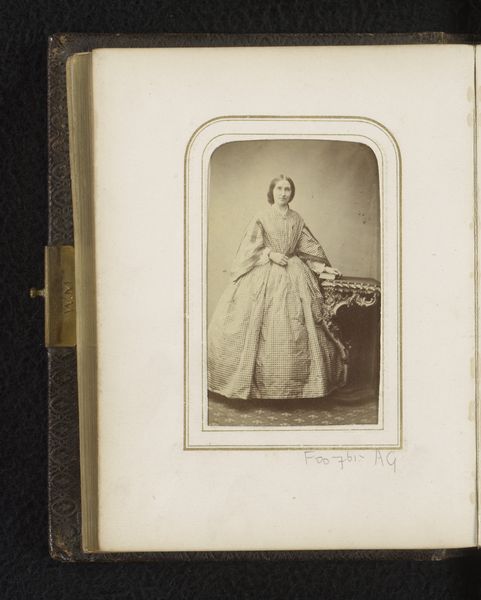
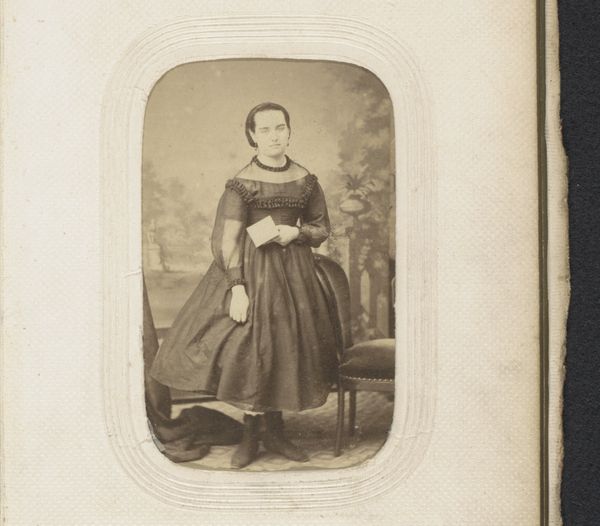
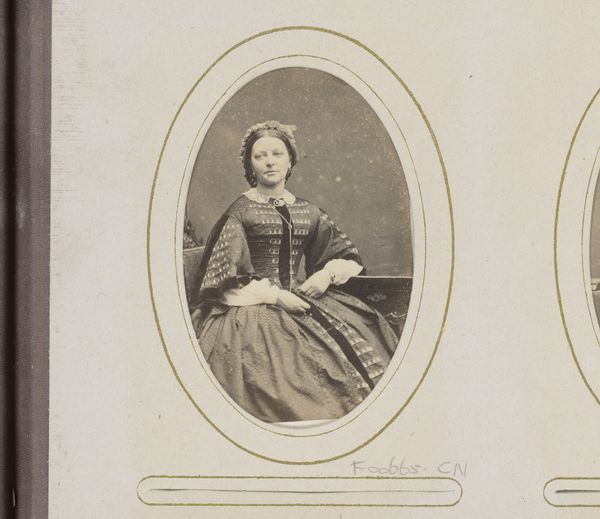
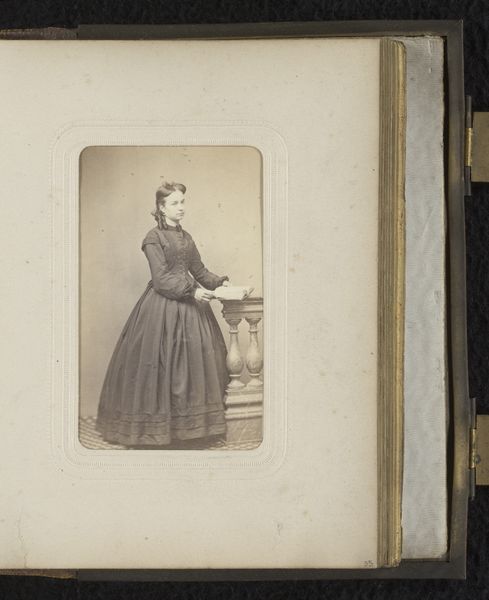
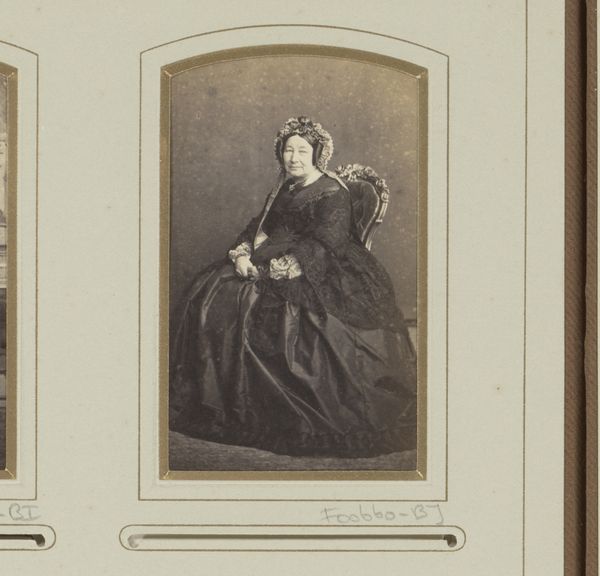
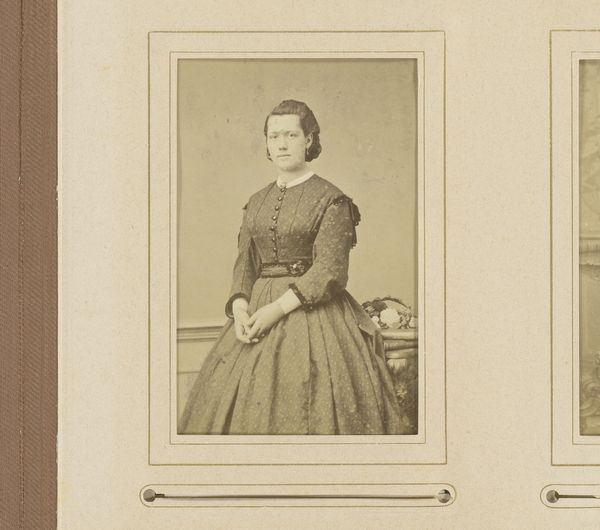
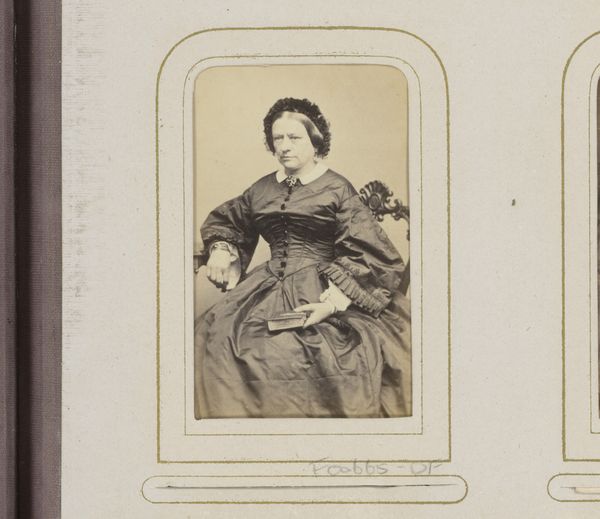
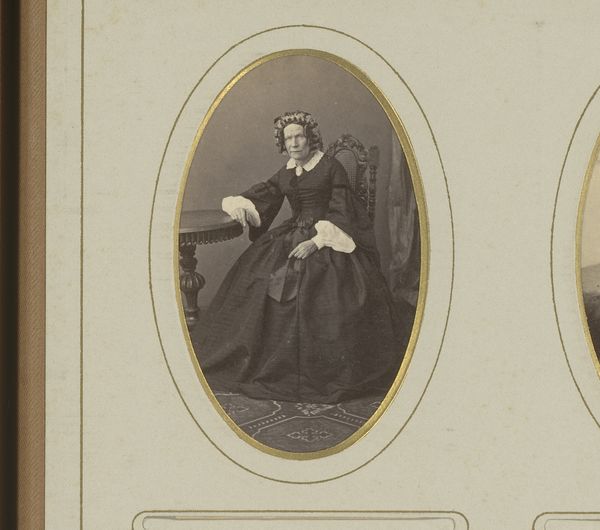
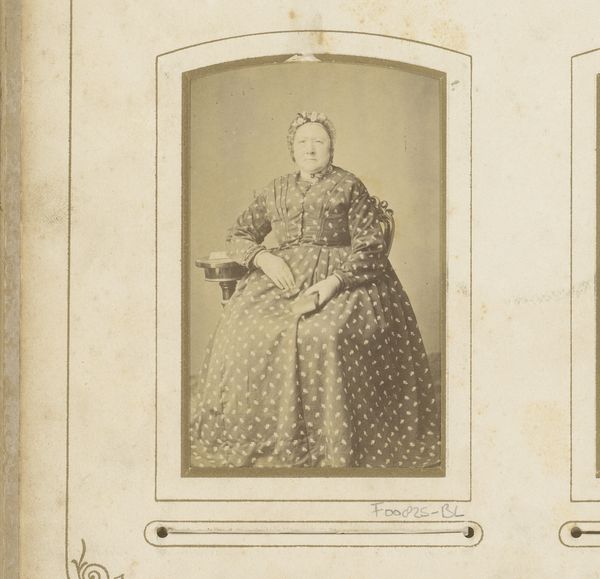
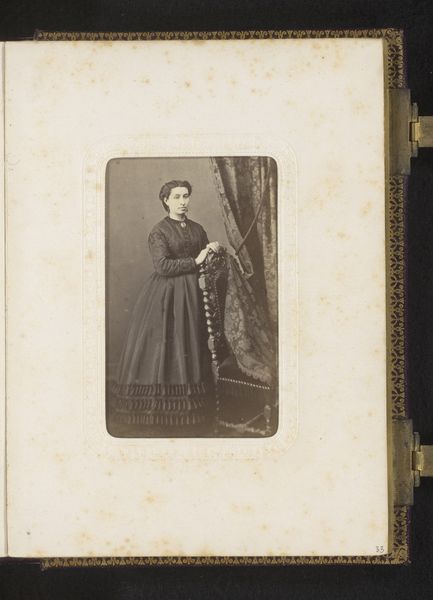
Editor: This is "Portret van een staande vrouw met muts bij een stoel," an albumen print portrait from between 1855 and 1865. It feels both intimate and formal, a slice of life carefully posed. What strikes you when you look at this piece? Curator: I see the careful layering of symbols, a visual encoding of societal expectations and personal identity. The chair, for example, suggests status, but also perhaps confinement. Notice the woman's hand resting gently upon it – is it support, or a subtle grasp? What emotions might we see captured in her body language? Editor: That’s fascinating. I hadn’t considered the chair beyond just being a prop. Her dress also seems very specific to the era. Curator: Indeed. The high neckline and the long sleeves reflect Victorian ideals of modesty, yet the fabric suggests a certain degree of affluence. Do you see how the muted tones and her direct gaze contribute to a feeling of introspection, yet with elements suggesting elevated social class? What unspoken stories does this image hint at? Editor: So, it’s almost like reading a person through objects and style, trying to understand what was considered ideal or aspirational at the time? Curator: Precisely. We can explore cultural memory through these very deliberate visual signifiers that shape our perceptions of gender, class, and self. How does that shift your initial reaction to the piece? Editor: It adds a lot more depth. I see her as less of a passive subject and more of an active participant in constructing her own image within those social constraints. Curator: And isn’t that the power of visual imagery, inviting us to decode those layers and connect with echoes of the past in surprisingly familiar ways?
Comments
No comments
Be the first to comment and join the conversation on the ultimate creative platform.
 Collect
 React
React Comment
More like this