c. 1565 - 1570
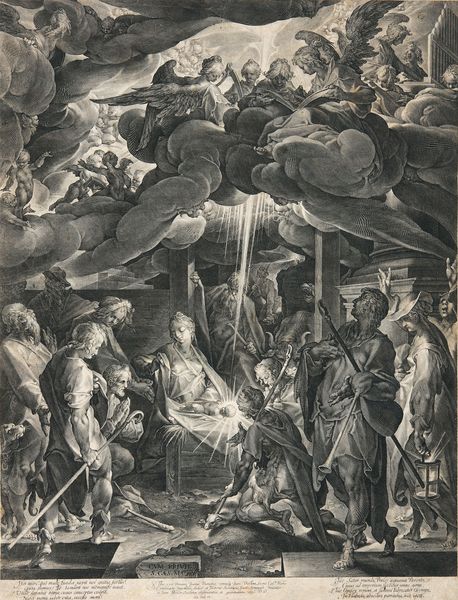
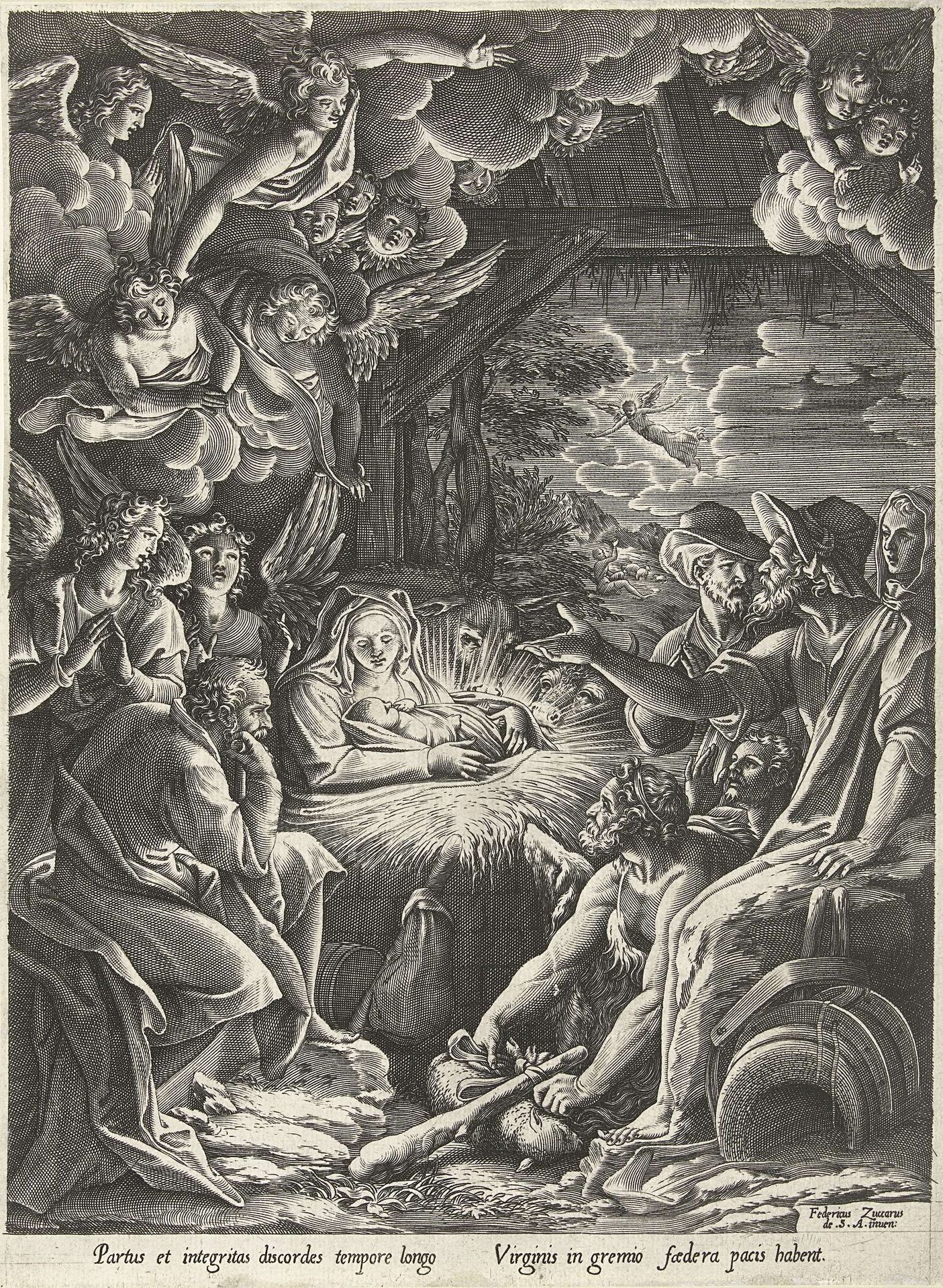
Aanbidding door de herders

Cornelis Cort
1533 - 1578Location
RijksmuseumListen to curator's interpretation
Curatorial notes
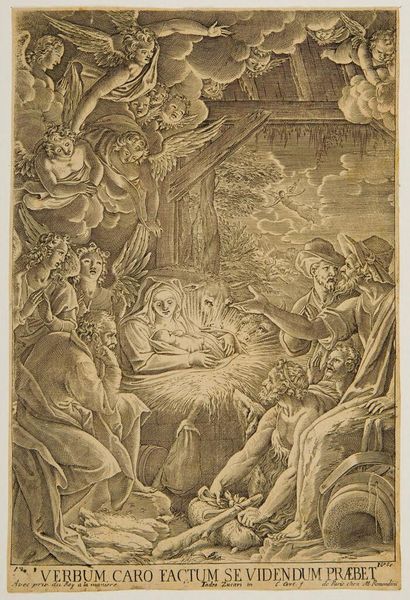
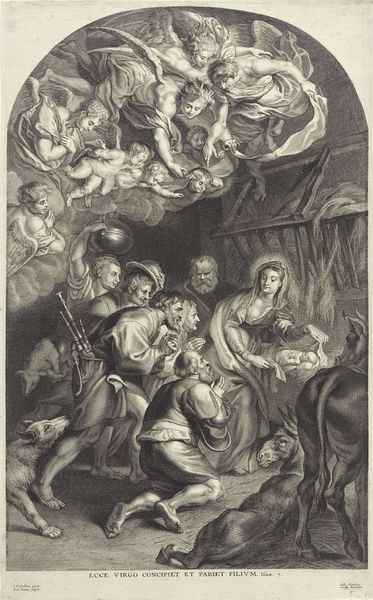
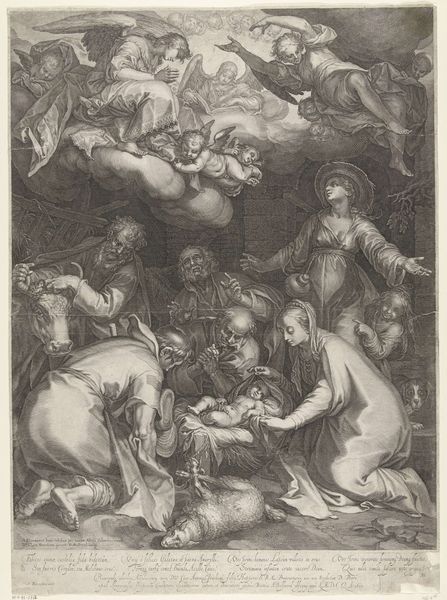
Editor: This engraving, "Adoration of the Shepherds," was created around 1565-1570 by Cornelis Cort. The detail is just incredible for a print! I’m immediately drawn to the almost chaotic composition, yet there's a strange harmony in the way the figures are arranged. What kind of symbolism do you see within this piece? Curator: The chaotic harmony you observe stems from a rich layering of symbols. The angels clustered above aren’t just decorative; they represent the divine sphere intersecting with the earthly. Notice how they frame the humble stable. What feeling do they evoke, hovering as they do? Editor: They seem to be actively participating in the scene, pointing, gesturing. Like messengers… Curator: Precisely! They embody communication, bridging heaven and earth. Consider the shepherds themselves, rough figures juxtaposed with the ethereal angels. What does that contrast suggest? Editor: It’s about inclusion? About this miraculous event being for everyone, regardless of their social standing. Curator: Yes! The shepherds, the earthly, the divine, all converging at this single point: the infant Christ. The radiating light surrounding Jesus and Mary isn't just visual; it's symbolic of spiritual illumination. Light dispels darkness, ignorance. What memories or associations does this light trigger for you? Think beyond the purely religious. Editor: I think of hope, definitely. And the idea of new beginnings, a shared renewal. It really hits me how powerfully visual symbols connect us to shared cultural experiences. Curator: Indeed. Cort uses these potent symbols to tap into centuries of collective memory. Understanding those symbols is key to unlocking the engraving's enduring emotional power. I’m so glad that we got a chance to study it together.