About this artwork
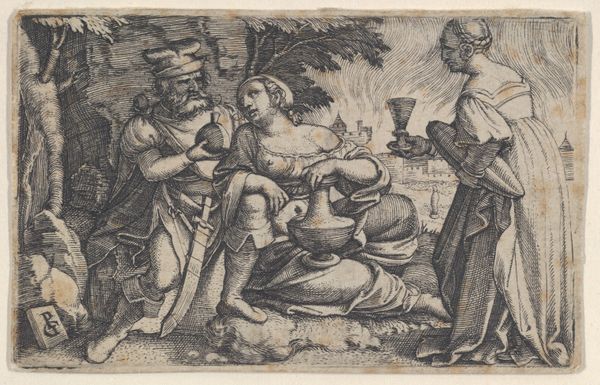
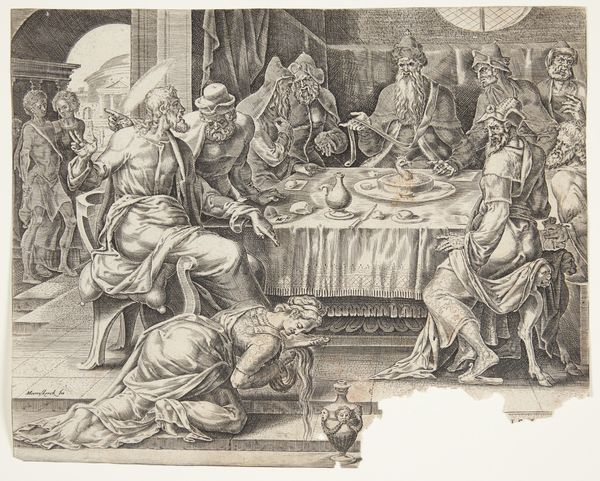
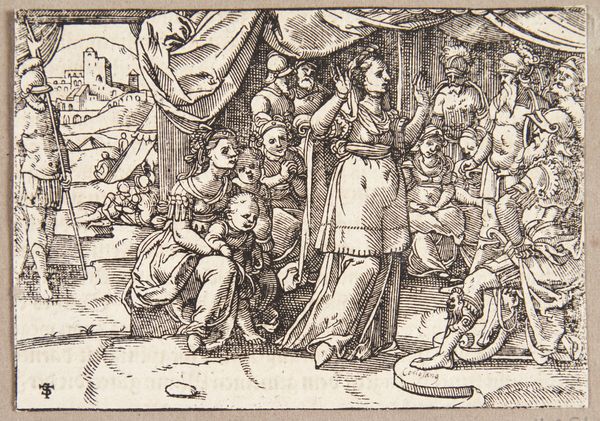
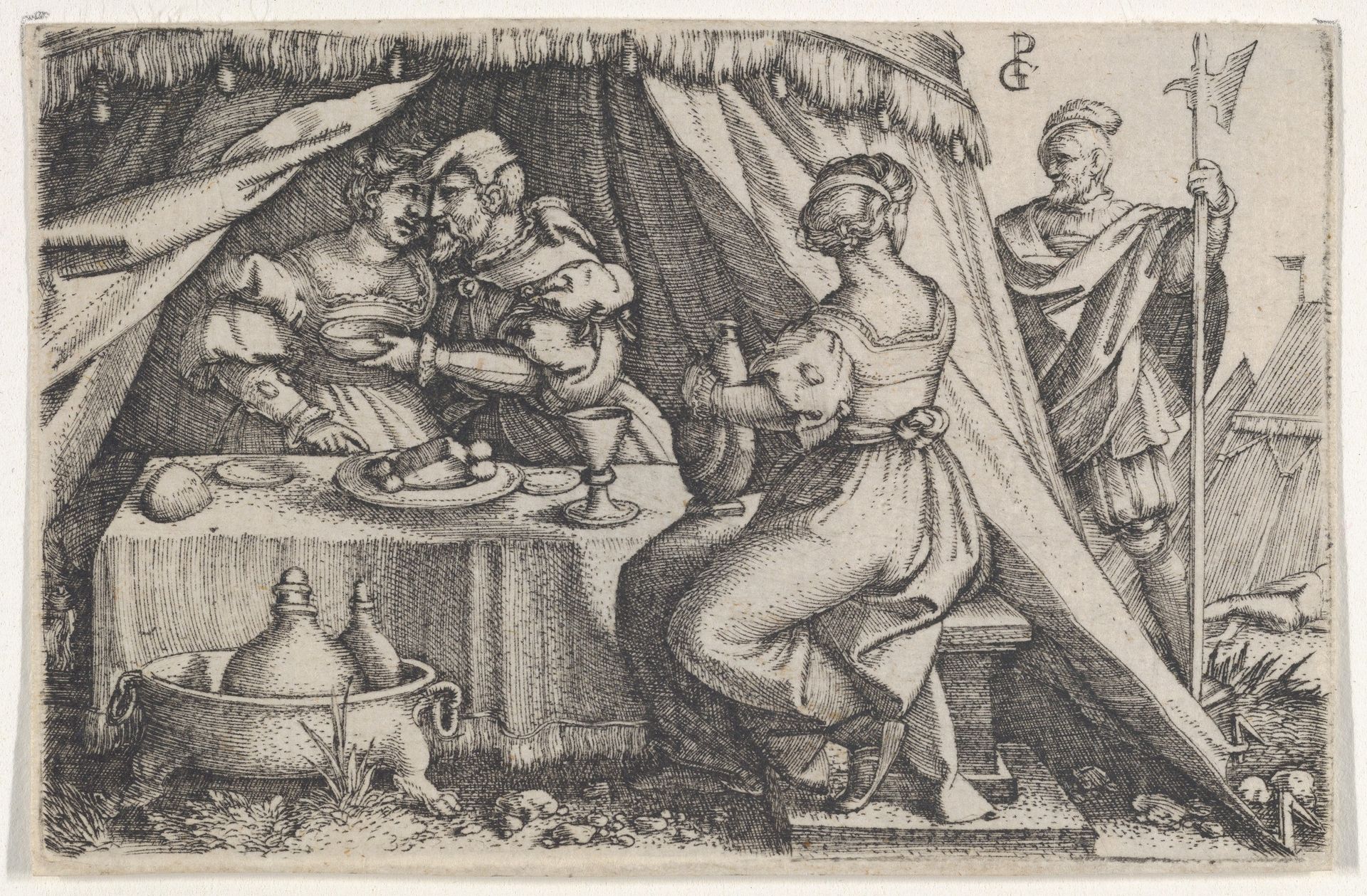
Georg Pencz etched "Judith and Holofernes Dining" around the 16th century, capturing a pivotal moment laden with symbolic tension. We see the intimate dinner setting, but the impending doom is palpable. The wine, flowing freely, is a symbol of both conviviality and the intoxication that will lead to Holofernes's downfall. This motif of deceptive hospitality echoes through art history, from ancient Greek tragedies to Renaissance dramas. The raised cup in Holofernes’s hand, a gesture of trust and celebration, becomes a chilling foreshadowing of his fate. Consider the image of Salome with the head of John the Baptist, where the presentation of a severed head on a platter mirrors the consequences of unchecked power and desire. These images evoke a deep, subconscious understanding of betrayal and the cyclical nature of power dynamics, reminding us that history—and the human psyche—often repeats itself.
Judith and Holofernes Dining
1526 - 1536


Artwork details
- Medium
- drawing, print, engraving
- Dimensions
- Sheet: 2 × 3 1/16 in. (5.1 × 7.8 cm)
- Location
- Metropolitan Museum of Art, New York, NY
- Copyright
- Public Domain
Tags
drawing
narrative-art
figuration
history-painting
italian-renaissance
engraving
Comments
Be the first to share your thoughts about this work.
About this artwork
Georg Pencz etched "Judith and Holofernes Dining" around the 16th century, capturing a pivotal moment laden with symbolic tension. We see the intimate dinner setting, but the impending doom is palpable. The wine, flowing freely, is a symbol of both conviviality and the intoxication that will lead to Holofernes's downfall. This motif of deceptive hospitality echoes through art history, from ancient Greek tragedies to Renaissance dramas. The raised cup in Holofernes’s hand, a gesture of trust and celebration, becomes a chilling foreshadowing of his fate. Consider the image of Salome with the head of John the Baptist, where the presentation of a severed head on a platter mirrors the consequences of unchecked power and desire. These images evoke a deep, subconscious understanding of betrayal and the cyclical nature of power dynamics, reminding us that history—and the human psyche—often repeats itself.
Comments
Be the first to share your thoughts about this work.