c. 1515 - 1520
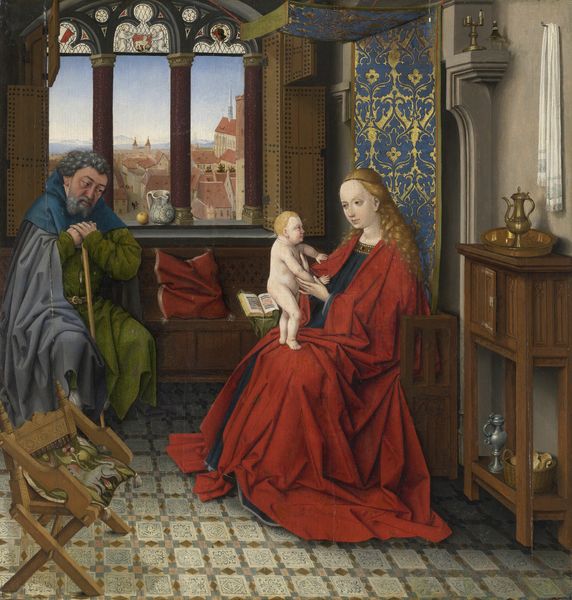
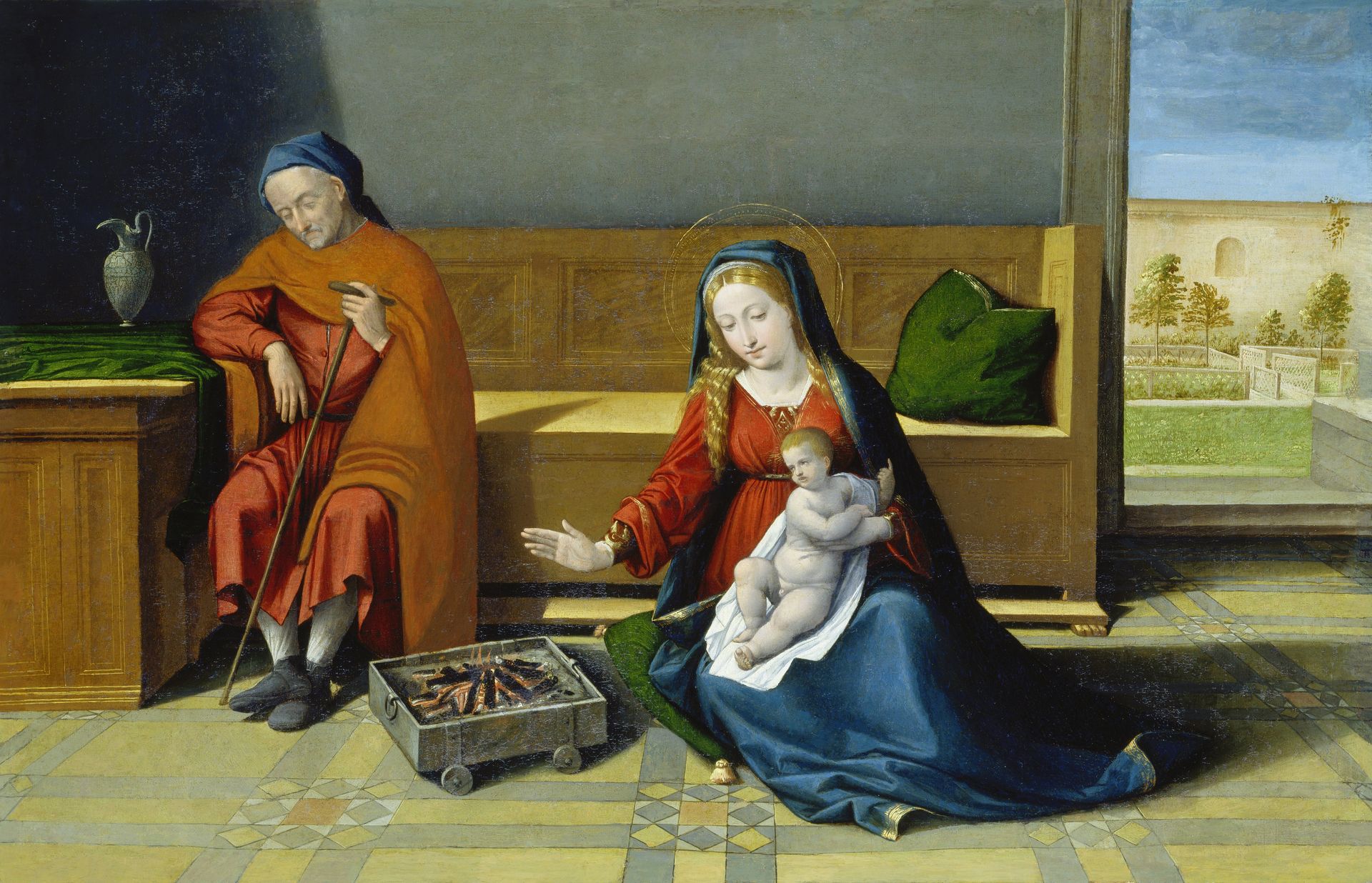
The Holy Family


Listen to curator's interpretation
Curatorial notes
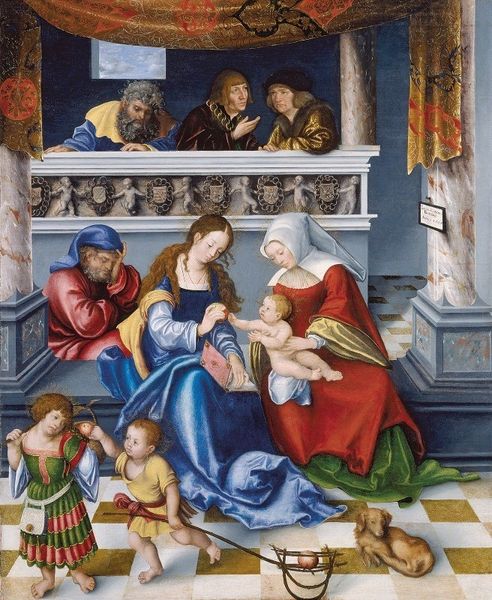
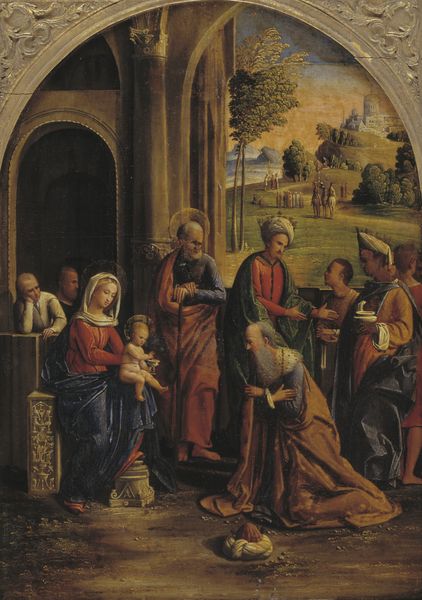
Curator: Look at this oil on panel, "The Holy Family," by Garofalo, painted sometime between 1515 and 1520. You can find it here at the Städel Museum. What strikes you first? Editor: The tranquility, definitely. Everyone is so still, like they're paused in a sacred moment, bathed in a really gentle light. There is a cart full of some items next to the Holy Family in this quiet little moment; they could almost be at church. Curator: That tranquility is so very Renaissance, wouldn't you agree? I’m captivated by the geometric construction, especially in the tiled floor. It firmly organizes the space, anchoring the figures, while the backdrop, through the window, gestures toward infinity, an idea reinforced by those classical architectural elements in the yard. Editor: It’s that blend of human warmth and divine significance that really makes it click. Garofalo’s use of oil gives the colors such depth. Notice that the Virgin’s red dress and blue robe feel so rich, almost palpable, against the somewhat pallid flesh tones of Jesus and the slightly ruddy flesh tones of St. Joseph. And speaking of him—Joseph looks so tired! You know, it kind of humanizes the whole scene. Curator: Precisely. Garofalo uses symbolism quite effectively here. Even that little cart overflowing with objects carries layers of significance that prompt meditation on themes like sacrifice, provision, or faith. This use is not unfamiliar with other artwork and symbolism from that time period. Editor: It does make me wonder about the scene and the artist's feelings on the concept. I find the artist is making it human, really hitting that point about the sacredness in the small, everyday. You know, holiness isn’t just up there somewhere—it’s right here with us. Curator: That is certainly a reading. Thank you for joining me today.