painting, acrylic-paint
painting
outdoor photograph
acrylic-paint
figuration
cityscape
street
modernism
realism
building
Copyright: Antonio Lopez Garcia,Fair Use
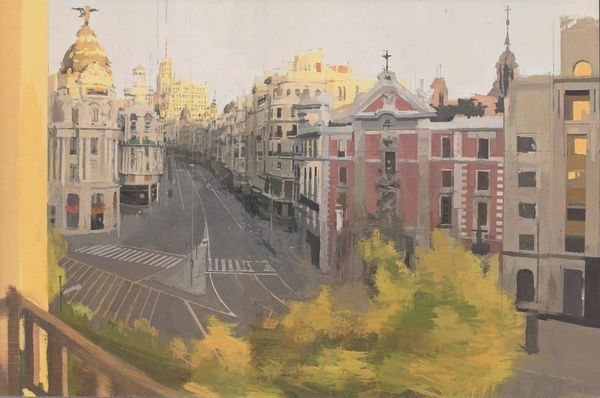
Editor: Here we have Antonio Lopez Garcia’s "Grand Via," painted in 1981 using acrylic. The stillness is what strikes me. It's an almost eerie depiction of a major thoroughfare. What do you see in this piece? Curator: The material reality is meticulously rendered – look at the concrete, the faded paint markings, the aging facades of the buildings. The painting acts almost as a document of material culture in transition. Consider how the artist employed acrylics here. Editor: How does using acrylics, specifically, shape the image we see? Curator: Acrylic, a relatively modern medium for the time, allowed Garcia to capture the hard, almost industrial feel of the cityscape with precision. The layers he builds, likely applied with brushes of varied fineness, emphasize the city’s relentless, material existence. Each building speaks to processes of labour. What are those buildings displaying on their frontages? Editor: I see shop names and brand names like 'Piaget'. It feels both contemporary and…old-fashioned? Curator: Exactly! The juxtaposition is key. The consumerism of those brands clashes with the older, European architectural forms. Notice the stark perspective, as well: our eye is drawn down the street, like a road to a distant, capitalist future. The whole piece makes me consider the forces of capital at play in the reshaping of urban spaces. Editor: It’s incredible how just analyzing the materials and what is painted gives such different insight. It is also unsettling when we understand the history and context. I won't be looking at cityscapes the same again. Curator: Agreed. Focusing on the material underpinnings of the image and what that can represent changes how we see art's relation to society.
Comments
No comments
Be the first to comment and join the conversation on the ultimate creative platform.
 React
React Comment