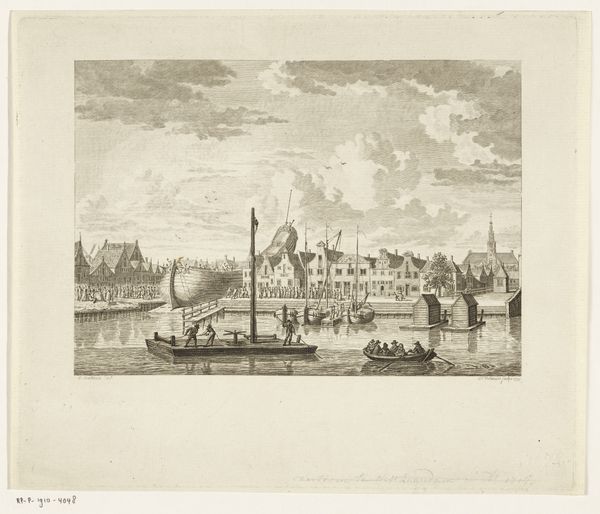
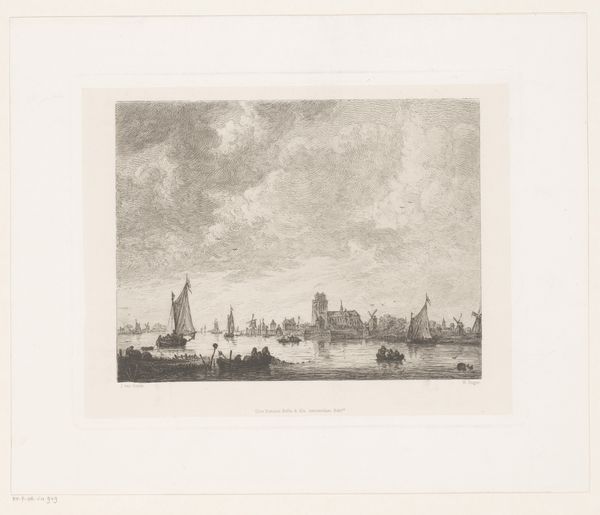
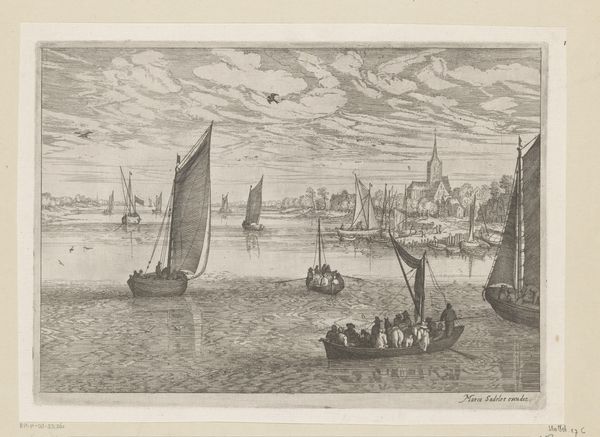
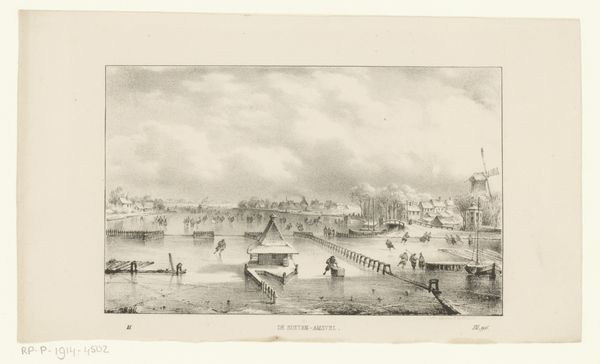
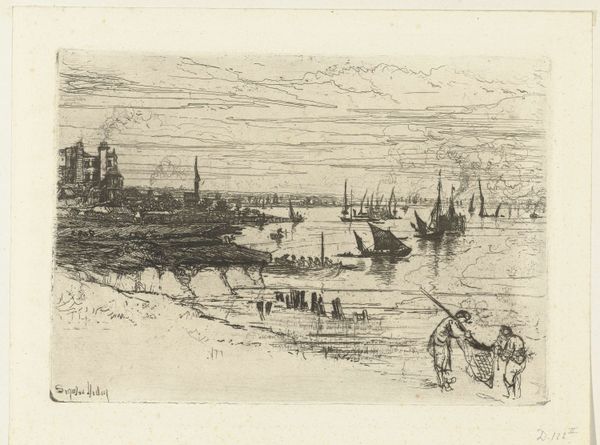
De eerste roeiwedstrijd van de Koninklijke Nederlandsche Yachtclub, gehouden op 10 juni 1846 op de Maas te Rotterdam 1846

carelchristiaanantonylast
Rijksmuseum
print, engraving
16_19th-century
old engraving style
landscape
cityscape
engraving
Dimensions: height 152 mm, width 235 mm
Copyright: Rijks Museum: Open Domain
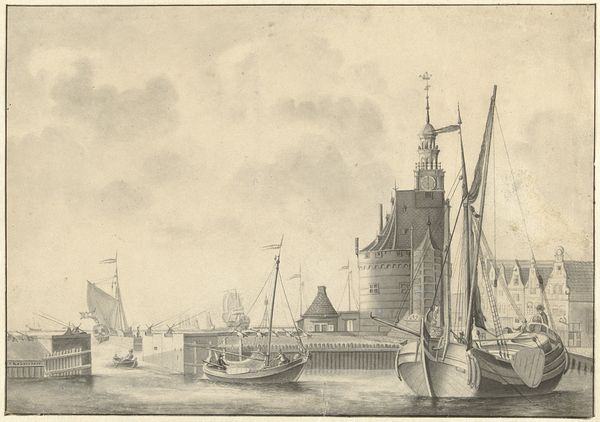
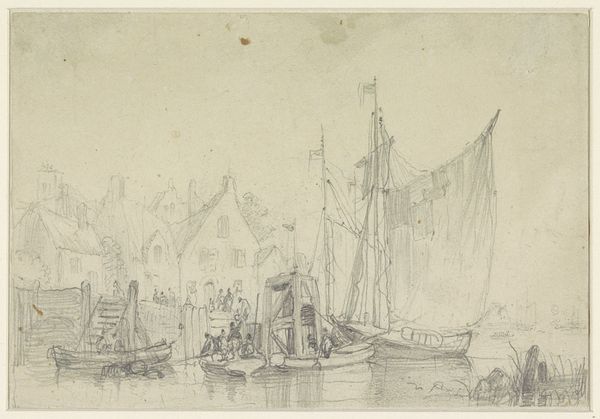
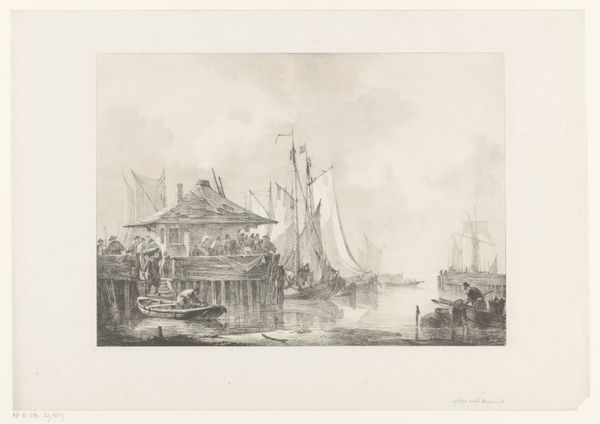
Editor: Here we have Carel Christiaan Antony Last's "De eerste roeiwedstrijd van de Koninklijke Nederlandsche Yachtclub, gehouden op 10 juni 1846 op de Maas te Rotterdam," created in 1846. It’s an engraving, and there's a real sense of bustling energy; you can almost hear the chatter and feel the excitement of the race. What’s your interpretation of the historical context of this work? Curator: This print captures more than just a boat race; it's a snapshot of burgeoning Dutch nationalism and the rise of leisure culture in the mid-19th century. Yachting, initially an elite pastime, was becoming a symbol of national pride. Consider how the image subtly promotes a particular vision of Dutch identity. Who do you think would have had access to these leisurely activities? Editor: Presumably, the wealthy. Everyone in the boats looks quite affluent. Does the image tell us anything about class structures at the time? Curator: Absolutely. This isn't just about sport; it's about visibility and power. The Koninklijke Nederlandsche Yachtclub was a highly exclusive club. Images like this helped to construct and reinforce social hierarchies. Ask yourself, whose stories are missing from this picture? What about the working class in Rotterdam at this time? Editor: I see what you mean. It's easy to get caught up in the festive scene and miss the underlying message of social stratification. This makes me wonder about who this print was actually made for and what their understanding would have been? Curator: Precisely! This print likely circulated amongst the same elite it depicts, further solidifying their status and worldview. By viewing this artwork critically, we can begin to deconstruct how visual representations of history are never neutral, and often reinforce existing power dynamics. What have you noticed about the position of the windmills? Editor: Good point about position. To me the windmills are placed quite centrally within the work, acting almost like a mirror, reflecting back an old industrious spirit and an attempt to move on into a new age of ‘sport’ and wealth. Curator: Exactly! These artworks always allow us to consider how identity, history and politics play out over time. It's not merely a picture of a boat race; it’s a complex cultural document, an insight into power, privilege and national identity during a key moment in Dutch history.
Comments
No comments
Be the first to comment and join the conversation on the ultimate creative platform.
 React
React Comment