1862 - 1888
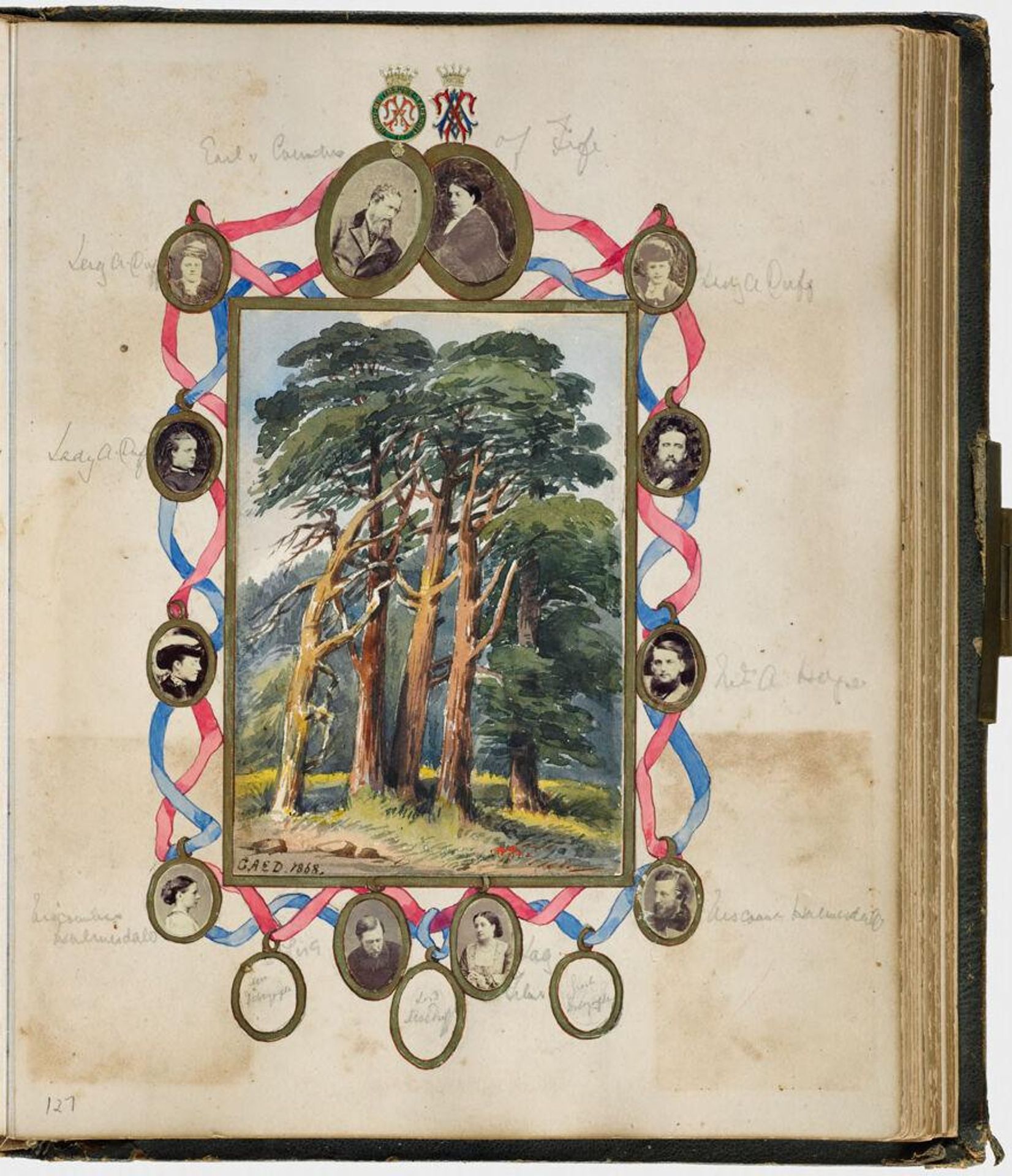
Untitled (watercolor drawing inscribed "GAED 1868" surround by painted ribbon motif with ovals (some w/photographs) incorporated; clockwise from top center, Earl and Countess of Fife; Lady A. Duff; Mr. A. Hope; Viscount Holmesdale; Lady Mary Filmer; Sir Edmund Filmer; Viscountess Holmesdale; Lady A. Duff; Lady A. Duff; verso: photograph, group of 12 unidentified people seated on steps in front of building, woman on far left holding dog)
Mary Georgiana Caroline Cecil Filmer
@marygeorgianacarolinececilfilmer
Harvard Art Museums
Harvard Art MuseumsListen to curator's interpretation
Curatorial notes
Editor: Here we have an untitled watercolor drawing by Mary Georgiana Caroline Cecil Filmer, dated 1868. It incorporates photographs of various individuals within a painted ribbon motif. It gives off a very intimate, familial feeling. What can you tell me about the social context of this piece? Curator: It’s fascinating to see how photography is being integrated into art during this period. The surrounding photographs and names suggest a personalized album or a memento of a social circle. Considering the aristocracy mentioned, how do you think this piece functions within their social rituals and self-representation? Editor: I suppose it shows the importance of lineage, family ties, and social standing among the British aristocracy. I learned so much about social history and photography by looking at this piece. Curator: Exactly, and it also highlights the performative aspect of identity within specific social circles. I noticed that as well. It’s a great piece to analyze the public role of art and the politics of imagery.