1654
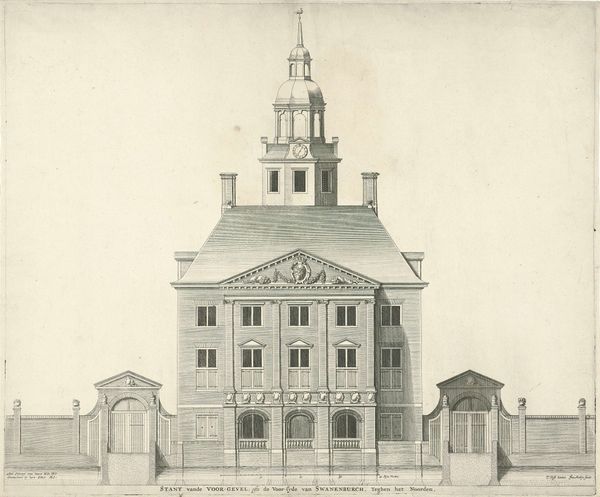
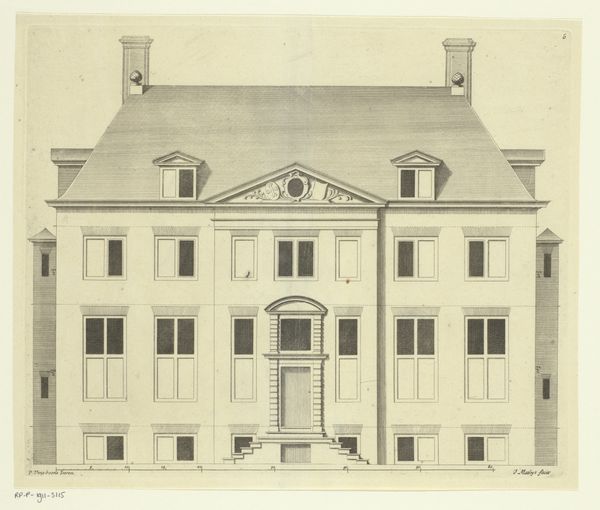
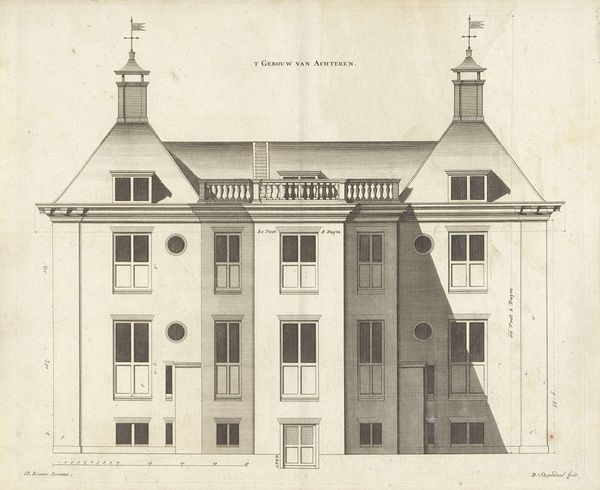
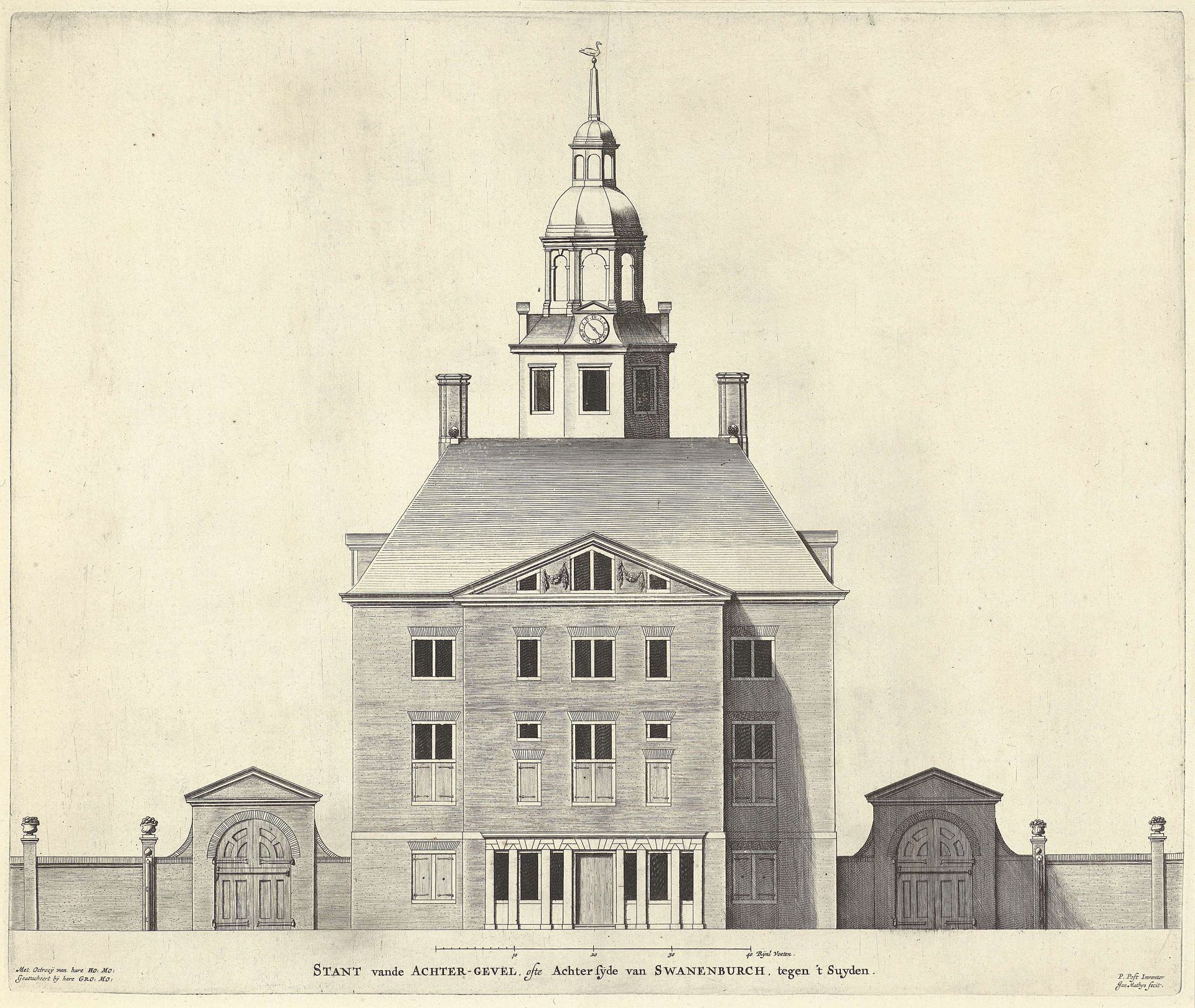
Achterzijde van Swanenburg, gemeenlandshuis van Rijnland

Listen to curator's interpretation
Curatorial notes
Editor: Here we have Jan Matthysz.'s 1654 engraving, "Achterzijde van Swanenburg, gemeenlandshuis van Rijnland"—or, "Rear View of Swanenburg, Community Land House of Rijnland." The architectural rendering feels quite formal and austere. I am struck by how the building commands this sort of stately presence even as just an engraving. What story do you think it tells? Curator: It's important to recognize that 17th-century Dutch art, including architectural prints, often played a civic role. It depicted not just buildings, but the very symbols of power and governance. This meticulous rendering of Swanenburg, with its precise lines, was commissioned for a purpose beyond mere aesthetics. Ask yourself: who would be the audience for such a print? Editor: Perhaps local officials? I imagine having an accurate depiction of the Gemeenlandshuis— the Rijnland community land house—was important for administrative or public identity purposes. Curator: Precisely! Consider Rijnland’s function: it regulated waterways, critical for trade and agriculture. The print visually reinforced their authority. Its stark realism isn’t just descriptive; it’s a statement. Think of the social context: the Dutch Golden Age, burgeoning trade, and a rising merchant class. How do you see the style reflecting these realities? Editor: The realism presents a sense of precision and order – a very "matter of fact" look, fitting for those concerned with managing the land. Also, I notice the civic identity theme tying in with the development of an established social order in that period. Curator: Exactly. The building itself projects this image, but so does its reproduction, available on paper, meant for dissemination and documentation. These visual details of the print served a political purpose within the 17th Century public life. I'd say it prompts us to reflect on how visual media operates to shape civic life even today. Editor: This has completely changed the way I perceive the role of architectural renderings, or any sort of “realistic” depiction for that matter. Thanks for bringing these contextual issues into play.