About this artwork
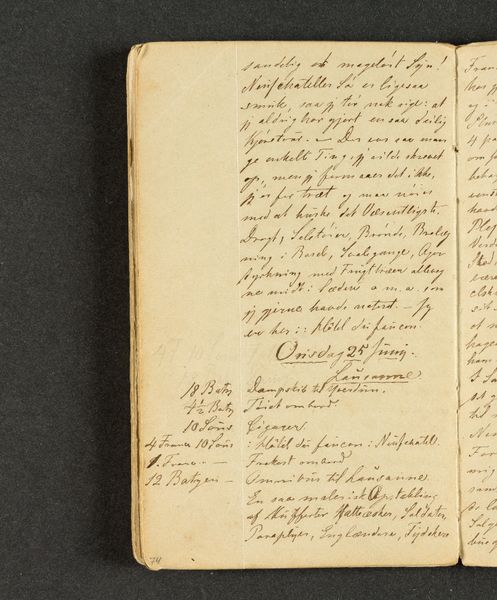
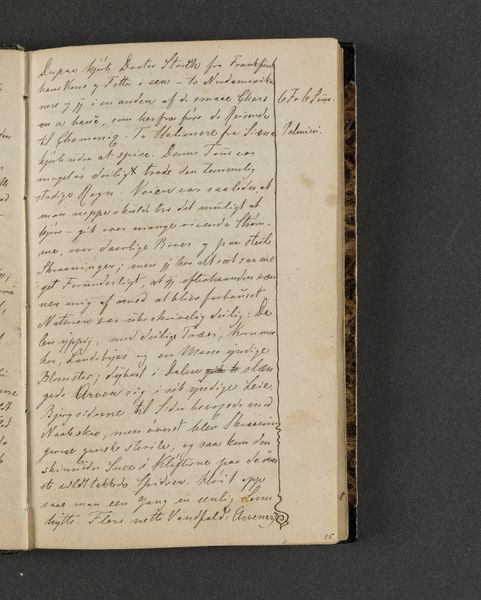
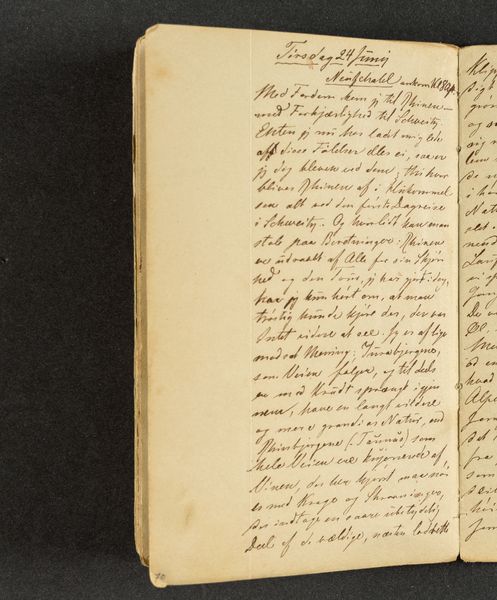
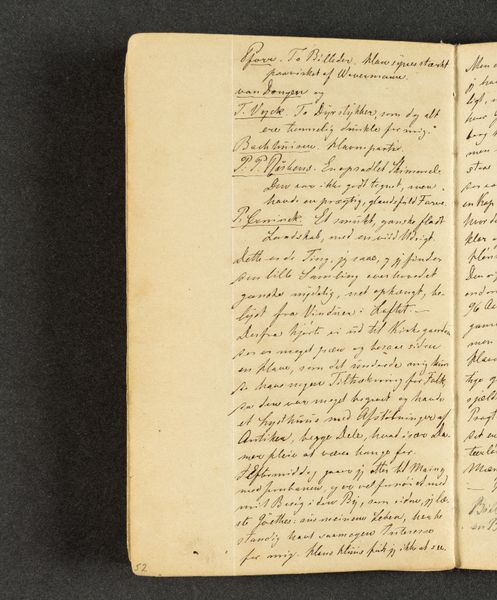
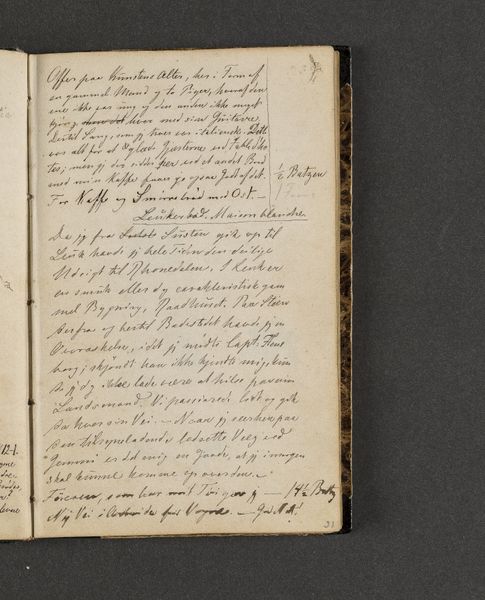
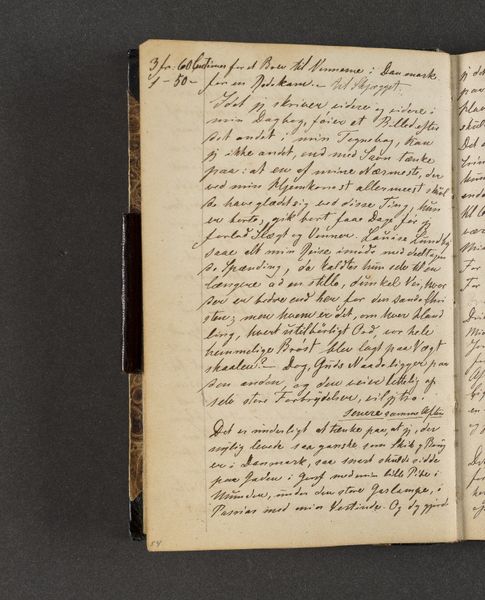
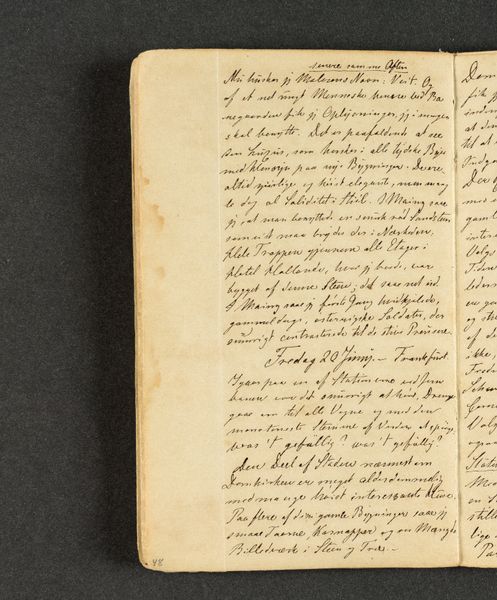
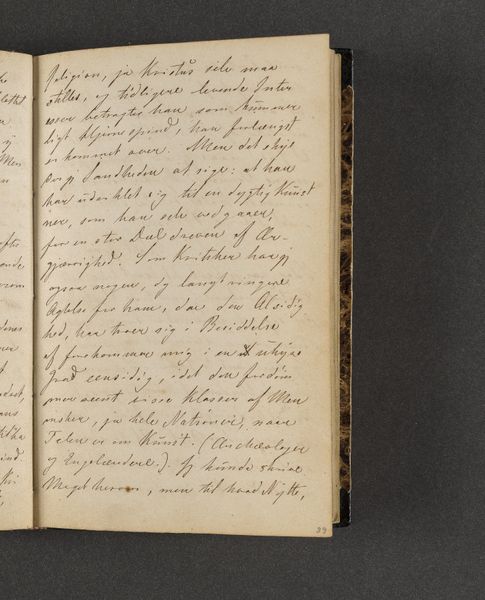
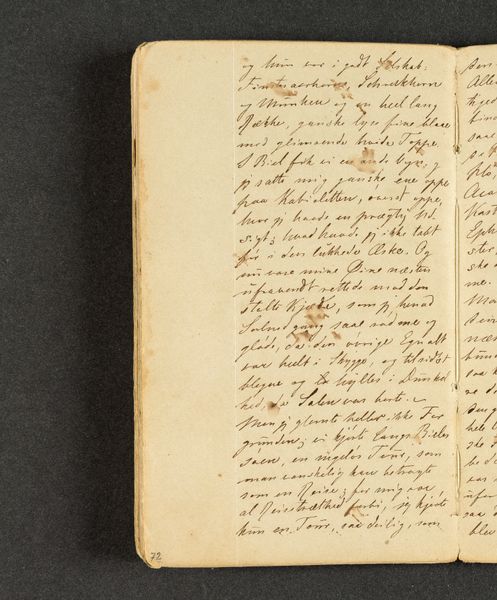
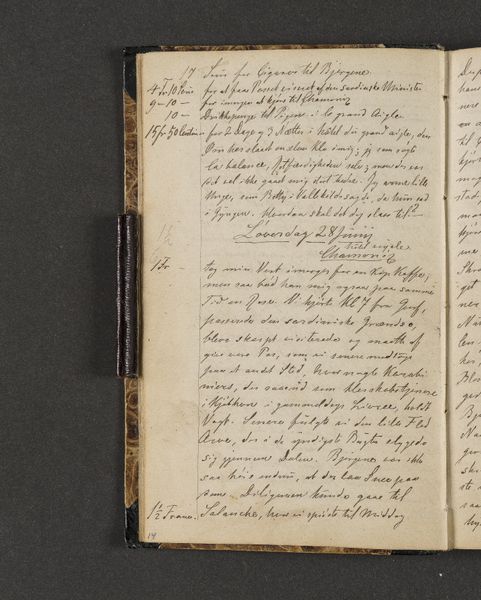
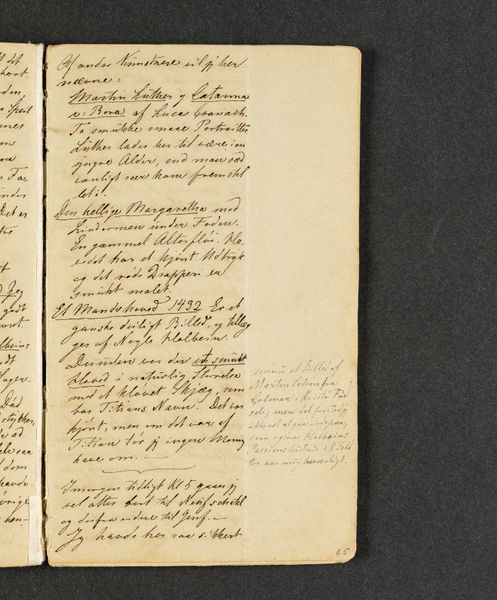
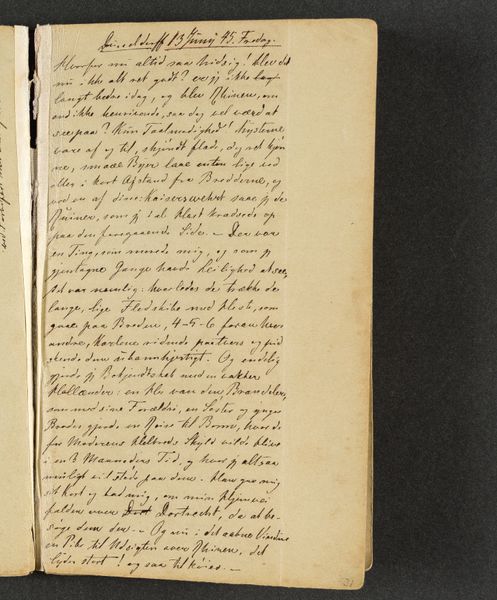
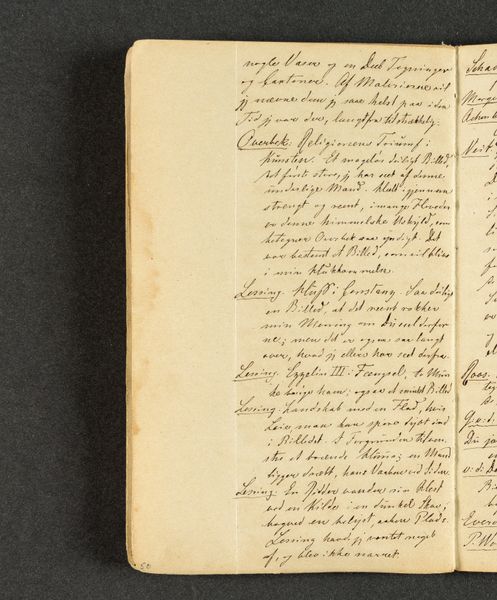
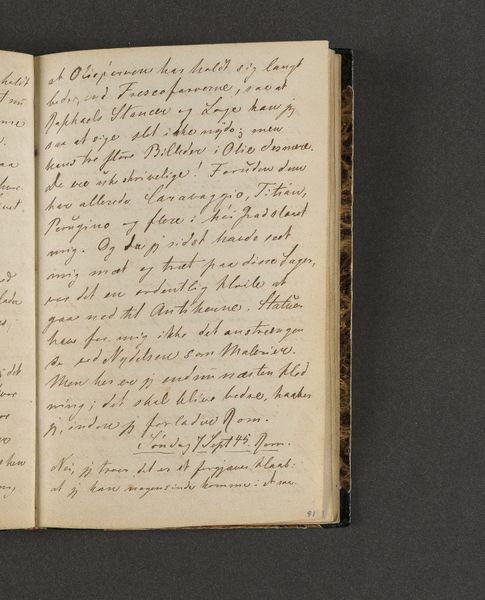
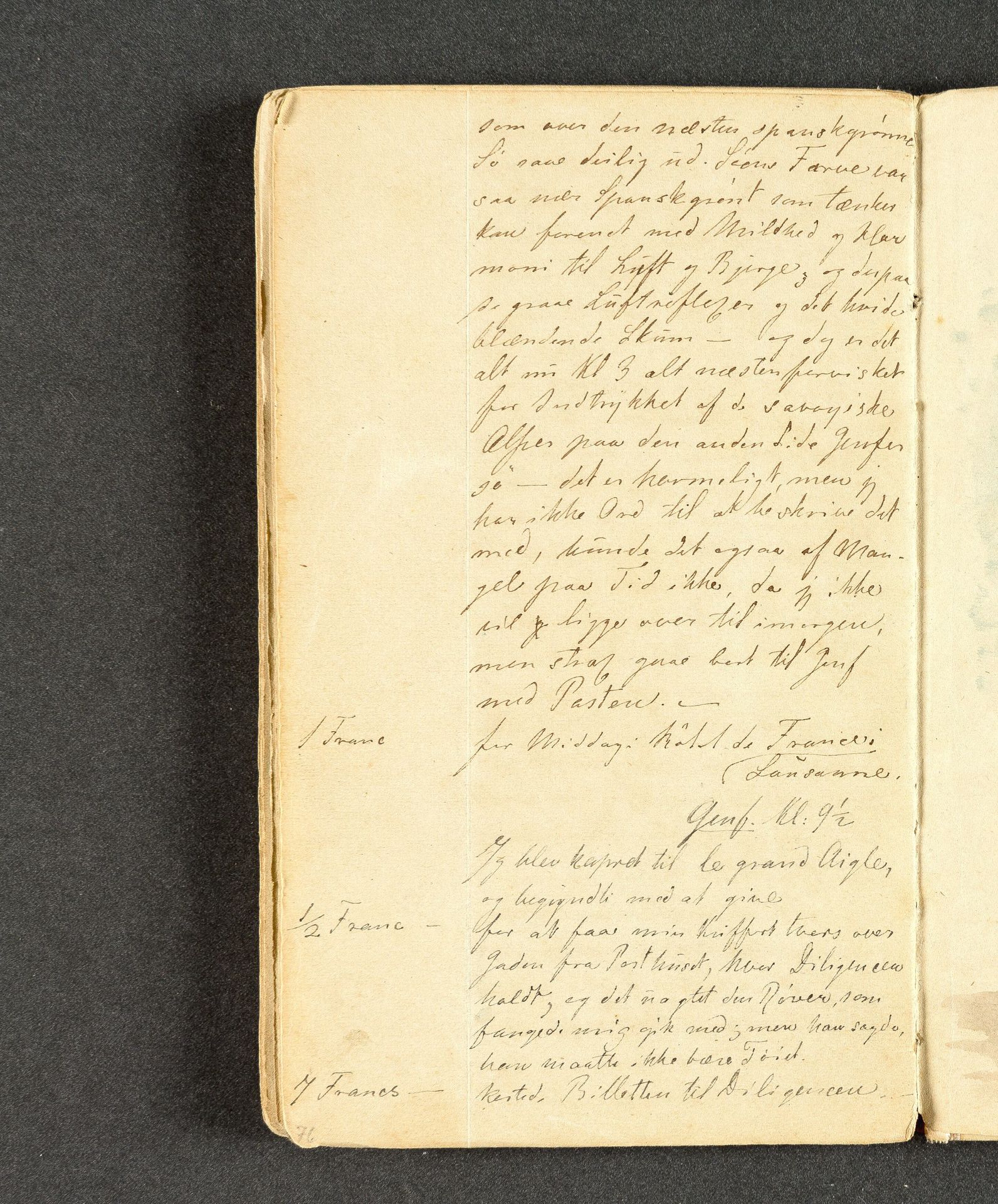
This is a page from Johan Thomas Lundbye's travel journal, created with ink on paper sometime in the 1840s. Lundbye was a Danish painter and illustrator known for his landscapes and depictions of rural life. This travel journal offers a glimpse into the cultural and intellectual life of the Danish Golden Age, a period marked by a surge of national romanticism and artistic innovation. The text, handwritten in Danish, likely contains observations, reflections, and sketches from Lundbye's travels. The journal format itself, a private and portable space for recording personal experiences, was a common tool for artists of this time. The content of the writing is important. During this period travel was becoming more accessible to certain segments of the population. How might Lundbye's class and status have shaped his experiences and observations? Understanding this artwork requires considering the social and cultural context in which it was made. Primary sources such as letters, diaries, and travel guides can provide valuable insights into the artist's world and the broader historical forces at play. The meaning of art, in this case, lies in its connection to the time and place of its creation.
Rejsedagbog
1845


Artwork details
- Medium
- drawing, paper, ink
- Dimensions
- 163 mm (height) x 98 mm (width) (bladmaal)
- Location
- SMK - Statens Museum for Kunst
Tags
Comments
Share your thoughts
About this artwork
This is a page from Johan Thomas Lundbye's travel journal, created with ink on paper sometime in the 1840s. Lundbye was a Danish painter and illustrator known for his landscapes and depictions of rural life. This travel journal offers a glimpse into the cultural and intellectual life of the Danish Golden Age, a period marked by a surge of national romanticism and artistic innovation. The text, handwritten in Danish, likely contains observations, reflections, and sketches from Lundbye's travels. The journal format itself, a private and portable space for recording personal experiences, was a common tool for artists of this time. The content of the writing is important. During this period travel was becoming more accessible to certain segments of the population. How might Lundbye's class and status have shaped his experiences and observations? Understanding this artwork requires considering the social and cultural context in which it was made. Primary sources such as letters, diaries, and travel guides can provide valuable insights into the artist's world and the broader historical forces at play. The meaning of art, in this case, lies in its connection to the time and place of its creation.
Comments
Share your thoughts