

1926
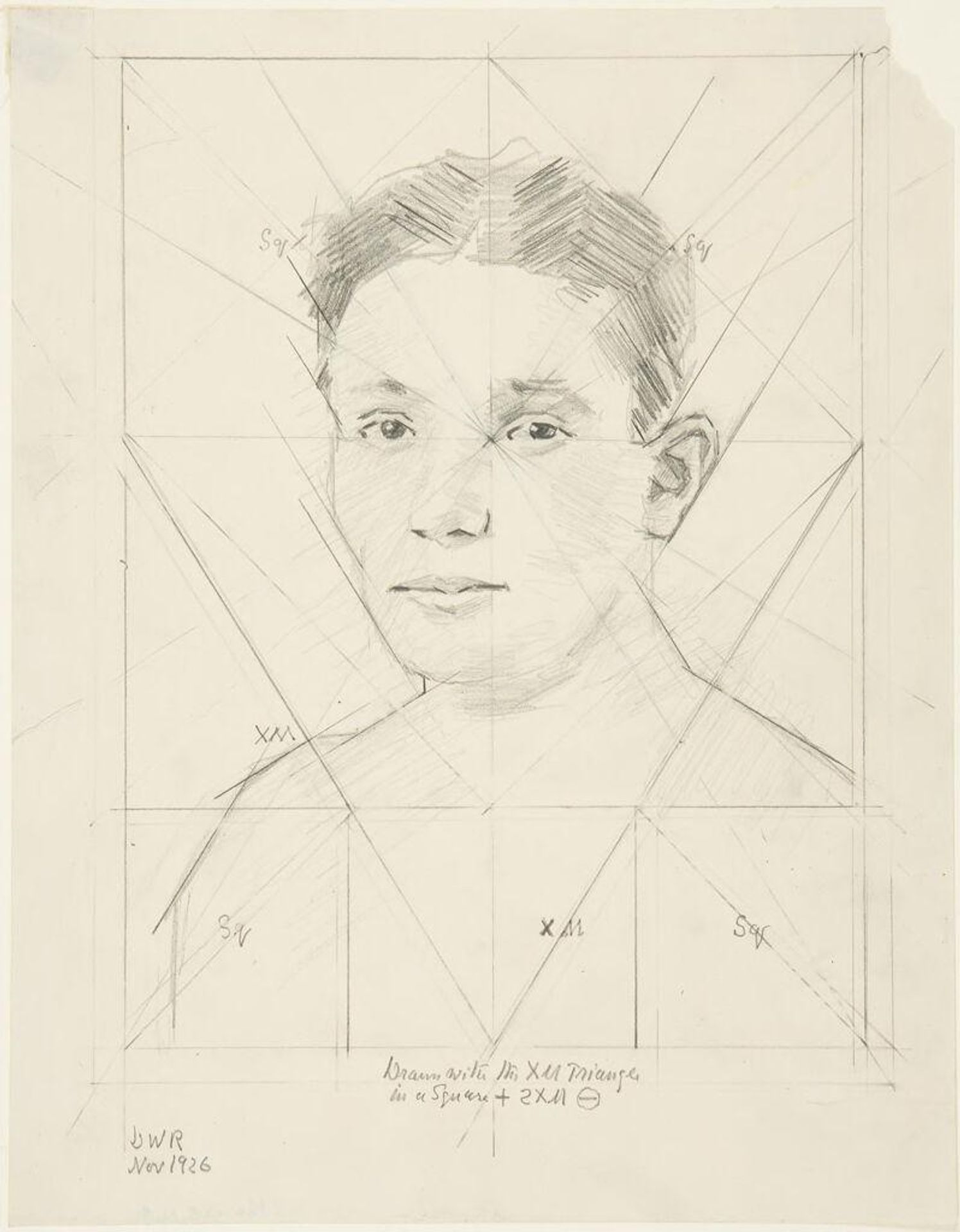
Head of a Youth

Listen to curator's interpretation
Curatorial notes
Editor: Here we have Denman Waldo Ross's "Head of a Youth," a pencil drawing from 1926. I’m struck by the geometric lines overlaid on the portrait; it feels almost like a map of the face. What do you make of those shapes? Curator: The geometric shapes resonate deeply. Notice how the grid both confines and defines the youth. It speaks to a cultural desire for order, a yearning to understand and control the chaos of the human form, perhaps reflecting anxieties of the interwar period. Editor: So, you're saying the shapes aren't just about aesthetics, but also reflect a particular time? Curator: Exactly. Consider the psychological weight of imposing such structure. Is it control, analysis, or something else? What do *you* feel when you see this? Editor: I hadn't thought of it that way before. The geometry almost cages the portrait, but also gives the face greater legibility and focus.