

1820
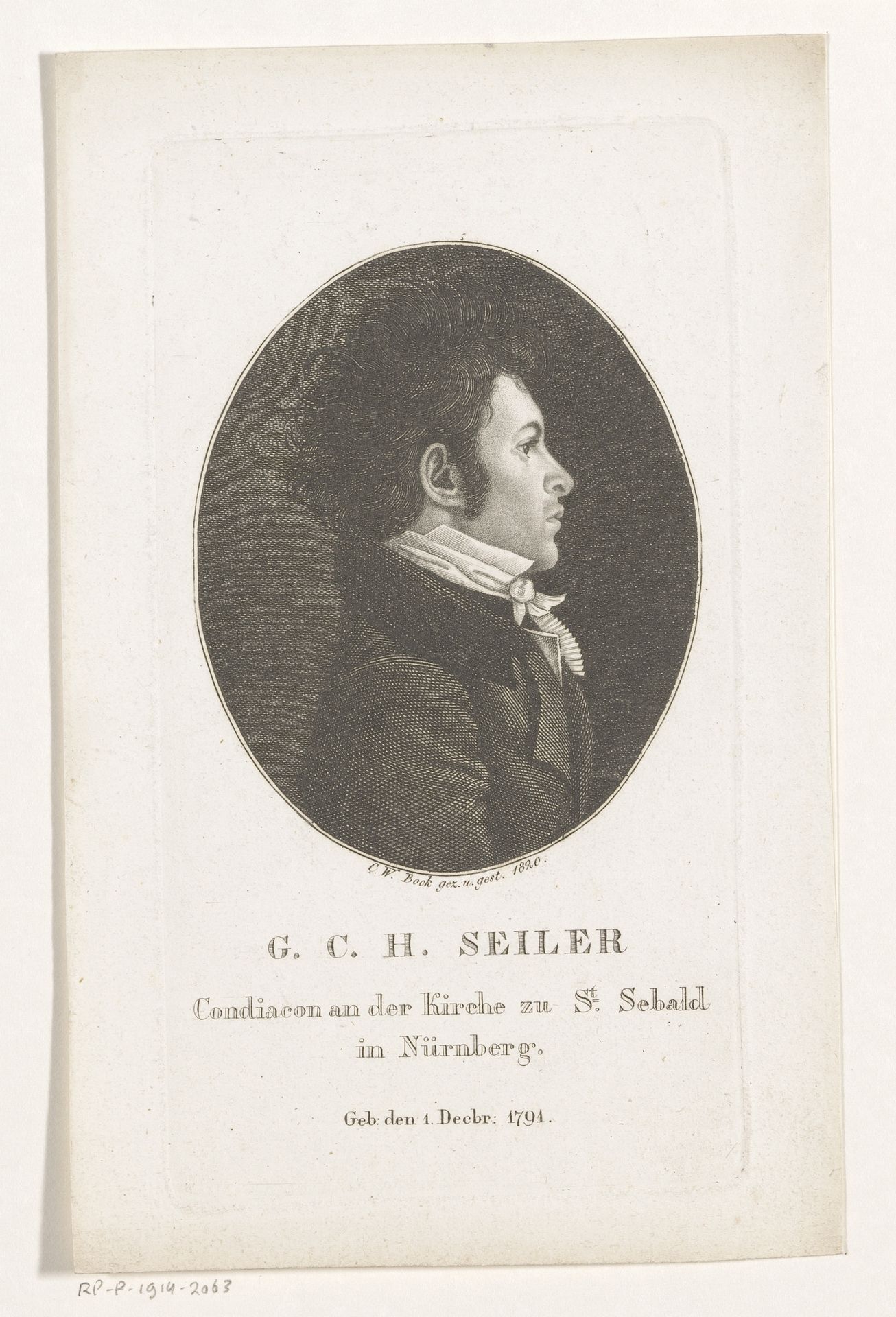
Portret van Christian Georg Seiler

Christoph-Wilhelm Bock
@christophwilhelmbockLocation
RijksmuseumListen to curator's interpretation
Curatorial notes
Editor: This is "Portret van Christian Georg Seiler," an engraving made around 1820 by Christoph-Wilhelm Bock, housed here at the Rijksmuseum. I’m struck by how sharply defined the lines are, especially given the softness of his hair. What aspects of the work catch your attention? Curator: The materiality of this engraving offers insight into its cultural context. The print medium suggests wider distribution, moving portraiture away from the exclusive realm of painted commissions. We can think about it in terms of reproducibility. How might access to images affect social perceptions? Editor: So, this portrait being a print makes it inherently different from an oil painting of the same era? Curator: Precisely. The technique of engraving involves labor and craftsmanship distinct from painting, changing the relationship between artist, subject, and consumer. This wasn't about unique art objects, but how affordable copies affected social status. Where does that take your thoughts? Editor: It makes me think about mass production and democratization of images – and maybe even celebrity culture in a way we understand today, but with a completely different process involved. I never considered that before, I was just focused on who the portrait depicted, but I hadn't reflected on the production behind it. Curator: Indeed, examining the means of production reframes our understanding of the portrait’s value and function within its society. Now what meaning do you see it has to modern society? Editor: Well, I realize the process of image making impacts our reception. It is something I have to think about now when I see other artwork from the same period. Thank you! Curator: My pleasure, thinking through materiality is the way to better connect with the objects.