About this artwork
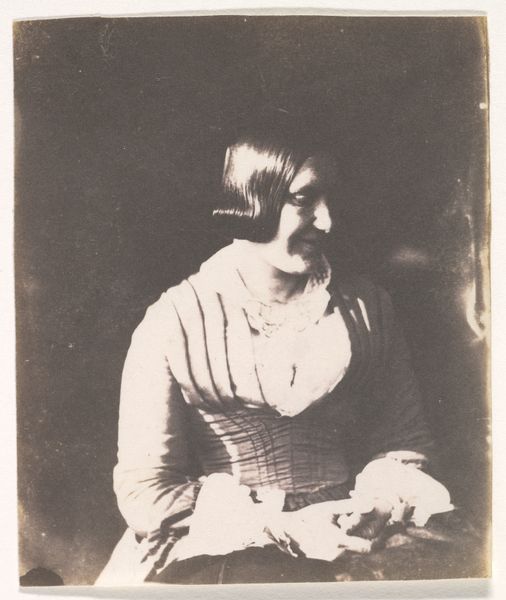
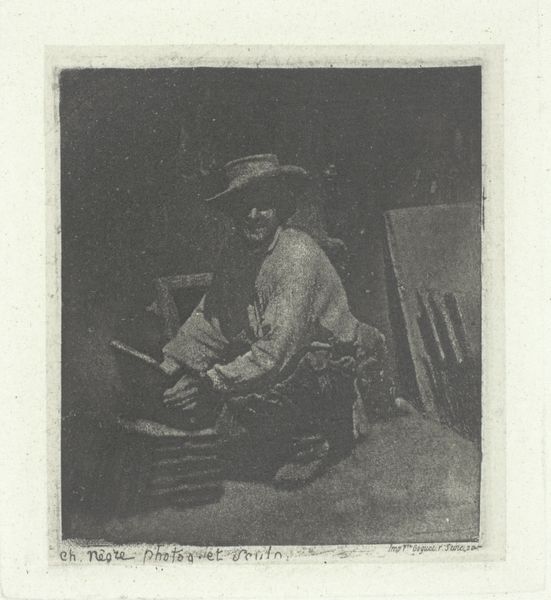
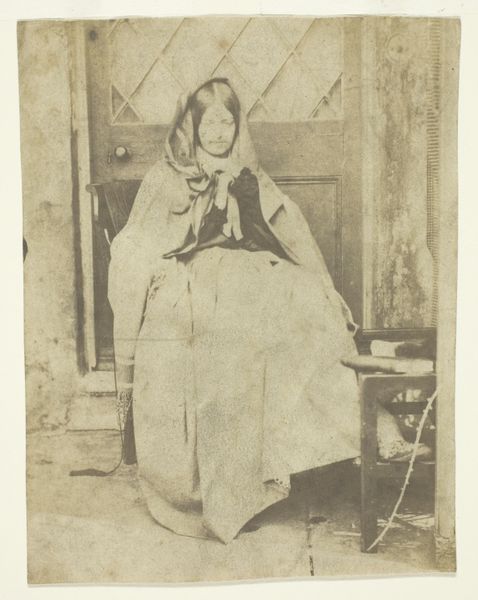
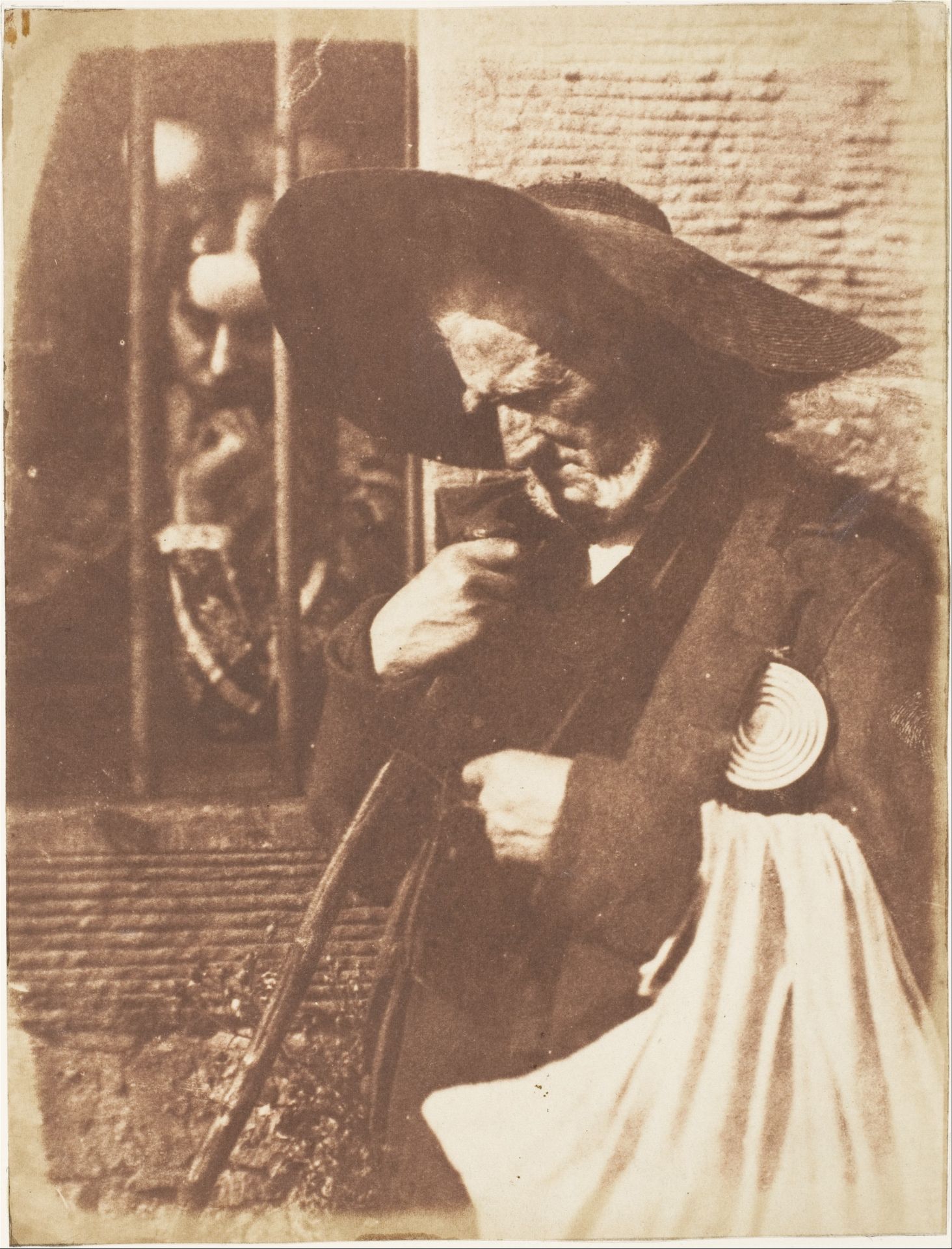
This salt print, made around 1843-1848 by Hill and Adamson, captures John Henning in character. The visual field is dominated by sepia tones, lending the scene a solemn atmosphere. Henning, draped in costume, embodies the fictional Edie Ochiltree. The composition invites a structural reading. Note how the subject's posture, with head bowed and gaze directed downwards, creates a closed form, suggesting introspection or melancholy. The rough texture of his clothing and the grainy quality of the print enhance the sense of reality, rooting the figure in a tangible world, while the soft focus blurs the background. The window to the left disrupts this, introducing a contrasting element that destabilizes the composition. This inclusion prompts us to consider what is being framed and what remains outside the frame. Hill and Adamson's image not only captures a likeness but also engages with broader questions of representation, identity, and the dialectic between art and reality.
John Henning as Edie Ochiltree from Sir Walter Scott's "The Antiquary" 1843 - 1847


Artwork details
- Medium
- daguerreotype, photography
- Dimensions
- Image: 20.6 x 15.8 cm (8 1/8 x 6 1/4 in.)
- Location
- Metropolitan Museum of Art, New York, NY
- Copyright
- Public Domain
Tags
portrait
film photography
daguerreotype
figuration
photography
historical photography
romanticism
men
Comments
No comments
About this artwork
This salt print, made around 1843-1848 by Hill and Adamson, captures John Henning in character. The visual field is dominated by sepia tones, lending the scene a solemn atmosphere. Henning, draped in costume, embodies the fictional Edie Ochiltree. The composition invites a structural reading. Note how the subject's posture, with head bowed and gaze directed downwards, creates a closed form, suggesting introspection or melancholy. The rough texture of his clothing and the grainy quality of the print enhance the sense of reality, rooting the figure in a tangible world, while the soft focus blurs the background. The window to the left disrupts this, introducing a contrasting element that destabilizes the composition. This inclusion prompts us to consider what is being framed and what remains outside the frame. Hill and Adamson's image not only captures a likeness but also engages with broader questions of representation, identity, and the dialectic between art and reality.
Comments
No comments