drawing, pencil
#
drawing
#
art-nouveau
#
hand-lettering
#
sketch book
#
hand drawn type
#
hand lettering
#
form
#
personal sketchbook
#
idea generation sketch
#
hand-drawn typeface
#
geometric
#
pencil
#
sketchbook drawing
#
decorative-art
#
sketchbook art
#
small lettering
Copyright: Rijks Museum: Open Domain
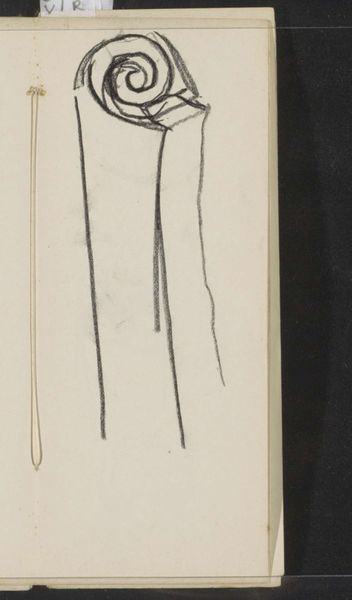
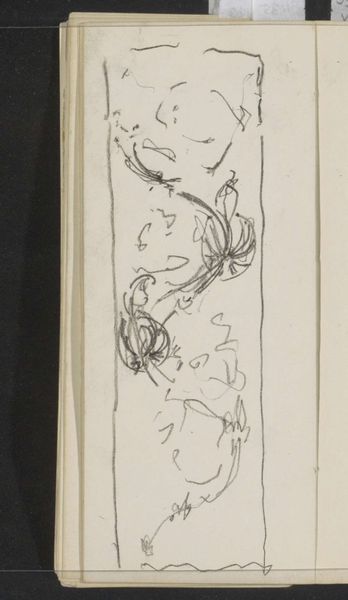
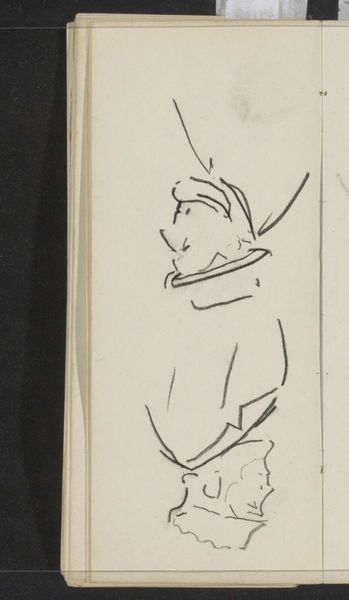
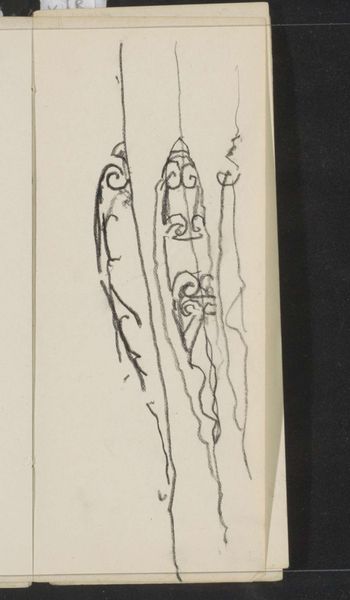
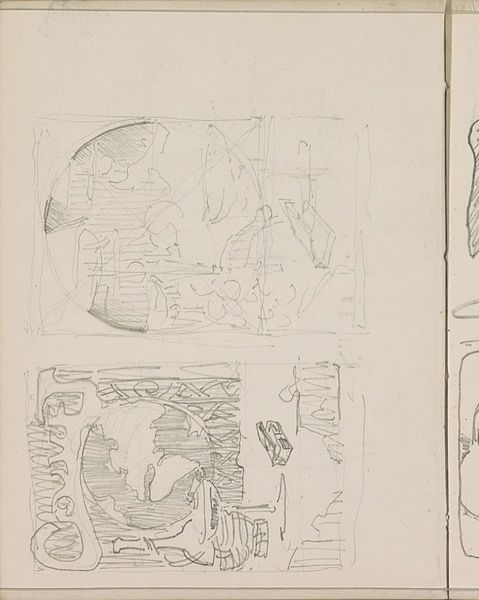
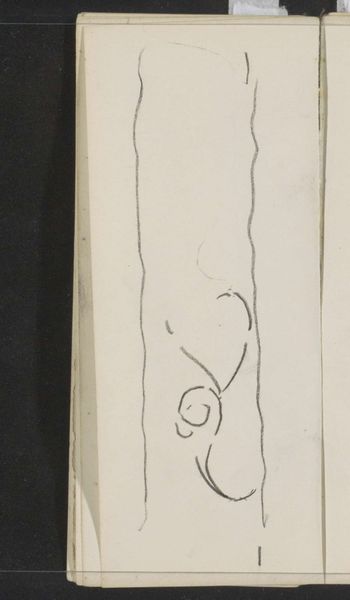
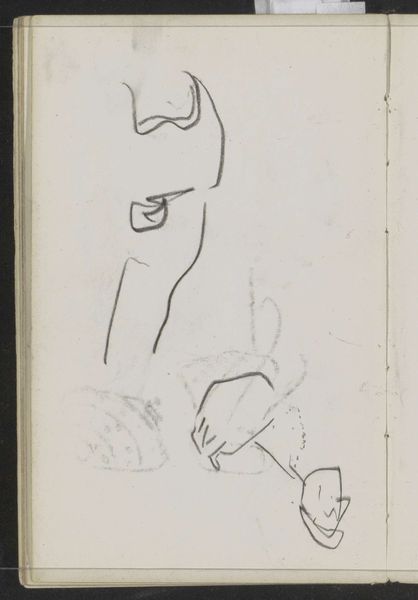
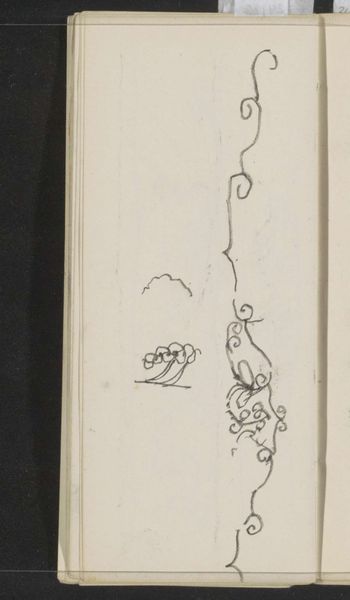
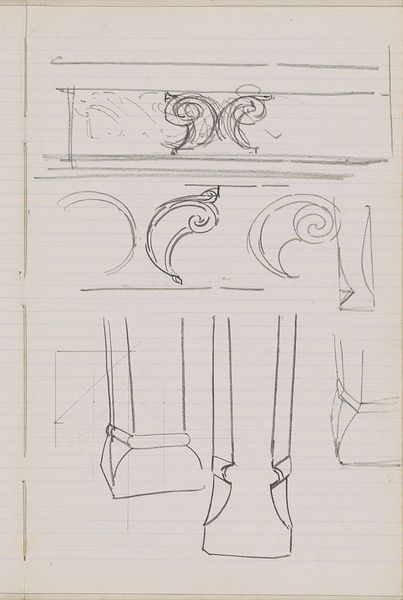
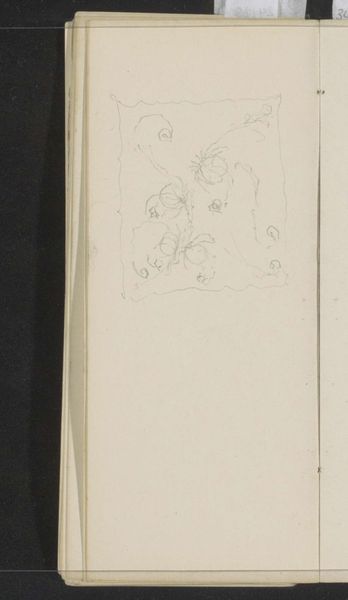
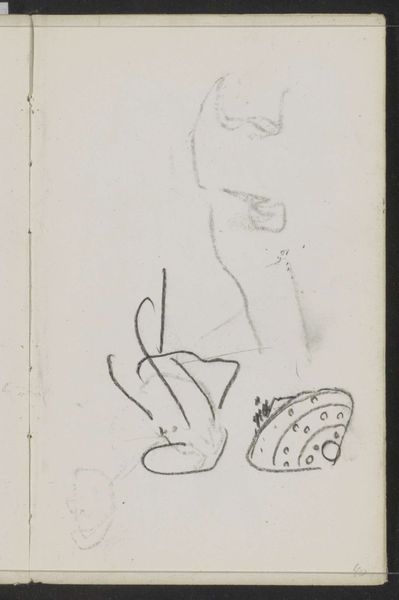
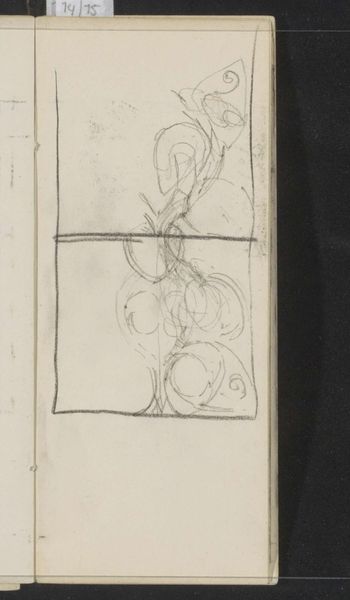
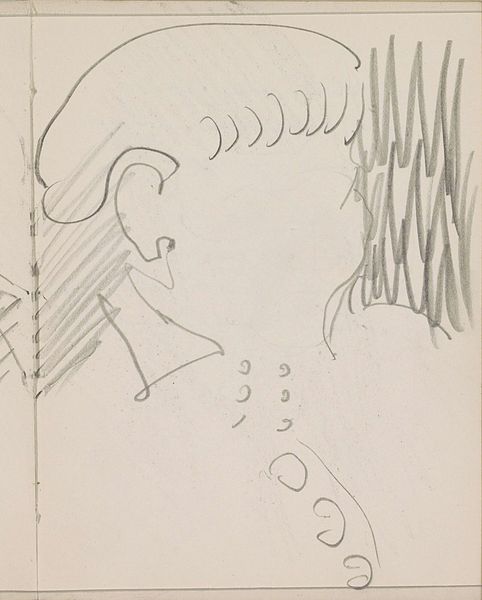
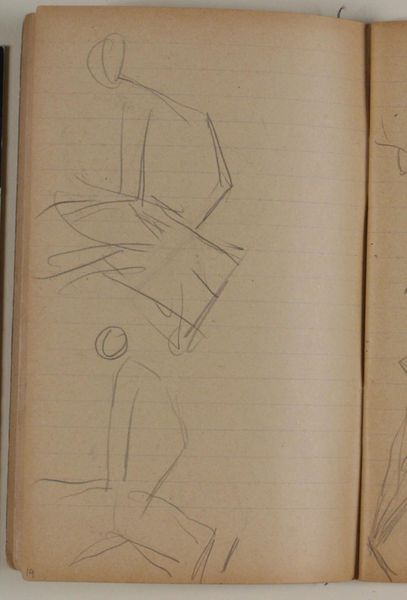
Editor: Here we have Gerrit Willem Dijsselhof's "Ornamenten met rolwerk" from around 1901. It appears to be a pencil drawing, a quick study maybe. It looks like a series of sketches on a single page of a sketchbook. What do you make of these designs? Curator: These drawings give us insight into the design process at the turn of the century. Dijsselhof was a key figure in the Dutch Art Nouveau movement. Looking at this sketchbook page, we see an exploration of form and pattern. The scroll-like shapes reflect the organic, flowing lines characteristic of the era. Consider how these decorative motifs, these "Ornamenten," might have been intended for furniture, textiles, or even architectural details. Editor: So, it's about understanding the practical use of these images. Curator: Precisely. Think about the social context. Art Nouveau aimed to integrate art into everyday life, blurring the boundaries between fine art and design. How might a piece like this have contributed to that goal, especially when design processes began to be standardized for industrial uses? Editor: It's interesting to consider that this raw sketch could be a step towards mass production. Curator: Exactly! It shows the democratization of art implied by Art Nouveau. We also see hand-lettering; it makes this personal sketchbook all the more appealing. Editor: So, viewing this drawing as part of a larger social movement gives the artwork much more significance. Curator: That’s right! Appreciating art also means understanding its role in history and the ideologies behind it. It opens up new layers to something that initially seems so simple. Editor: I’ve learned to think beyond aesthetics and to view a piece of art within its cultural framework.
Comments
No comments
Be the first to comment and join the conversation on the ultimate creative platform.
 Collect
 React
React Comment
More like this