About this artwork
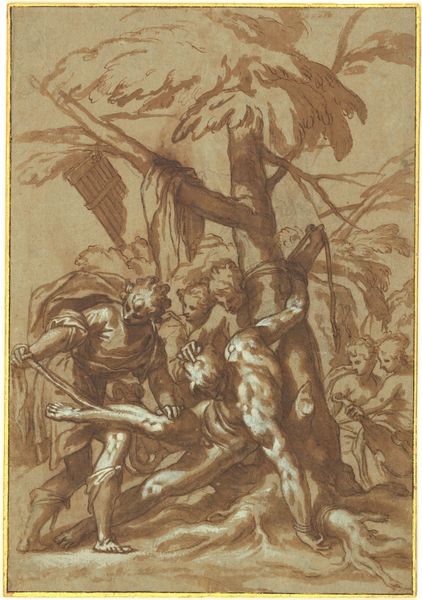
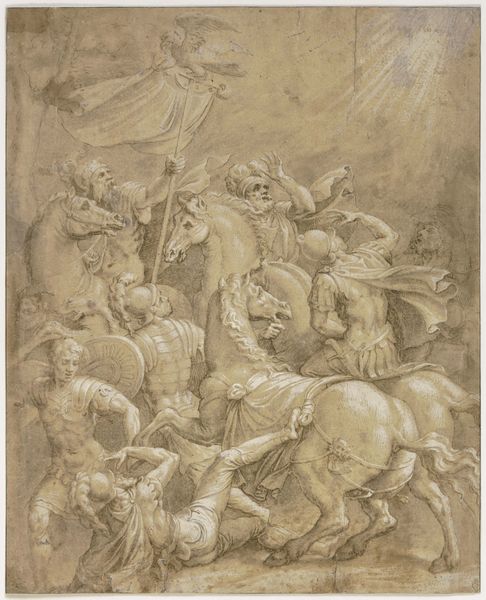
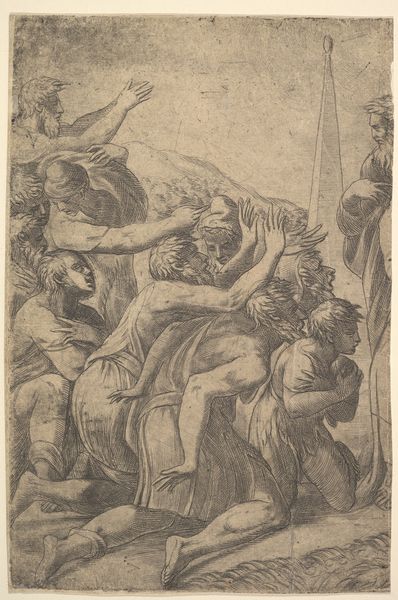
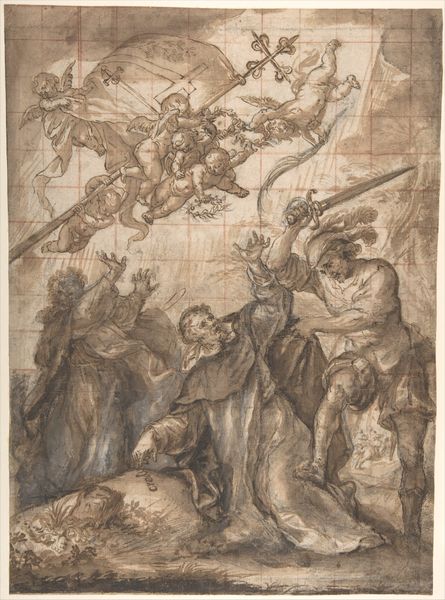
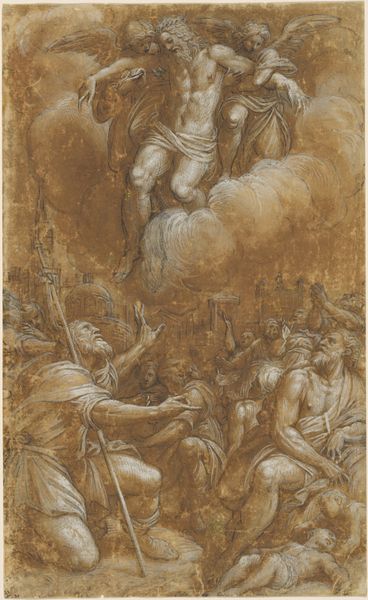
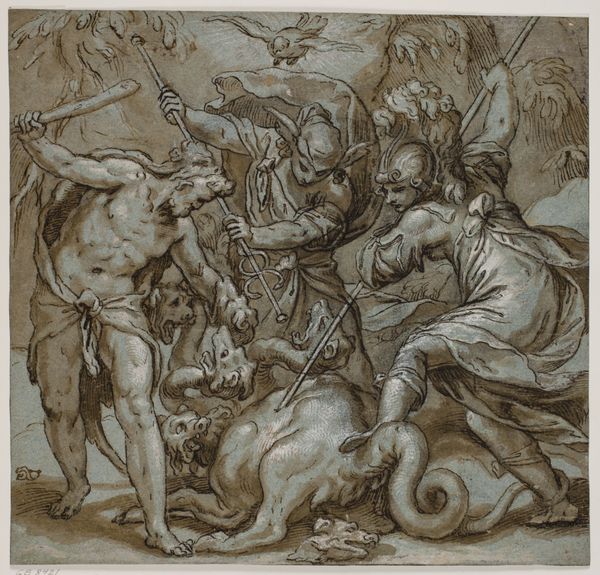
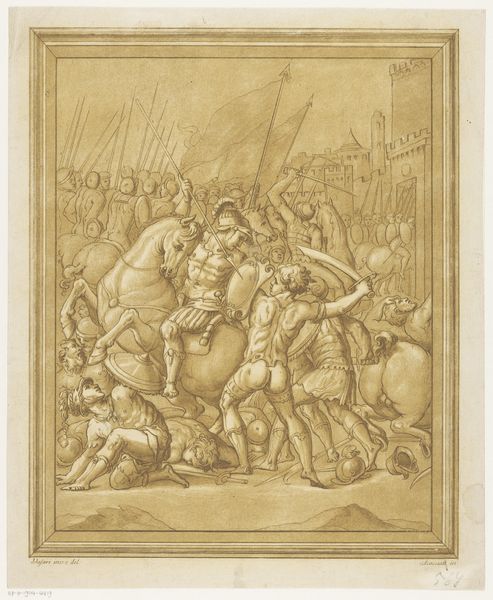
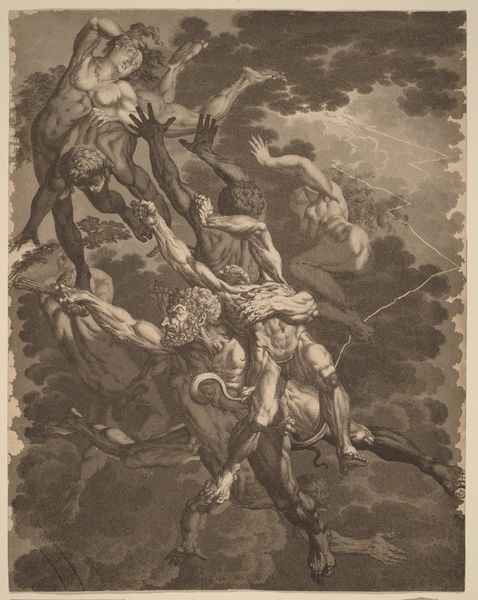
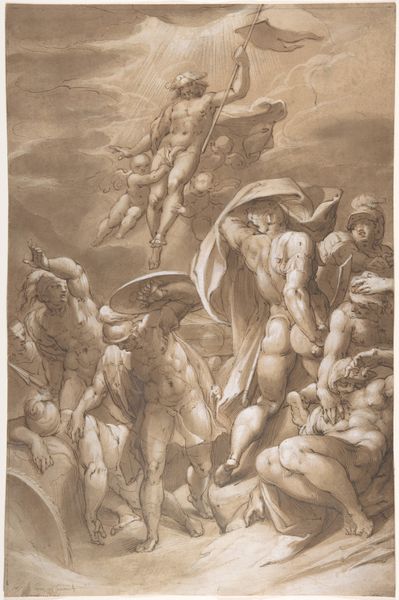
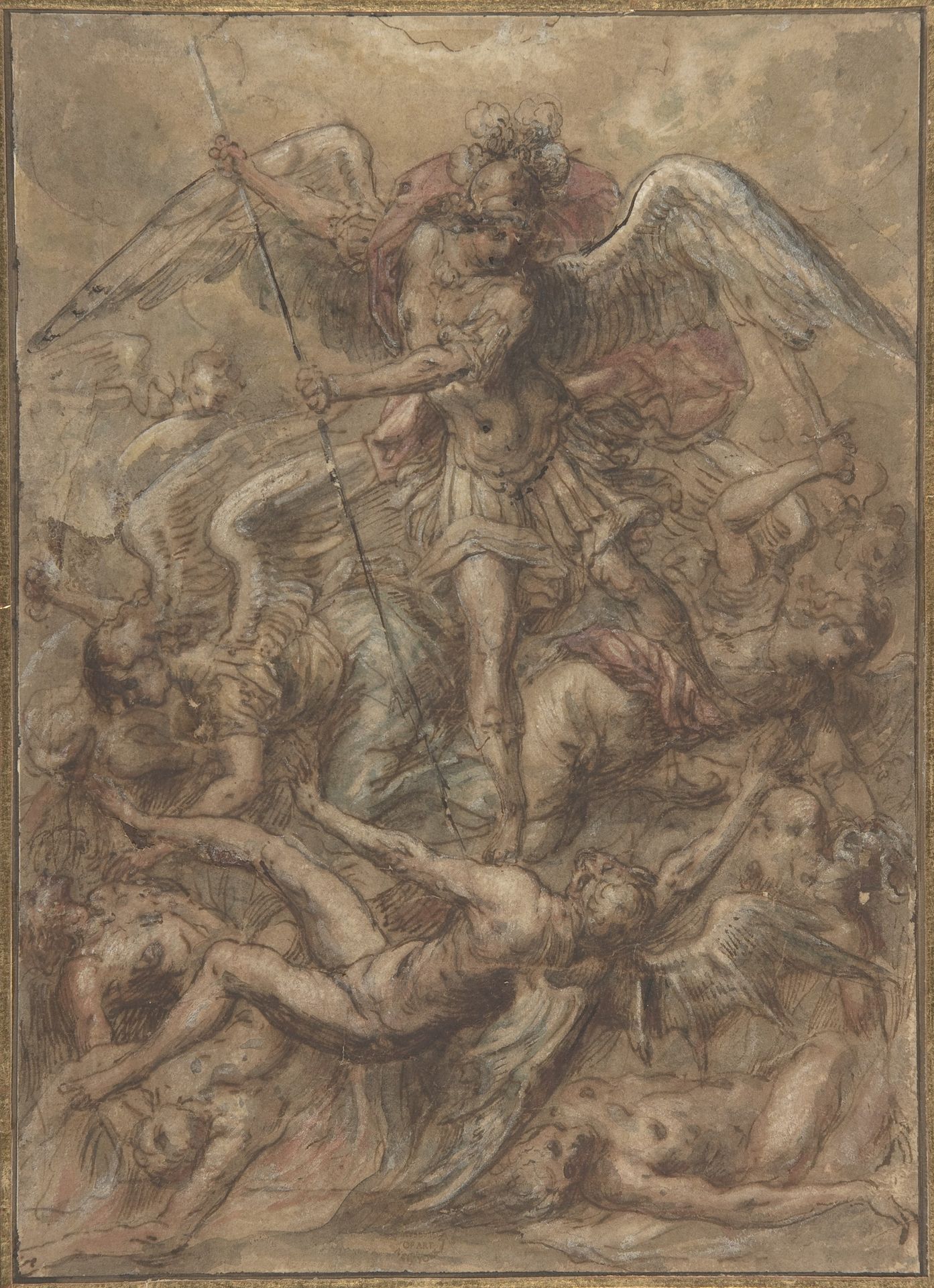
Editor: Here we have an ink and paper drawing called "Saint Michael Expelling the Fallen Angels," made sometime between 1500 and 1600 by an unknown artist. It's quite dynamic, with lots of figures swirling around. How do you interpret this work's symbolism? Curator: Well, consider Saint Michael, not just as a warrior, but as a potent symbol. What does the act of expulsion itself signify across different cultures and belief systems? Editor: I guess it’s about banishing negativity, evil being cast out...starting fresh? Curator: Precisely. Think about how light and darkness play into this. Michael, bathed in a hypothetical light, contrasted against the shadowed, falling figures. The battle between good and evil is more than a simple story; it's a continuous psychological drama. The symbolism resonates deeply within us. Does that contrast strike you as deliberate? Editor: Absolutely. It’s very clear that they're meant to be seen as opposites. But how does it fit into the art of the Renaissance, specifically? Curator: This echoes Mannerist ideals: dynamic compositions and heightened emotion. It invites viewers into the fray, asking them to contemplate where they stand in this timeless conflict. We are asked to consider whether these symbols have morphed through time or kept a cultural continuity from then to now. Editor: That's fascinating. I never thought about the viewer's position in the symbolism before. Curator: Understanding the symbolism shifts the art's weight – a visual encapsulation of humanity's ongoing moral struggles, and our place within it. Editor: That gives me a lot to consider moving forward!
Saint Michael Expelling the Fallen Angels
1500 - 1600


Artwork details
- Medium
- drawing, print, paper, ink
- Dimensions
- 10-1/16 x 7-5/16 in. (25.6 x 18.6 cm)
- Location
- Metropolitan Museum of Art, New York, NY
- Copyright
- Public Domain
Tags
Comments
Share your thoughts
About this artwork
Editor: Here we have an ink and paper drawing called "Saint Michael Expelling the Fallen Angels," made sometime between 1500 and 1600 by an unknown artist. It's quite dynamic, with lots of figures swirling around. How do you interpret this work's symbolism? Curator: Well, consider Saint Michael, not just as a warrior, but as a potent symbol. What does the act of expulsion itself signify across different cultures and belief systems? Editor: I guess it’s about banishing negativity, evil being cast out...starting fresh? Curator: Precisely. Think about how light and darkness play into this. Michael, bathed in a hypothetical light, contrasted against the shadowed, falling figures. The battle between good and evil is more than a simple story; it's a continuous psychological drama. The symbolism resonates deeply within us. Does that contrast strike you as deliberate? Editor: Absolutely. It’s very clear that they're meant to be seen as opposites. But how does it fit into the art of the Renaissance, specifically? Curator: This echoes Mannerist ideals: dynamic compositions and heightened emotion. It invites viewers into the fray, asking them to contemplate where they stand in this timeless conflict. We are asked to consider whether these symbols have morphed through time or kept a cultural continuity from then to now. Editor: That's fascinating. I never thought about the viewer's position in the symbolism before. Curator: Understanding the symbolism shifts the art's weight – a visual encapsulation of humanity's ongoing moral struggles, and our place within it. Editor: That gives me a lot to consider moving forward!
Comments
Share your thoughts