1596
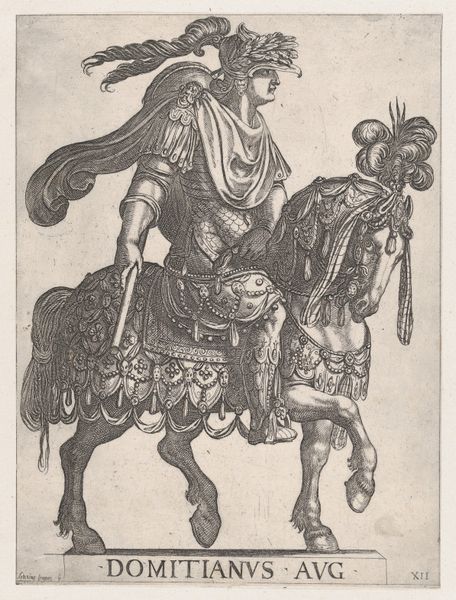
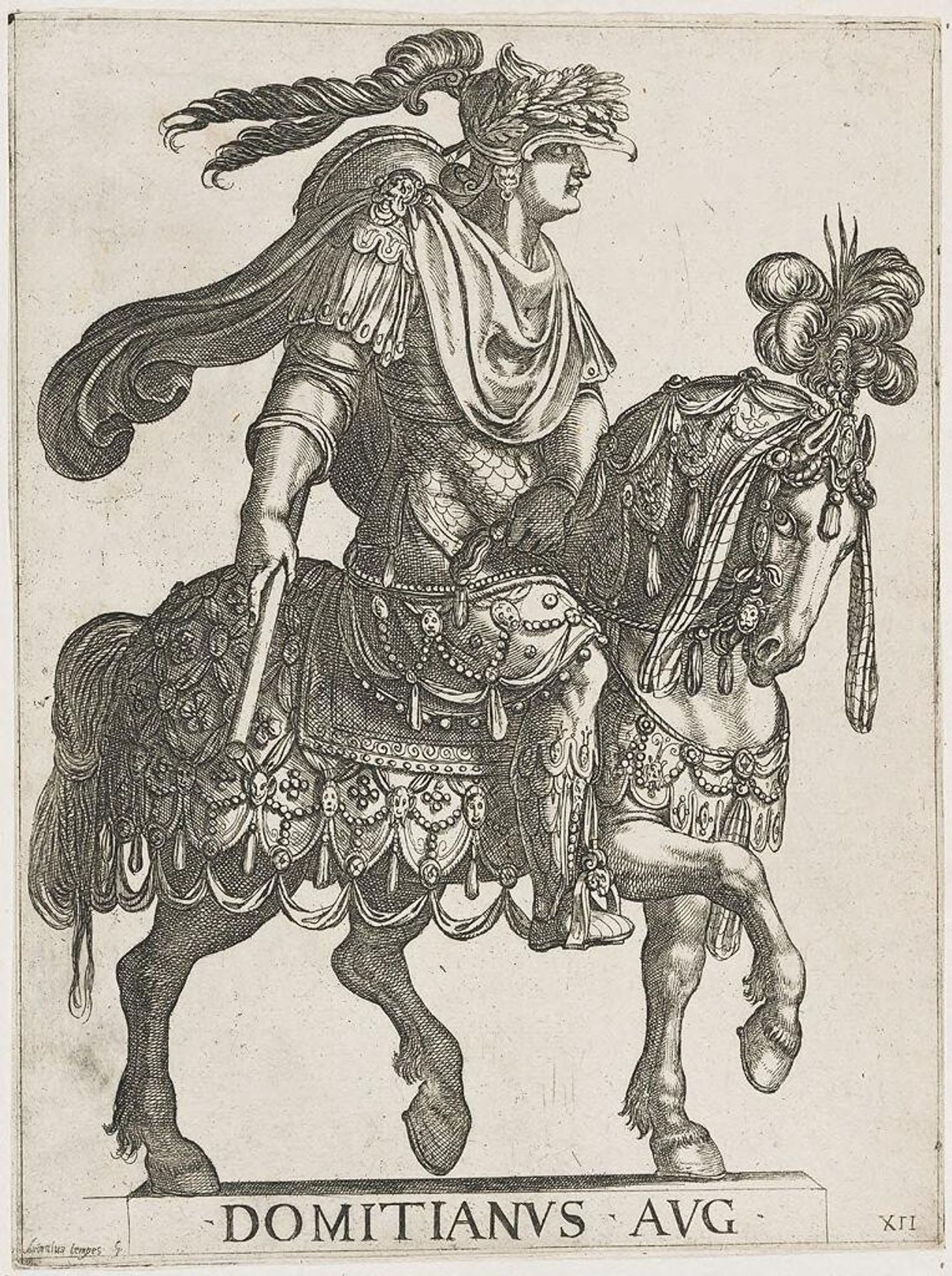
Emperor Domitian on Horseback


Listen to curator's interpretation
Curatorial notes
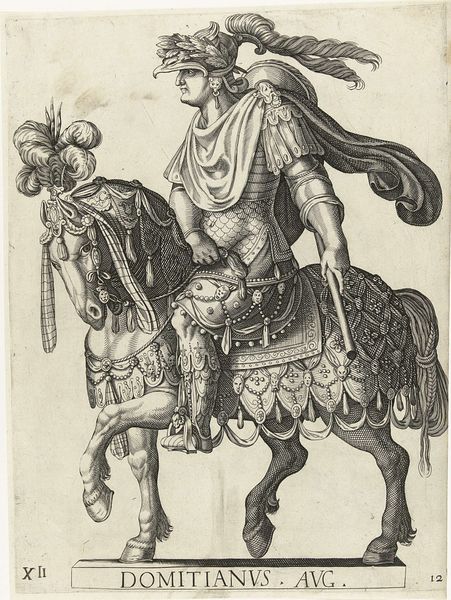
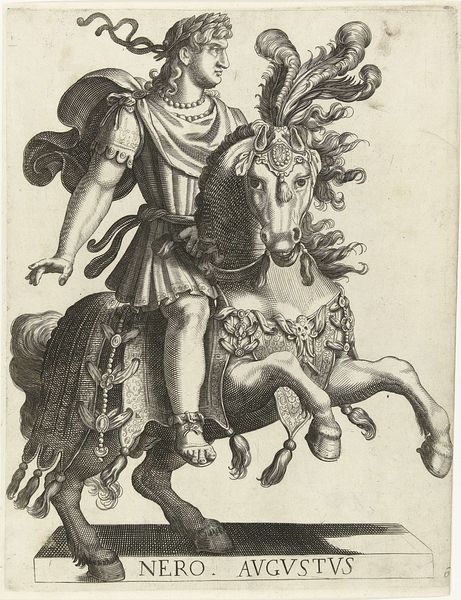
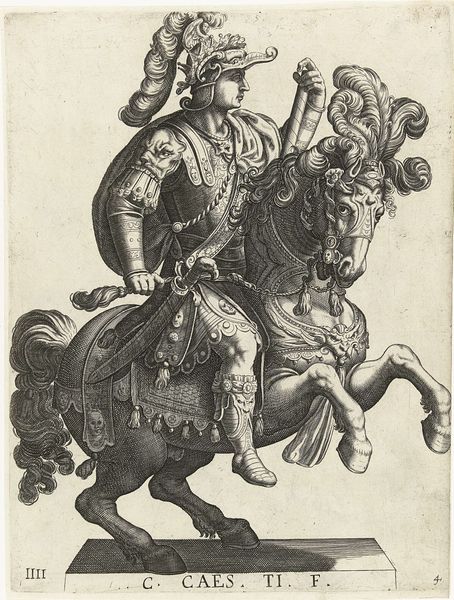
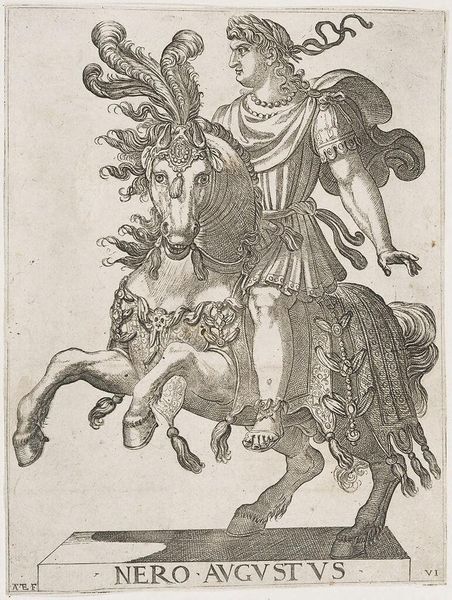
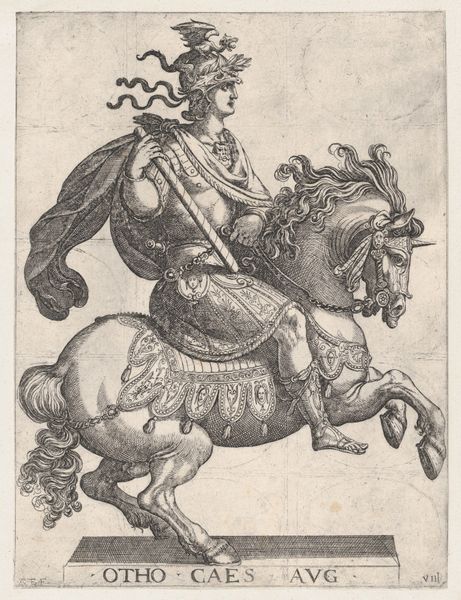
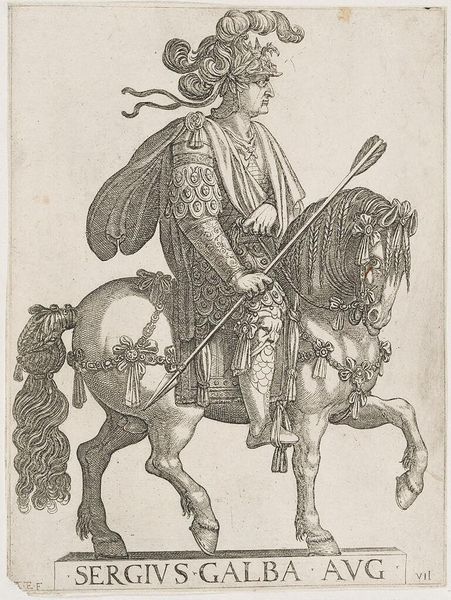
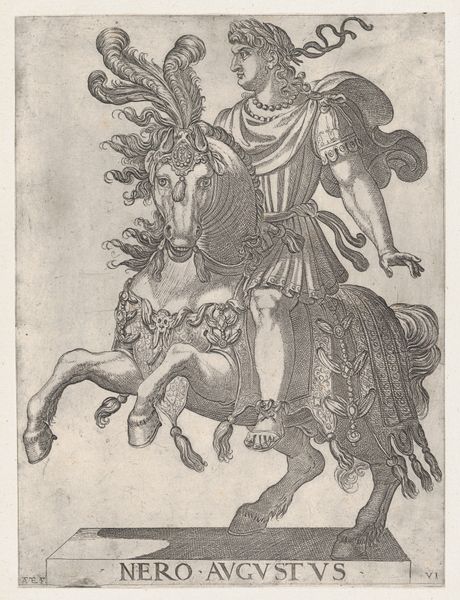
Curator: I'm struck by the density of detail in this print; it feels weighty, almost oppressive. Editor: Indeed. Here we have Antonio Tempesta's "Emperor Domitian on Horseback," a 16th-century engraving. Notice the profusion of ornamentation, the intricate rendering of armor and trappings. Curator: The visual language reads as pure power. Domitian is elevated, almost deified. The horse becomes an extension of his authority, every element reinforcing imperial dominance. Editor: Look at the lines! The meticulous cross-hatching builds form, but also creates a certain rigidity. The contrast is stark, enhancing the overall sense of grandeur. Curator: Equestrian portraits, throughout history, act as powerful symbols of rulership, connecting the ruler to the mythical and the divine. Domitian is being consciously placed within that visual lineage. Editor: The materiality of the print itself--the etched line, the paper--gives the image a certain permanence, echoing the emperor's ambition to leave a lasting mark. Curator: It's fascinating how Tempesta uses visual cues to project not only power, but a specific kind of imperial narrative, playing on deeply ingrained cultural associations. Editor: Agreed. Reflecting on Tempesta's choices allows us to decode the era's fascination with power, and its artistic manifestation.