


Curatorial notes
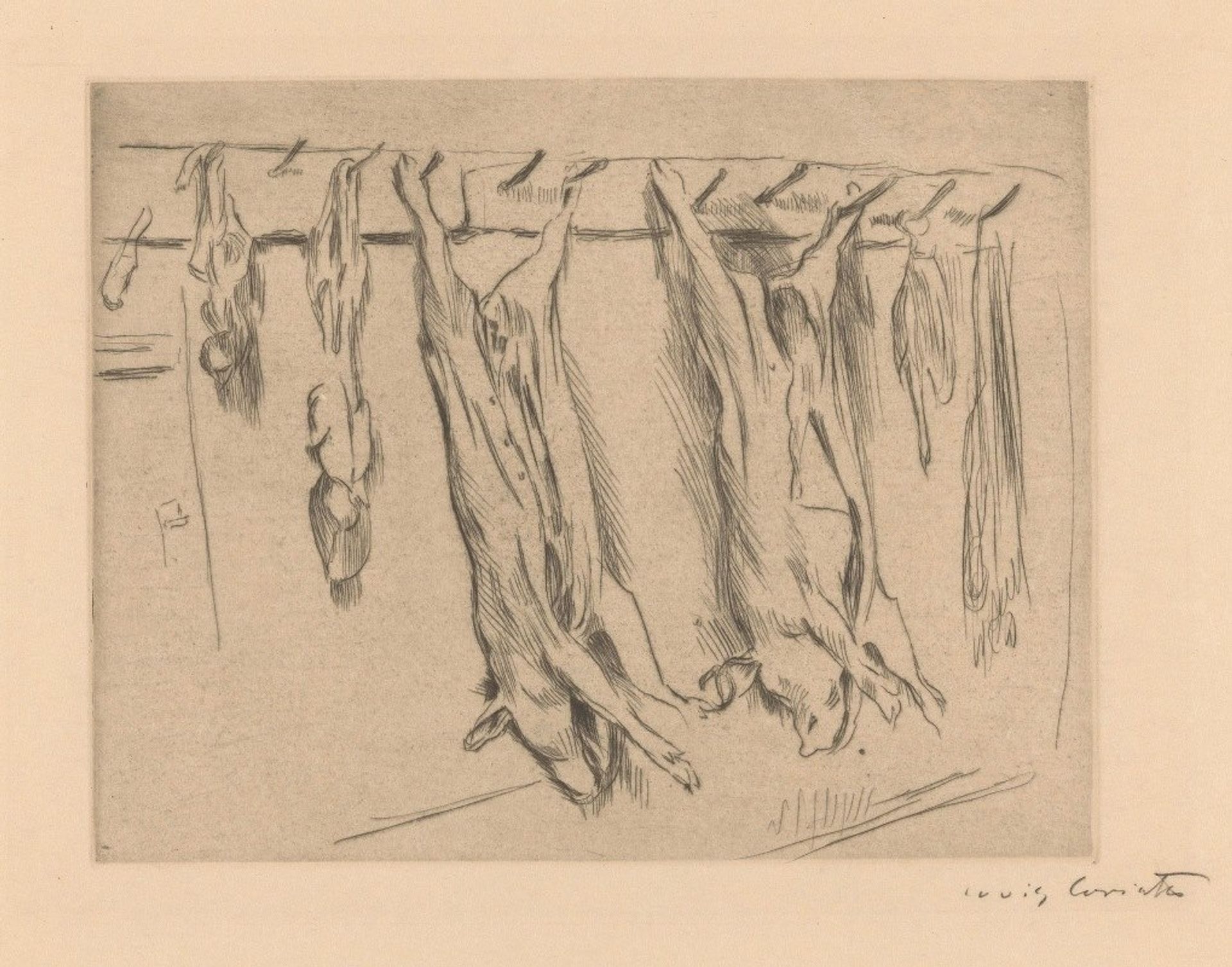
Curator: What a visceral print. I'm struck immediately by its graphic immediacy, so brutally stark. Editor: This is "Geslachte varkens," or "Slaughtered Pigs," an etching by Lovis Corinth. You know, beyond the obvious subject, I’m interested in what Corinth’s rendering signifies regarding labor and our relationship to the food chain. Curator: Note how the carcasses dominate the composition, their weight and volume described with stark lines. The foreshortening of the bodies forces us to confront the physicality of death head-on. Editor: The print medium is key here. The etching process allows for detailed rendering, mirroring the meticulous labor of butchering. See how the artist captures the textures: the slickness of the skin, the rendering of the flesh itself. It's not detached observation, it is deeply invested. Curator: But Corinth is after more than representation. The high contrast and energetic linework heighten the emotional impact, teetering, I'd say, between realism and German Expressionism. The use of such severe lines emphasizes the harsh reality of mortality. It is more about the stark contrasts than gruesome details. Editor: Perhaps, but let’s consider the intended audience. Corinth is not simply expressing a universal truth; he is engaging with the realities of production, distribution and consumption. These carcasses are destined for someone's table. It forces us to confront where our dinner comes from. Curator: Fair point. This is indeed about raw emotions materialized through lines, light, and shadow to create an impactful visual statement on the brutality, fragility, and rawness of life. Editor: Agreed. Considering it as material reality makes the piece both confrontational and surprisingly moving. It acknowledges the labor, death, and processes so often rendered invisible.