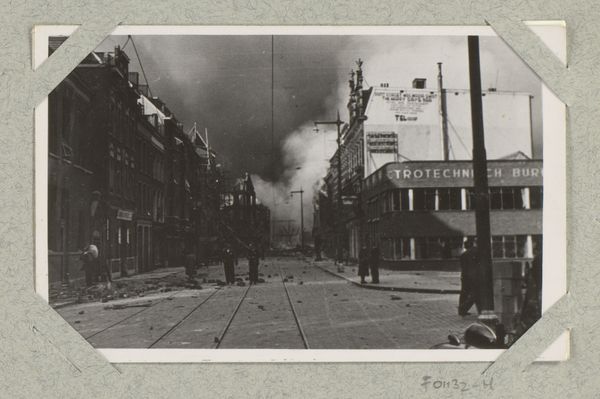
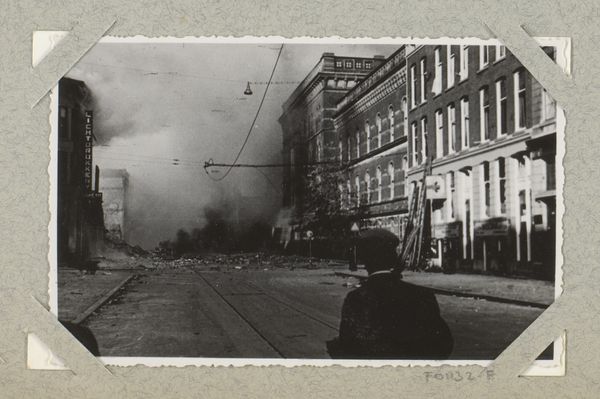
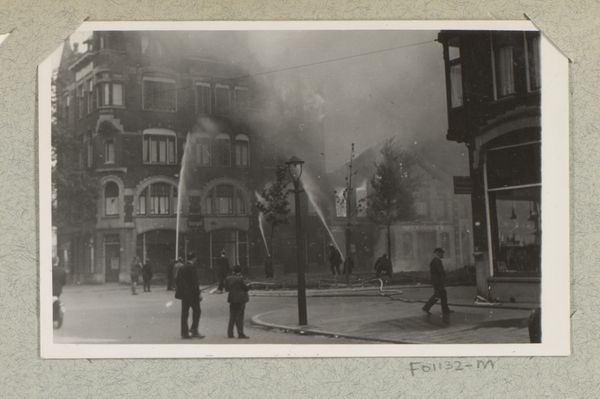
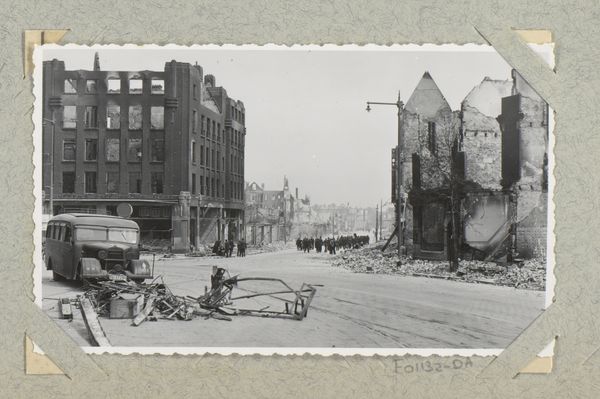
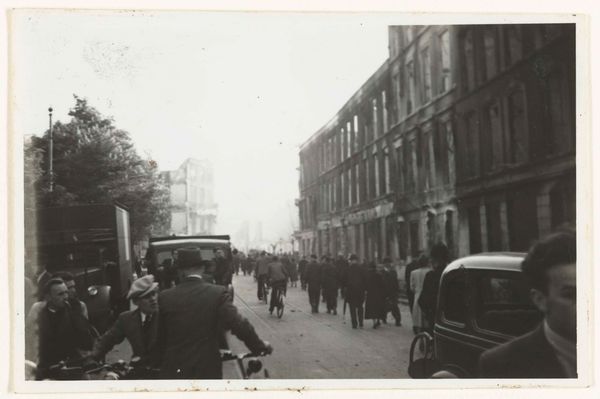
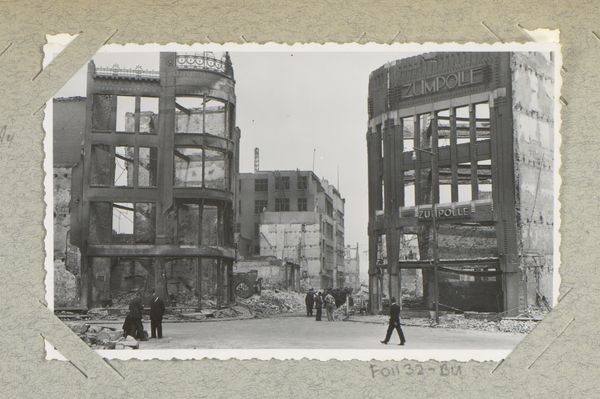
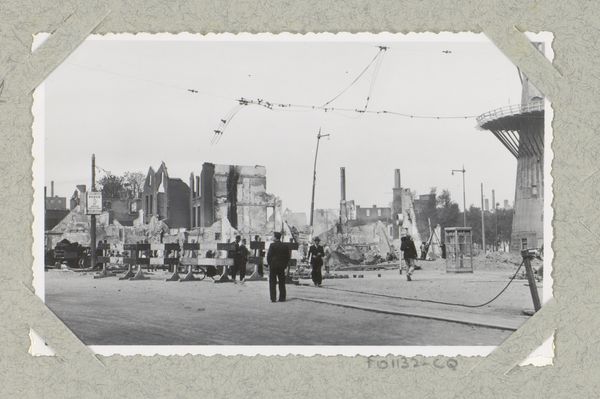
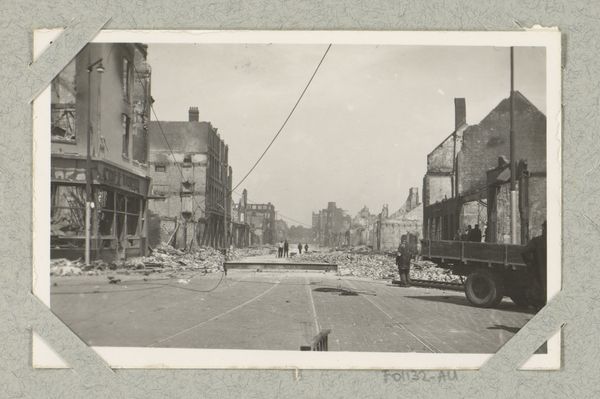
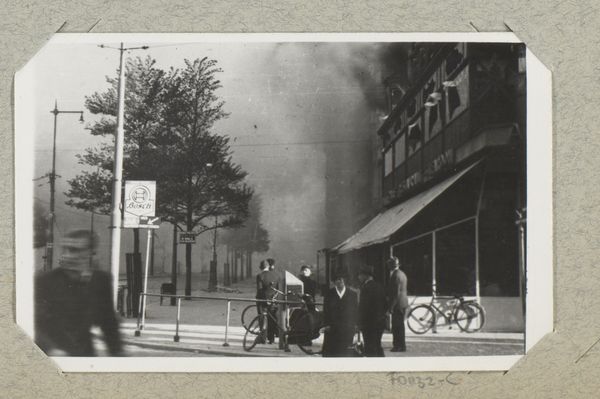
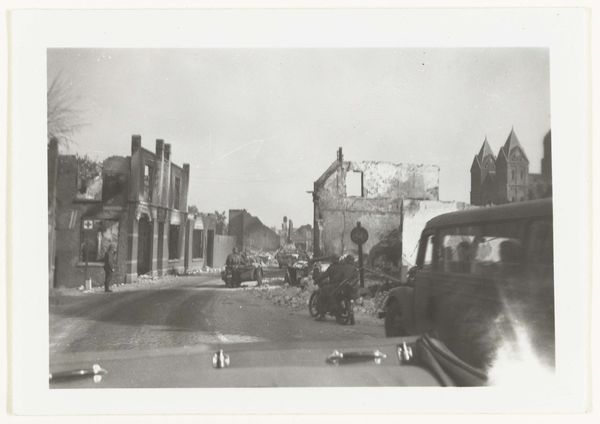
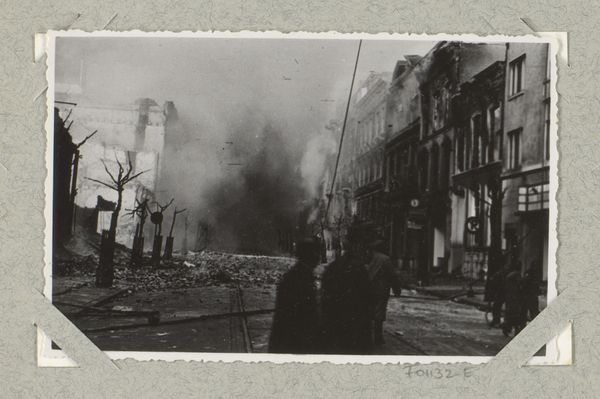
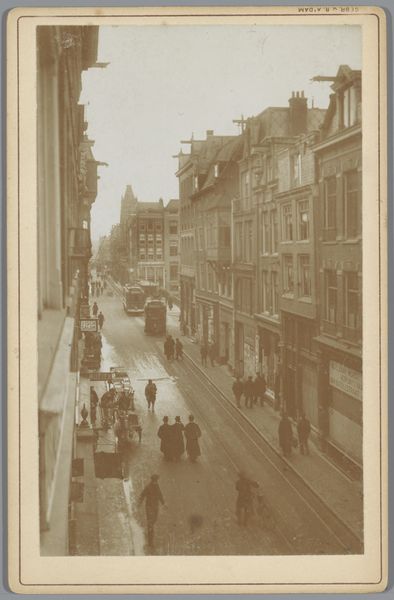
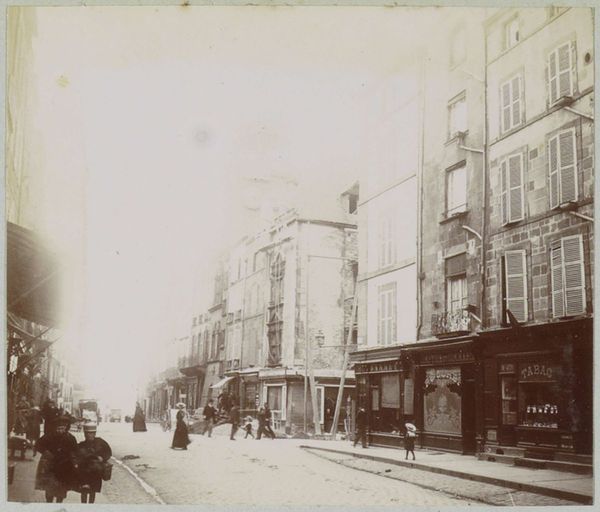
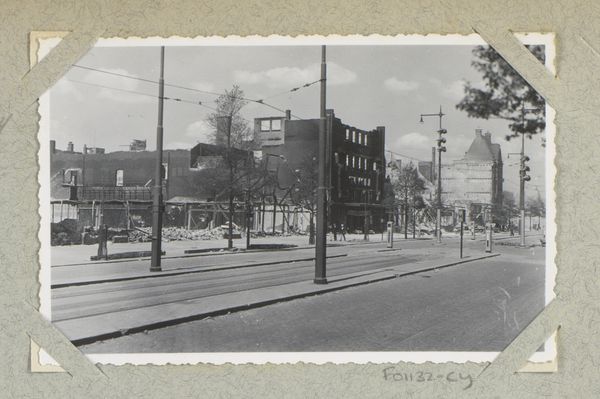
Personen kijken naar rookwolken in de Van Oldebarneveltstraat te Rotterdam c. 1940 - 1945
0:00
0:00

photography
#
photography
#
cityscape
#
street
#
realism
Dimensions: height 89 mm, width 140 mm
Copyright: Rijks Museum: Open Domain
Editor: This photograph, “Personen kijken naar rookwolken in de Van Oldebarneveltstraat te Rotterdam,” taken by J. Nolte sometime between 1940 and 1945, shows a streetscape filled with onlookers gazing at plumes of smoke. There’s a somber, almost surreal quality to it. How do you interpret this work, given the period it was created? Curator: The power of this image lies in its stark depiction of everyday life amidst extraordinary circumstances. The photograph captures a moment of collective trauma and resilience. Look at the composition, how the smoke divides the sky. What could the people looking signify for you? Editor: A sense of helplessness, maybe? Like passive witnesses to a tragedy unfolding. Curator: Precisely. It reflects the psychological impact of war on civilians. Nolte subtly critiques the limitations of individual agency in the face of overwhelming historical forces, showing a very gendered public. In times of crisis, the roles people play shift in function of cultural power structures and expectation. Editor: It's fascinating how a seemingly simple street scene can speak to larger themes of identity and politics. It makes me consider the stories behind each of those figures in the crowd. Curator: Exactly. Consider the racial and gendered narratives at play. The photographer includes details like the types of cars, maybe signifying economic disparities, alongside the ever-present sign of war: smoke. Photography is documentation, and a selection; what do you make of that? Editor: The photographer selected what to leave *in* the picture. Thank you for your thoughts on how to interpret art in the light of history and cultural theory; there’s more here than meets the eye. Curator: Indeed. Understanding context helps us to unveil not just what is represented, but whose perspectives are privileged and whose are silenced within historical narratives.
Comments
No comments
Be the first to comment and join the conversation on the ultimate creative platform.
 Collect
 React
React Comment
More like this