drawing, print, etching, paper, graphite
#
drawing
# print
#
etching
#
landscape
#
paper
#
romanticism
#
water
#
graphite
Dimensions: 100 × 200 mm
Copyright: Public Domain
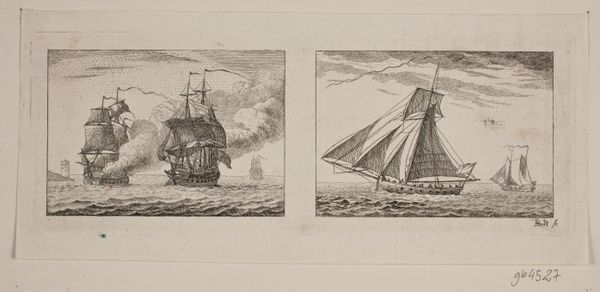
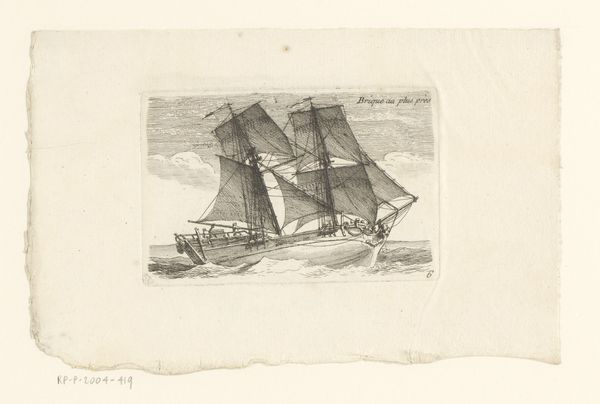
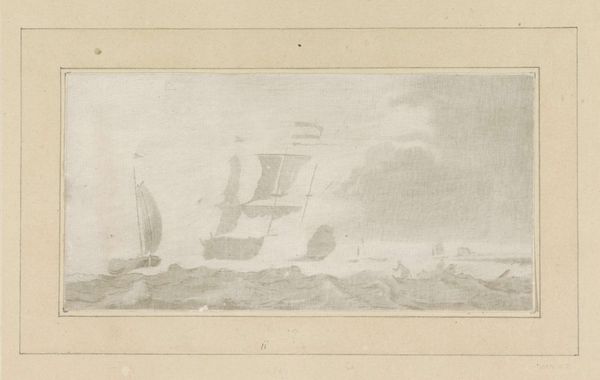
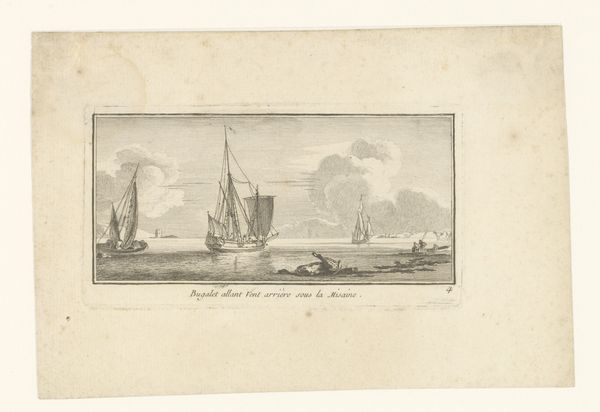
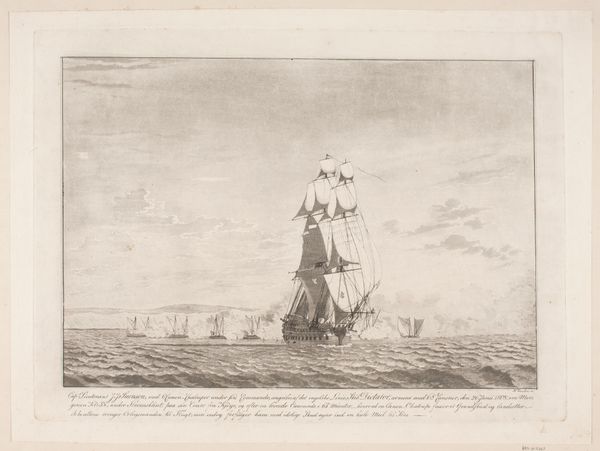
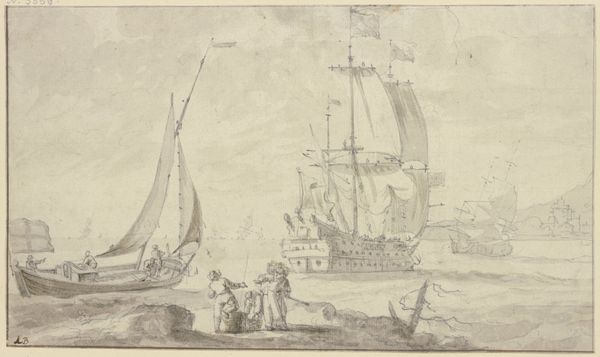
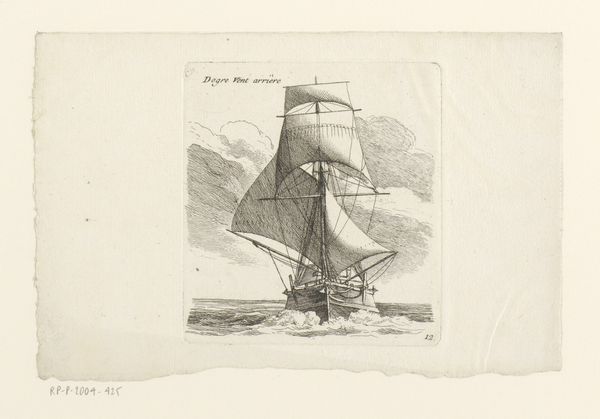
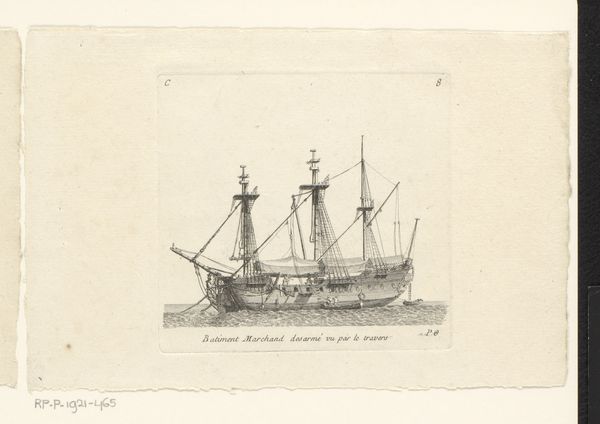
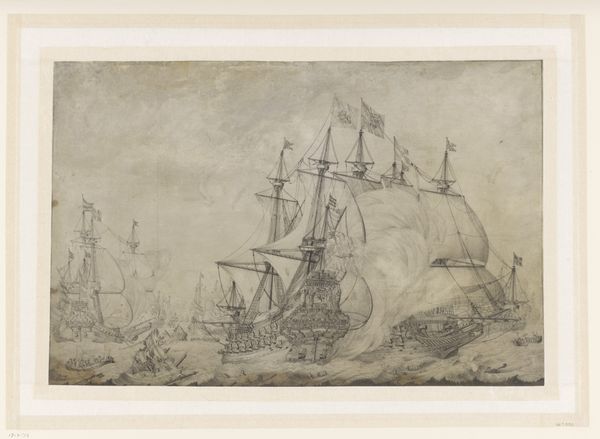
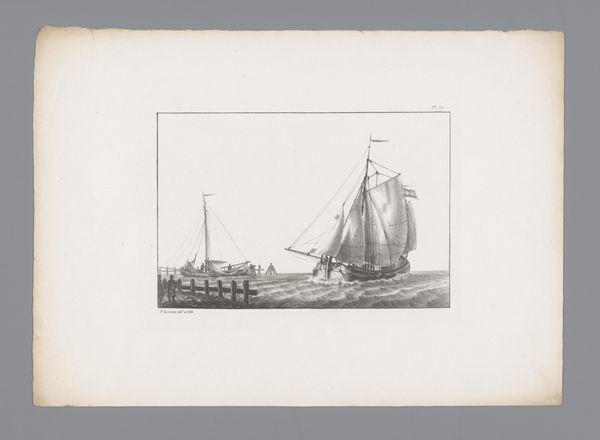
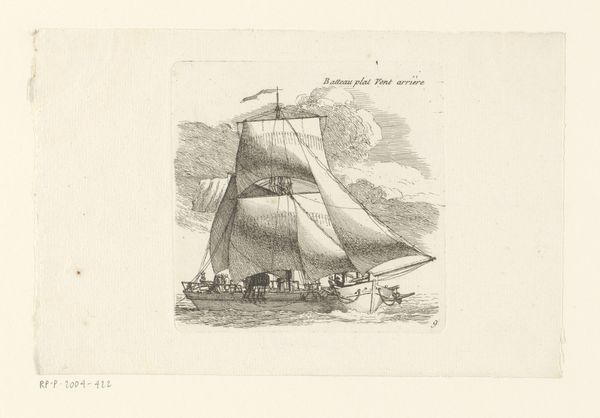
Curator: Let's consider this print by Charles Meryon, created around 1839, appropriately titled "Shipwreck." It’s an etching in graphite on paper and it is currently housed right here at the Art Institute. Editor: Bleak! I mean, instantly I feel this chill. It's so delicately rendered, all these swirling lines—yet, they create such a sense of despair. Look at those waves! The ship feels utterly lost, almost consumed. Curator: Precisely! Meryon captures that Romantic fascination with the power of nature. The "Shipwreck" uses etching to great effect. It emphasizes line work, producing all of those textures, from the frothy waves to the subtle shading in the sky, creating an atmospheric effect. It's almost dreamlike, no? Editor: And what about that strange little island hovering above the scene? Is that some kind of wishful thinking, or maybe a commentary on isolation amidst this industrial feat, the ship? A kind of absurd touch, really. Also the use of graphite, I find it very grounded despite this dreamy quality you talk about, a grounding due to the laborious nature of creating those textures using that material. Curator: A fascinating point! I would say Meryon, at least from my point of view, is questioning humanity's hubris in trying to dominate the natural world. That island, to me, serves as the idealised form which this ship longs to reach. However, it never quite gets there. Editor: I appreciate your reading of the island being an ideal. This technique highlights the physical process—laborious layering of lines to depict the emotional turmoil and material consequences of seafaring ambitions and ship wrecks in particular. One that speaks of mass production within a maritime ecosystem. Curator: Absolutely, the etching is such a painstaking medium that it mirrors the long process of building ships, and also highlights their relative vulnerability. The island, in the upper part of the frame seems so unreachable from the ship: Meryon seems to indicate something about aspiration itself. An attempt to reach an emotional paradise despite industrial advancement. Editor: Paradise just beyond grasp. Right! So while Meryon captures emotional and material labor through line and form, for me it's his technical skill, in these mediums, layering emotion and meaning—or at least beckons us to consider our own aspirations in a period of enormous industrial change and, perhaps now again.
Comments
No comments
Be the first to comment and join the conversation on the ultimate creative platform.
 Collect
 React
React Comment
More like this