

1839
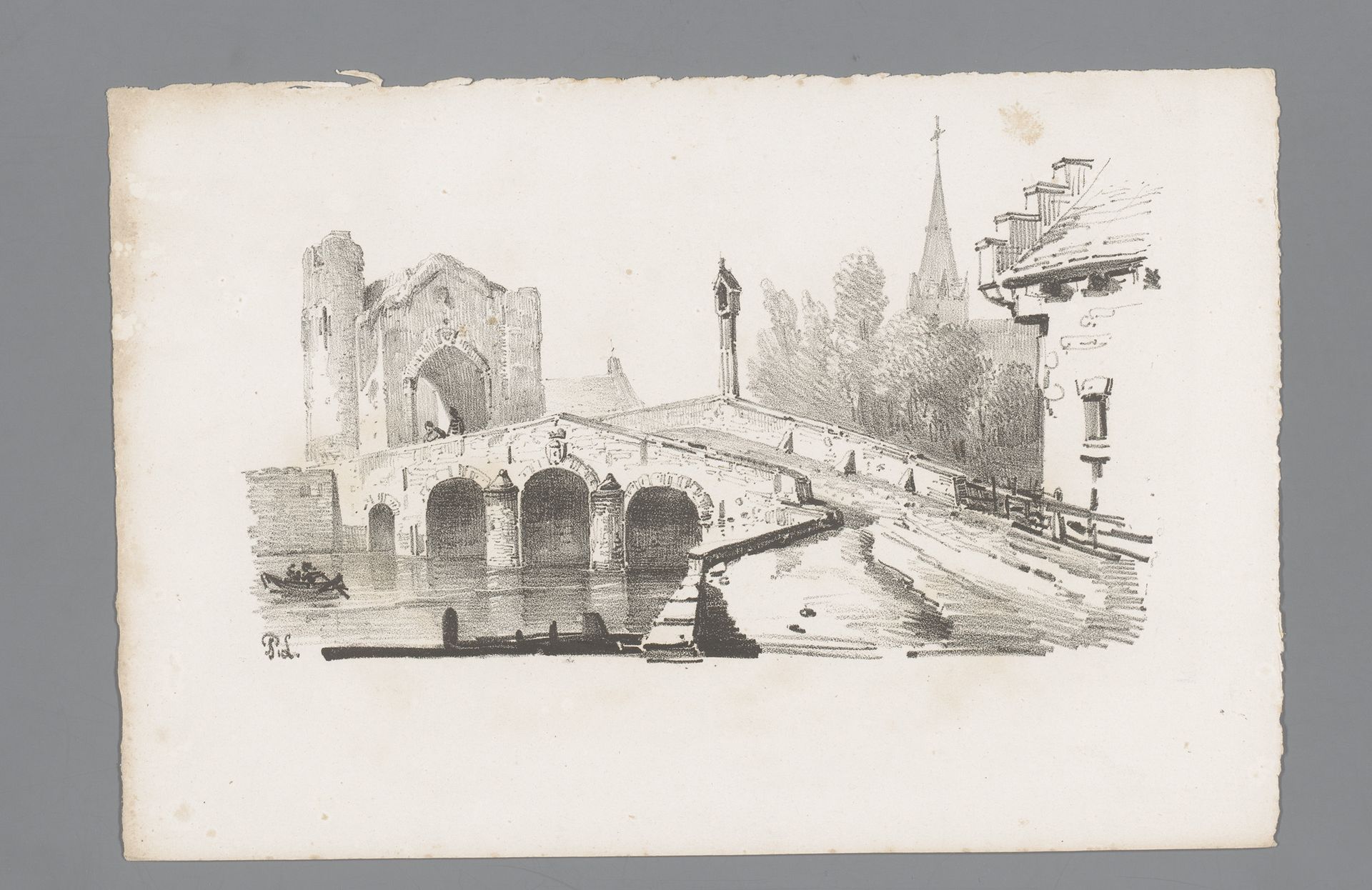
Gezicht op een brug met poort, op de achtergrond een kerk

Paulus Lauters
1806 - 1875Location
RijksmuseumListen to curator's interpretation
Curatorial notes
Curator: Editor: This drawing, "Gezicht op een brug met poort, op de achtergrond een kerk" by Paulus Lauters, from 1839, is quite detailed despite being just ink on paper. The buildings are beautifully rendered. How do you interpret this work? Curator: It’s fascinating to consider the means of production here. Ink drawings like these weren’t just artistic expressions, they were a form of visual record. Lauters's labor—his choice of ink, the quality of the paper, the meticulous mark-making—it all points to a specific relationship to the depicted environment. Editor: So you’re focusing on the physical aspects? The making of the piece and what it means? Curator: Exactly. Consider the social context. This wasn't mass production; this was an individual, painstakingly recreating a scene, which likely held some value – touristic, perhaps? - for the burgeoning middle class that consumed these images. The "realism" tag highlights an attention to material detail, inviting viewers to consider their own place in that visual landscape, and how this image then, and still now, circulates in society as a cultural artifact. How do you feel about that assessment? Editor: I see what you mean. It becomes more than just a pretty landscape; it becomes an artifact reflecting a particular society's values. Curator: Precisely. Think about the labor involved versus the ease of taking a photograph today. It emphasizes the shift in artistic creation and how our relationship to images and the depicted landscape has changed because of materiality and processes. Editor: That’s really interesting. I'll definitely be thinking about the materiality of artworks differently from now on. Curator: It offers another avenue into appreciation and understanding the cultural context, moving beyond the image itself into the modes of production and consumption that shape how we see.