print, graphite, engraving
#
portrait
# print
#
pencil drawing
#
graphite
#
history-painting
#
engraving
#
realism
Dimensions: height 390 mm, width 291 mm
Copyright: Rijks Museum: Open Domain
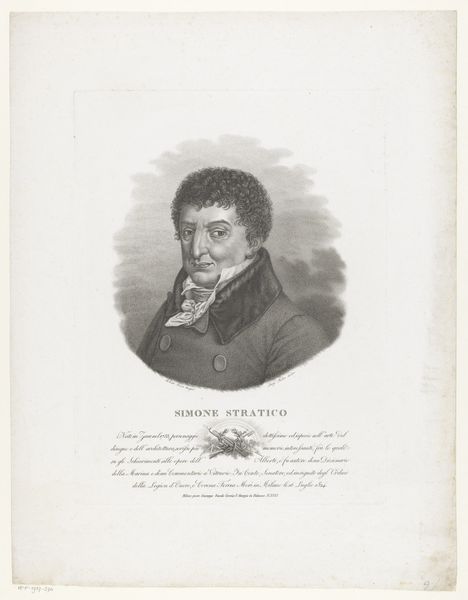
Curator: What a stern countenance! The high contrast between the subject and soft, smoky background lends the figure an air of seriousness and importance. Editor: Indeed. This is a print entitled "Portret van Luigi Valentino Brugnatelli," dating somewhere between 1783 and 1840. The work, created by Luigi Rados, employs graphite and engraving. We should examine the historical context of its production more closely. Curator: Let us consider first the formal elements. Note the exquisite tonal gradations Rados achieves, especially within the swirling fog surrounding Brugnatelli's head. This delicate treatment focuses attention squarely on the face, its volumes so skillfully rendered. Editor: And what does that face tell us? Beyond artistic skill, we see a representation of power and intellect. Consider who Brugnatelli was - a professor of chemistry at the University of Pavia, a significant figure of his time. How does this portrait function as a historical document that presents him and perhaps reinforces a social hierarchy? Curator: Of course, the representation served a purpose, but look how Rados uses light and shadow to define Brugnatelli's features, creating a palpable sense of presence and depth. Observe, too, the texture of the coat, achieved through masterful engraving. The texture adds visual weight, solidifying the sitter's image. Editor: This emphasis on “presence and depth,” to what end does that contribute to an interpretation of the print? And while technical skill is clearly present, we can't ignore the role portraiture played in immortalizing and celebrating men of science during that period, usually excluding those who might contribute to his accomplishments yet who exist on the margins. Where is their visual representation? Curator: That's a compelling point about representation. But the formal choices – the composition, the rendering of light – those are essential components contributing to the artwork’s aesthetic force, its impact upon the viewer regardless of subject matter or societal context. Editor: Perhaps the formal execution adds value and visual cues to our cultural understanding of power as presented by society, in this case how an educated man is depicted. This piece sparks essential considerations about who holds positions of authority and how they’re remembered. Curator: Well, it's given me new perspectives to consider when observing a work, thank you. Editor: As with any visual text from the past, seeing this portrait requires acknowledging its place within history and present-day relevance.
Comments
No comments
Be the first to comment and join the conversation on the ultimate creative platform.
 Collect
 React
React Comment
More like this