1597
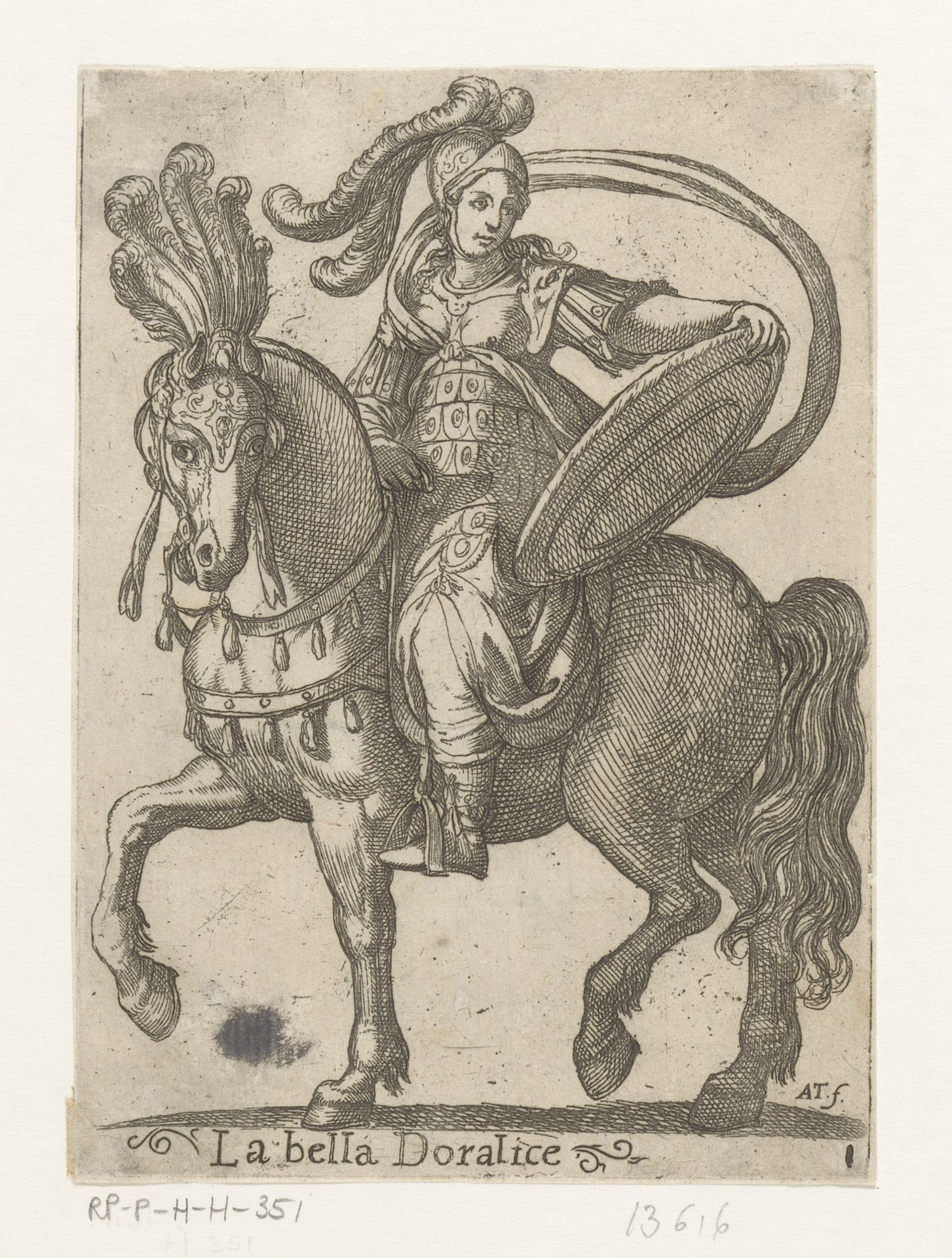
Doralice te paard

Antonio Tempesta
1555 - 1630Location
RijksmuseumListen to curator's interpretation
Curatorial notes
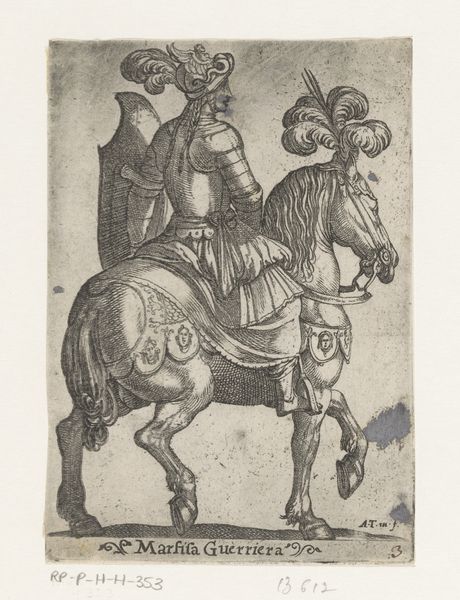
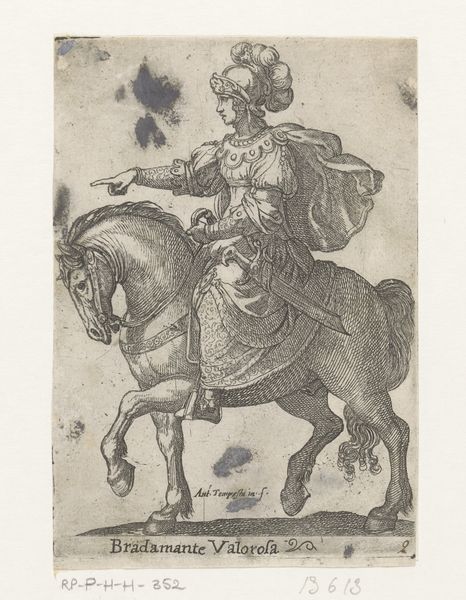
This print by Antonio Tempesta, made around the turn of the 17th century, depicts Doralice, a beautiful woman on horseback, armed for battle. The horse itself, adorned with plumes, is a symbol of nobility and power, harking back to classical equestrian statues of emperors and gods. Consider the shield Doralice carries: a protective device, but also a symbol of identity and status. In antiquity, shields bore emblematic images, acting as a visual representation of the bearer's lineage and allegiances. Think of Achilles’ shield in Homer's "Iliad", forged by Hephaestus, and charged with cosmological significance. This motif of the shield reappears throughout history, evolving from a practical piece of armor to a potent symbol of personal and collective identity. In the Renaissance, it morphed into elaborate displays of heraldry, embodying a complex system of social and cultural meanings. The image of Doralice evokes a sense of the eternal feminine, armed and ready, a recurring figure that continues to inspire and challenge our understanding of power and beauty. This image reminds us that symbols are never static; they are constantly being reinterpreted.