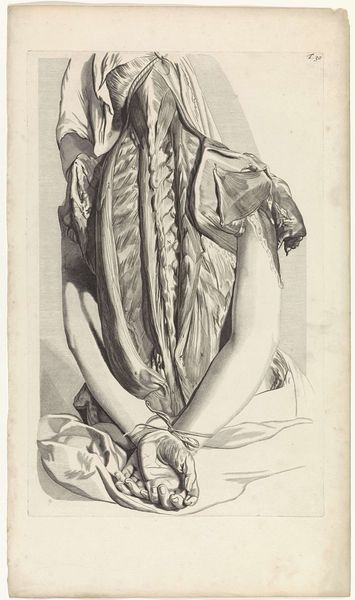
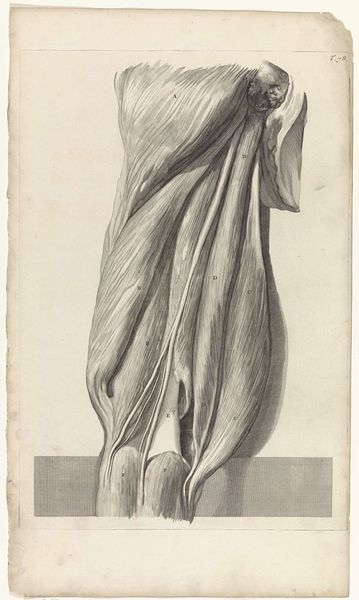
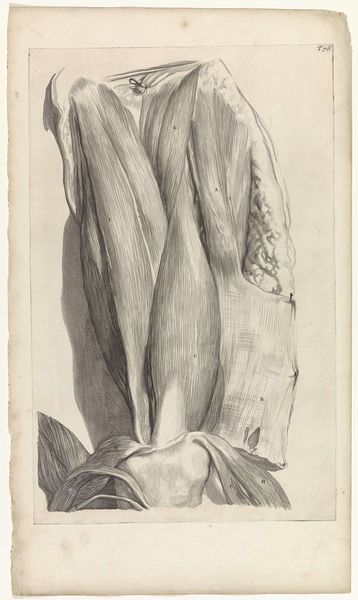
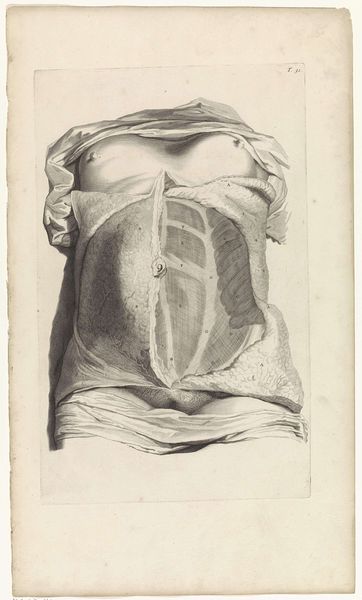
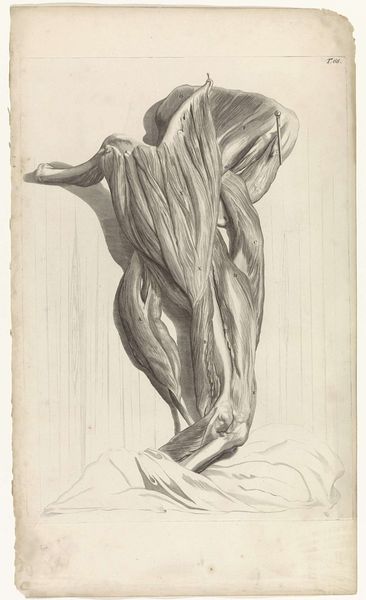
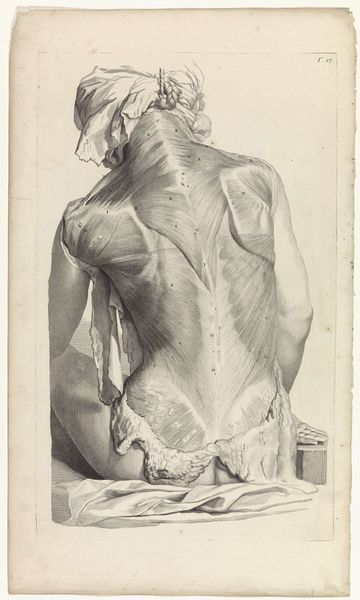
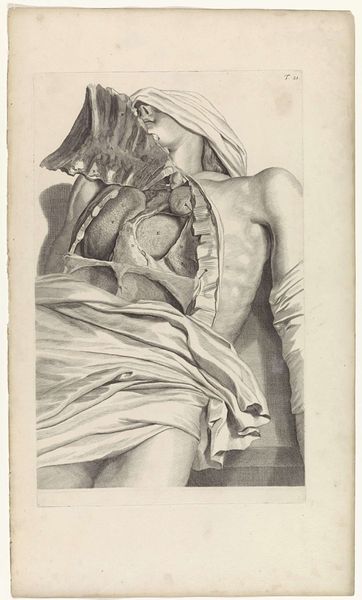
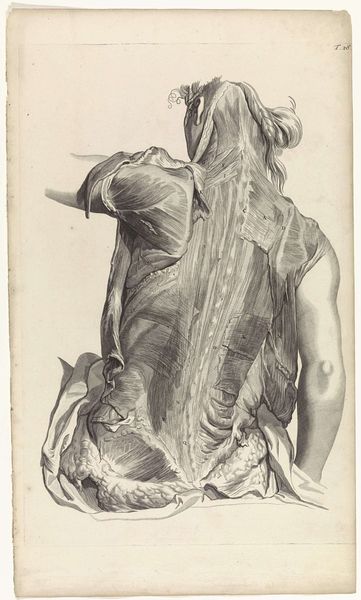
Tweede anatomische studie van de spieren van de rug en de bovenarmen van een vrouw 1685
0:00
0:00

pietervangunst
Rijksmuseum
drawing, pencil
#
drawing
#
baroque
#
figuration
#
pencil drawing
#
pencil
#
history-painting
#
nude
Dimensions: width 317 mm, height 488 mm
Copyright: Rijks Museum: Open Domain
Pieter van Gunst created this anatomical study of a woman's back and arms, rendered with meticulous detail. The exposed musculature evokes a sense of vulnerability, yet it's presented within a scientific context. The depiction of the flayed body can be traced back to ancient depictions of martyrdom, or even sacrificial rites, where the body is offered up for scrutiny, for knowledge, for some higher cause. Think of Saint Bartholomew, often shown holding his own flayed skin, a potent symbol of transformation. Here, this motif is transmuted into a tool for medical understanding. While seemingly clinical, the image taps into deeper, perhaps subconscious anxieties around mortality and bodily integrity. The tradition of anatomical drawings, evolving from the Renaissance fascination with classical forms, has served as a reminder of the fragile boundary between life and death. This detailed rendering of human anatomy encourages viewers to confront the body's inner workings, stirring both intellectual curiosity and a primal awareness of our corporeal existence.
Comments
No comments
Be the first to comment and join the conversation on the ultimate creative platform.
 Collect
 React
React Comment
More like this