1575 - 1607
Pluto en Proserpina

Hendrick Goltzius
1558 - 1617Location
RijksmuseumListen to curator's interpretation
Curatorial notes
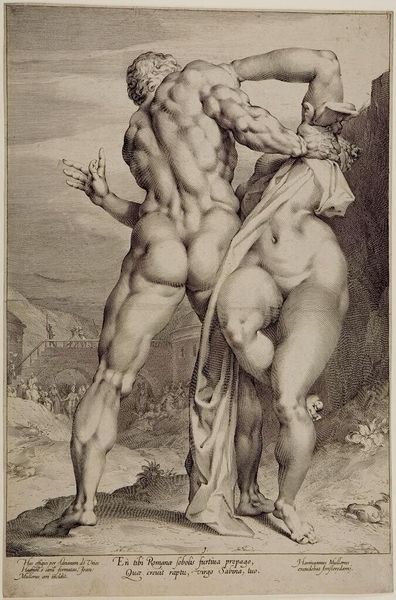
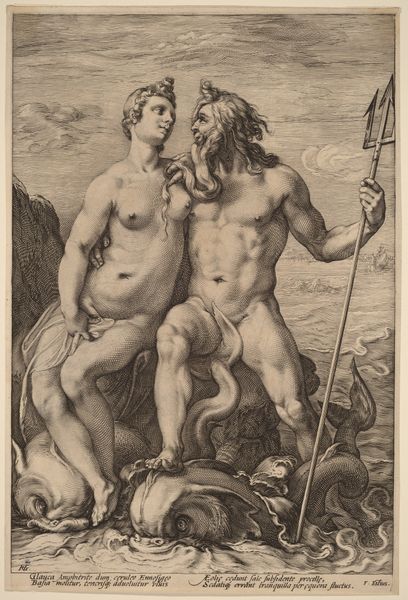
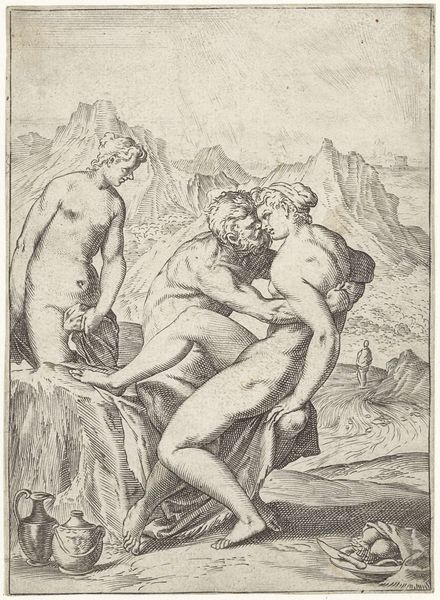
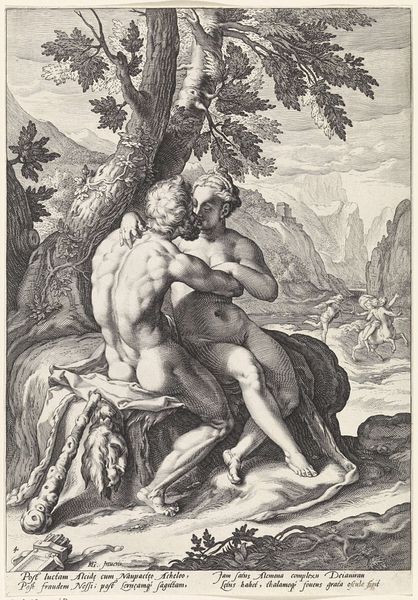
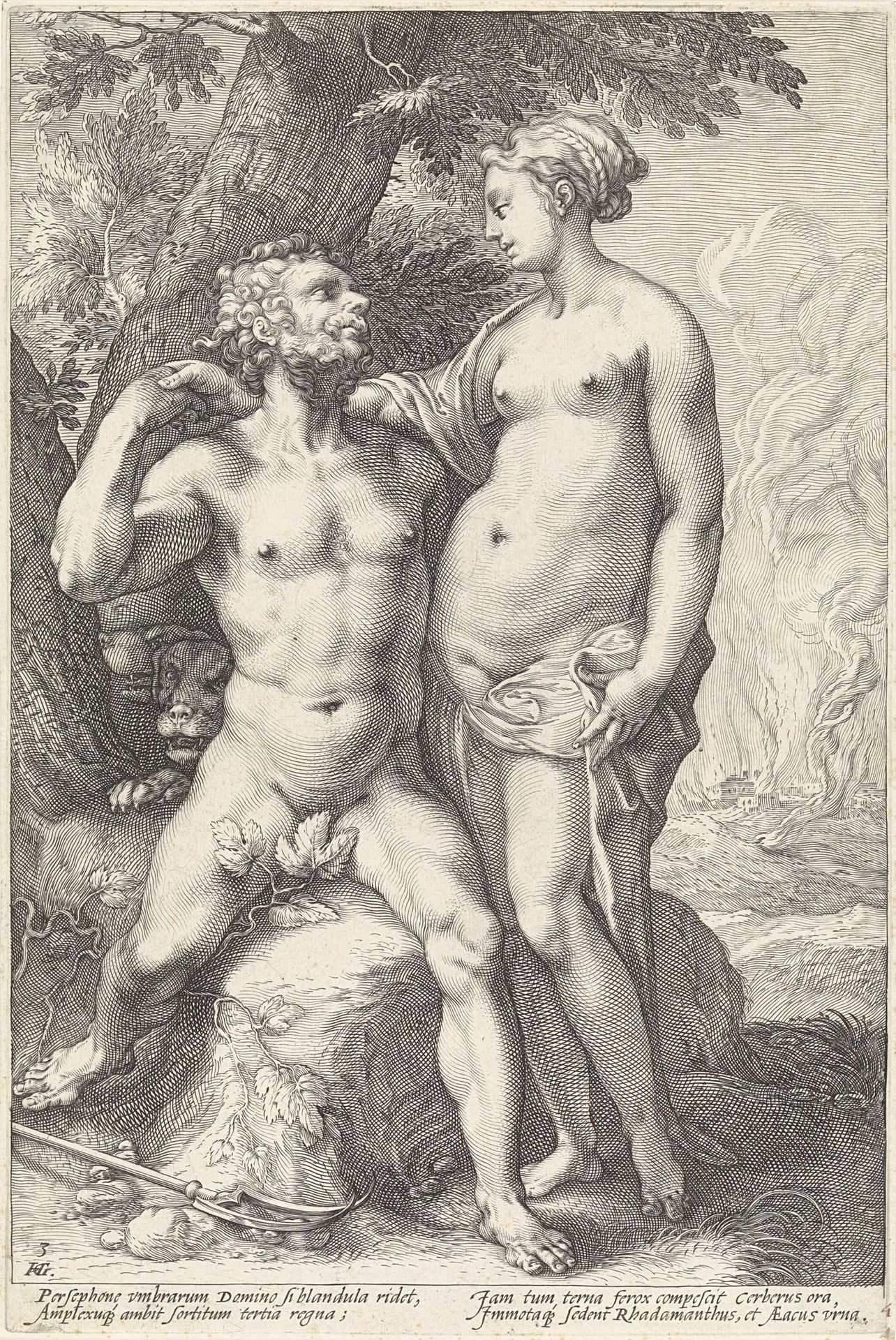
Hendrick Goltzius created "Pluto en Proserpina," using engraving techniques. The composition captivates with a balanced yet dynamic arrangement. Pluto, the muscular god, sits on a craggy rock, his hand assertively placed on Proserpina’s shoulder, who stands tall in contrast. The tension between captivity and reluctant compliance is palpable. Goltzius masterfully employs the use of light and shadow to model the figures, enhancing their three-dimensionality. Notice the intricate details of the musculature and drapery, achieved through precise and dense cross-hatching. This method is not merely decorative; it functions to accentuate the emotional intensity of the abduction. The print is structured by the interplay of classical mythology and the artist's technical prowess. The visual drama underscores a narrative about power and subjugation, challenging us to consider how these themes play out through the visual language of form and composition. By examining the formal qualities, we can understand how Goltzius uses art to grapple with complex ethical and philosophical questions about destiny, choice, and the gaze.