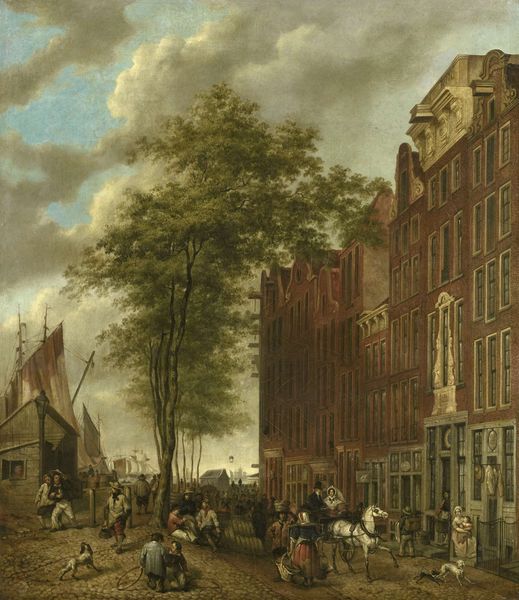
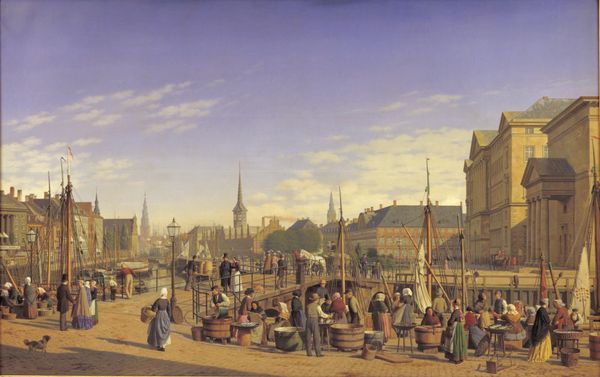
Dimensions: height 60 cm, width 74 cm
Copyright: Rijks Museum: Open Domain
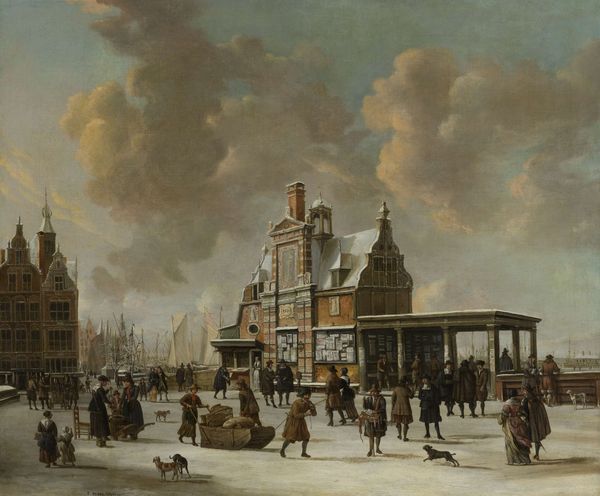
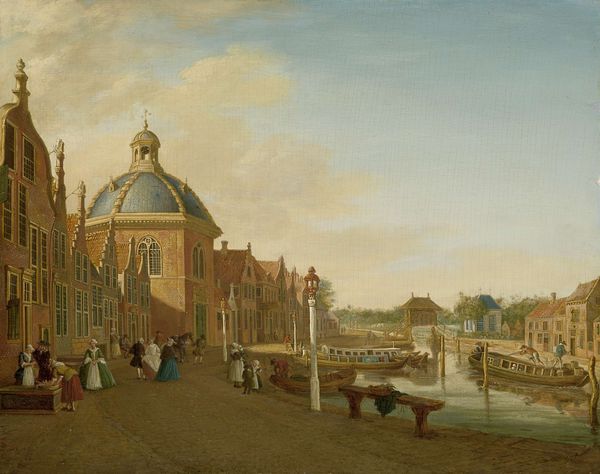
Curator: At first glance, there’s something wonderfully serene about this cityscape, even with all the implied activity. Editor: You’re right, it has a very calming effect. This painting is titled "The Sint-Antoniuswaag in Amsterdam" and was completed by Isaac Ouwater around 1780-1790. Ouwater was known for his cityscapes, and this is a fantastic example of his work in oil on canvas. Curator: The Waag building itself dominates the composition, doesn’t it? I’m particularly drawn to the details in the brickwork and those peculiar chimney-like structures on the roof. It suggests the labor involved in both its construction and ongoing maintenance. Editor: Absolutely. Consider, too, that the Waag served as a weighing house – a critical institution for commerce and taxation in Amsterdam. The scene, so casually observed, actually hinges on a centralized point for the flow of goods and capital. It’s where value was literally measured! Curator: That’s fascinating. The activity around the small market stall in the foreground feels so ordinary, and I wonder if that sense of everydayness intentionally obscures this larger economic engine. Editor: It's definitely a deliberate artistic choice. Think about how these cityscapes were consumed. Wealthy merchants displayed them in their homes, not just as aesthetic pieces but as statements of civic pride and demonstrations of their place within Amsterdam's economic power structure. Owning a scene like this broadcast their belonging. Curator: So, a display of consumerism, mirroring the market activity in the picture. It’s intriguing to consider the value chain of art itself. The pigment, the canvas, the labor of the artist, all bought and sold in a marketplace, like the cheese being haggled over in front of the Waag. Editor: Exactly! And don't overlook how institutions like art academies and the guilds controlled production and dissemination of paintings like this one. It reinforces how heavily the art world was steeped in societal structures. Curator: Thinking about the material origins and social implications provides such a different view than simply admiring the artistic skill, though that is, of course, evident too! Editor: It does. Examining Ouwater's city scene through both lenses deepens my understanding of the work and its world. Curator: Indeed, it pulls back the curtain, revealing a portrait of 18th-century Amsterdam that's both beautiful and politically charged.
Comments

rijksmuseum over 2 years ago
⋮
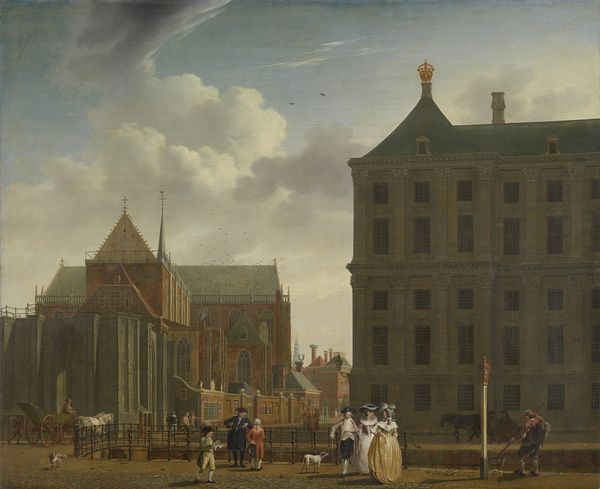
The subject of this painting, the 15th-century Saint Anthony weigh house, is largely cast in shadow. Ouwater also introduces strong contrasts of light in the foreground: the table with collectibles catches the sunlight, while the foreground is dark. In this painting and its pendant, The Nieuwe Kerk and the Town Hall on the Dam, bright, white accents on dresses, animals and lampposts enliven the compositions.


Join the conversation
Join millions of artists and users on Artera today and experience the ultimate creative platform.
 Collect
More like this