
Curatorial notes
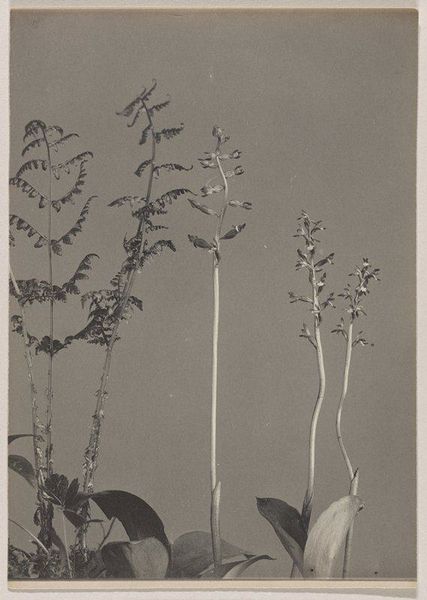
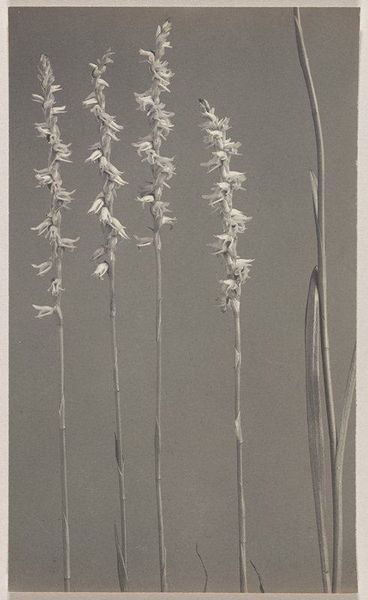
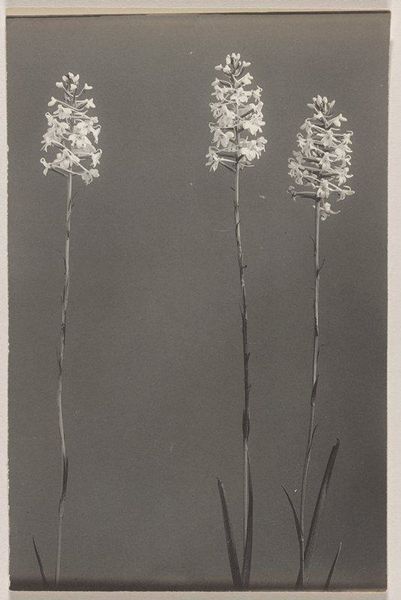
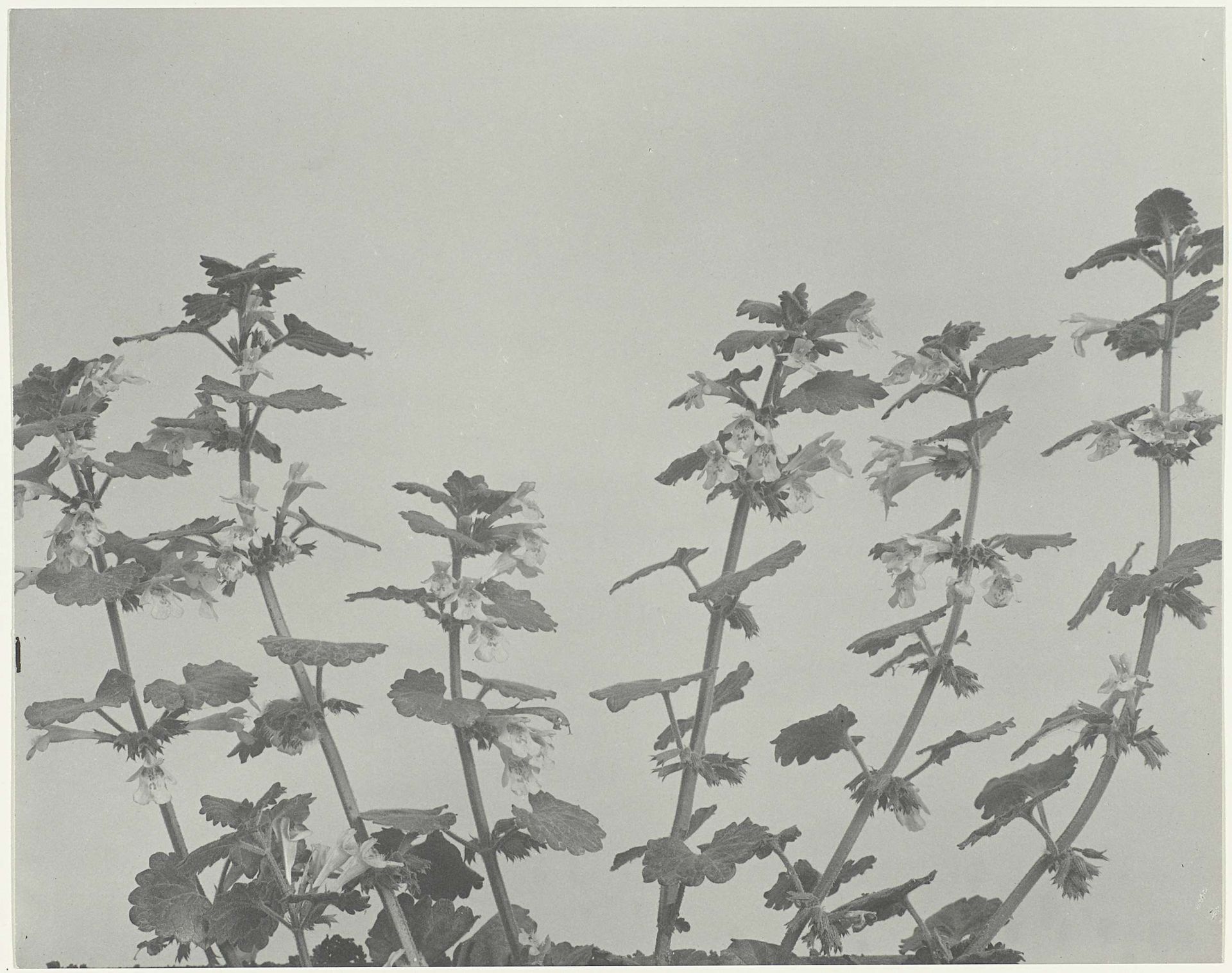
Editor: Here we have Edwin Hale Lincoln's "Hondsdraf," a gelatin silver print from 1905. It's such a simple, almost austere image, capturing the delicate details of these plants. I find it quite calming. What do you see in this piece, especially considering the time it was created? Curator: Well, it’s fascinating to consider "Hondsdraf" in its historical context. Early 20th century photography was still grappling with its identity as an art form. Lincoln's choice of a seemingly mundane subject like ground ivy elevated it to something worthy of artistic attention. How does this botanical study fit into the larger cultural landscape of early photography? Editor: I suppose it challenges the traditional notion of what makes a suitable subject for art, suggesting beauty can be found in the everyday. Curator: Precisely! Think about the rise of the Arts and Crafts movement at the time, a reaction against industrialization and a return to handcrafted, "authentic" objects. Lincoln's detailed botanical study aligns with that sensibility, offering a close, careful observation of the natural world, but it does more. How do you see the distribution of this imagery? What kind of person is observing these images of nature? Editor: The intended audience? Perhaps, middle and upper-class audiences who appreciated this careful observation. It makes me wonder about accessibility too, the original image is in grayscale after all. Curator: Good question, in its own way it is pushing for increased engagement from different classes, making these subjects palatable and digestible by an increased demographic. It gives a lot more meaning to the image. Do you agree? Editor: Absolutely, looking at it now, that element of social commentary is really fascinating. Curator: Exactly! And by understanding that relationship we may better appreciate what photography was, and is still capable of achieving!