drawing, paper
#
portrait
#
drawing
#
paper
#
romanticism
Dimensions: height 14 cm, width 10 cm
Copyright: Rijks Museum: Open Domain
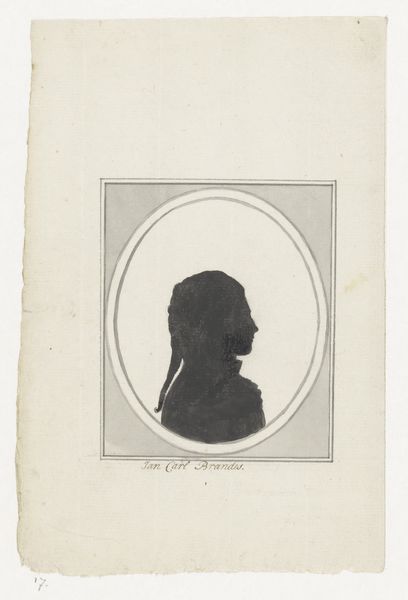
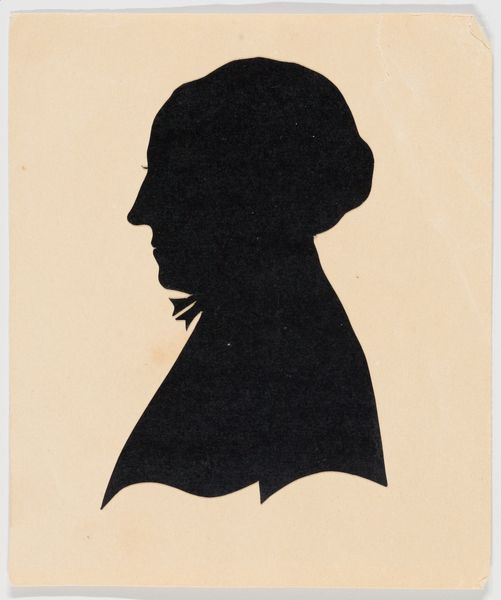
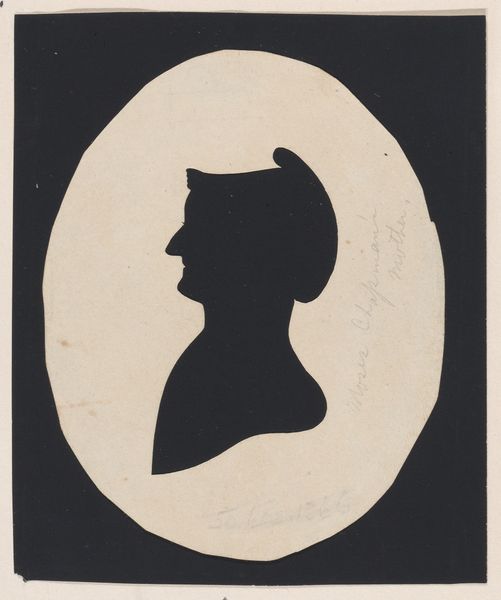
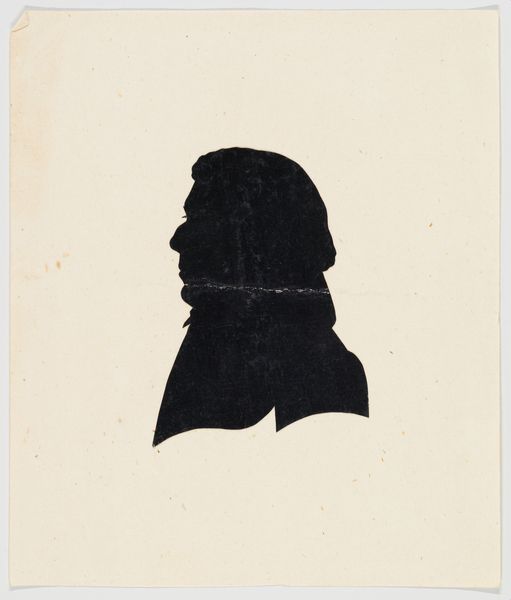
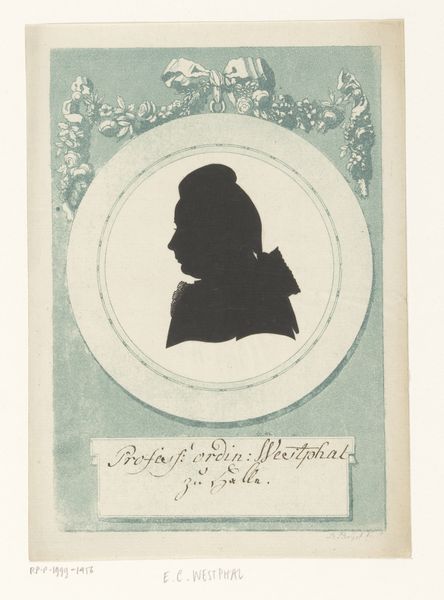
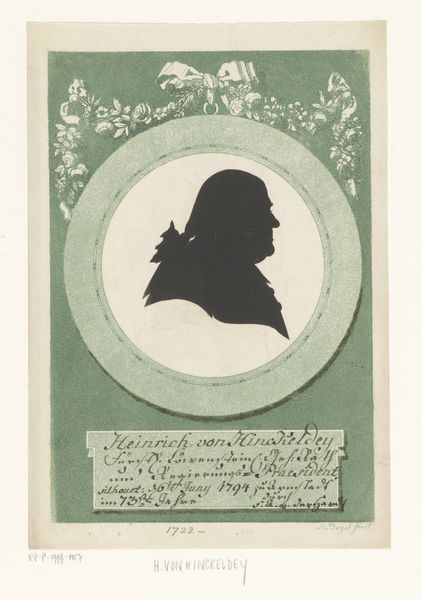
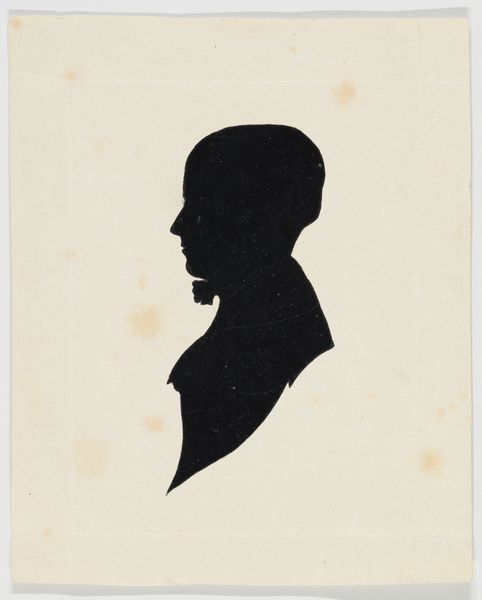
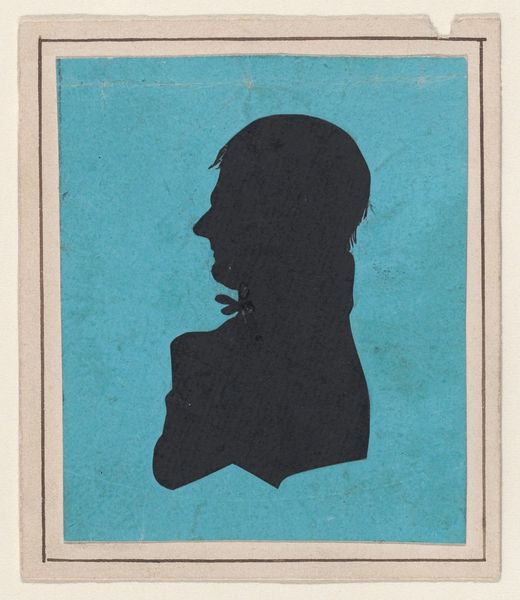
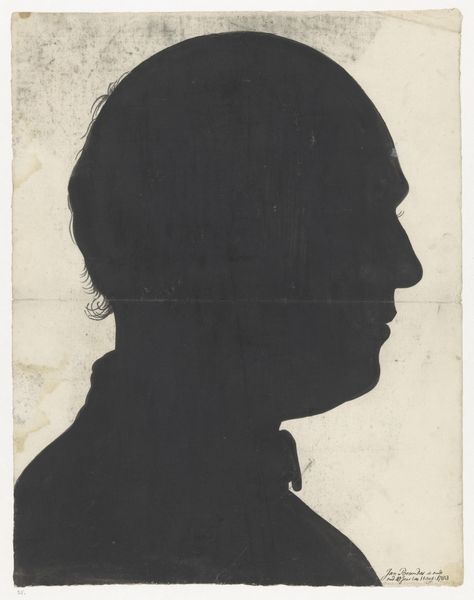
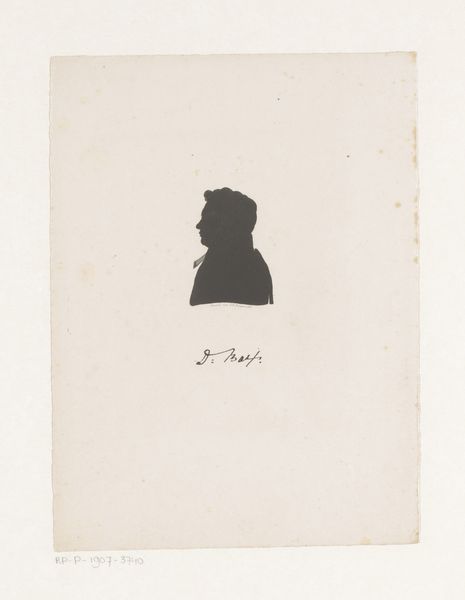
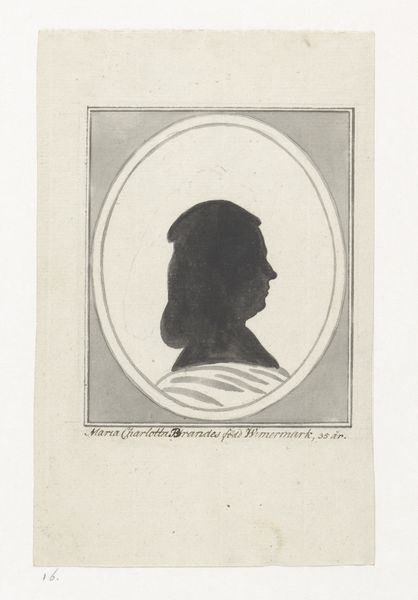
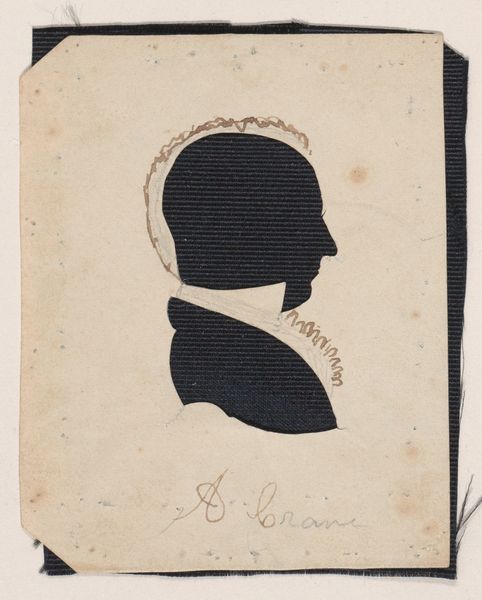
Curator: What strikes me immediately is the simplicity, the way the silhouette evokes so much with so little. It’s like a whispered secret from the past. Editor: Indeed. This is a drawing, simply titled "Tekening," from the period between the 1800s and 1810s, held in the Rijksmuseum. It’s attributed to an anonymous artist, a Romantic-era portrait in ink on paper. Curator: Romantic indeed. The austere black against the pale ground, like a shadow longing for substance. Makes me wonder about the sitter's real presence. Editor: That contrast speaks to the Romantic era’s fascination with shadow selves and the subconscious, especially the black silhouette against what seems like a lighter green ground. Consider that such images served not only as likenesses but also became important tools for political and cultural analysis by offering accessible representations in changing times. Curator: Accessible, yes, but also distancing, right? That flattened, simplified form—it withholds as much as it reveals. Is this about universalising or about categorizing this sitter within the social structures of the era? Editor: Exactly. Silhouette portraits were cheap and thus democratic. Though initially employed by the bourgeoisie to emulate aristocratic patronage of the arts, soon these portraits extended to broader, particularly dissenting, social classes, becoming instruments to reflect changing notions of visibility. They become potent symbols within social narratives. Curator: I guess art finds a way, whether painting grand statements or hinting with suggestive lines. Makes one ponder all those unrecorded narratives still lurking in shadow... Editor: And the role of artists in helping us unearth them—drawing, tracing, highlighting forgotten perspectives, it is what binds history to change and allows art to participate in current questions of inequality. This little shadow, in a way, it represents this work that has to be done. Curator: Poetic, powerful, and, I must admit, a rather lovely, evocative shadow. It makes you appreciate those tiny things that actually last. Editor: Absolutely. "Tekening" exemplifies how art history enables contemporary social analysis, prompting us to scrutinise and reinterpret images within a spectrum of cultural, identity, and class issues.
Comments
No comments
Be the first to comment and join the conversation on the ultimate creative platform.
 Collect
 React
React Comment
More like this