About this artwork
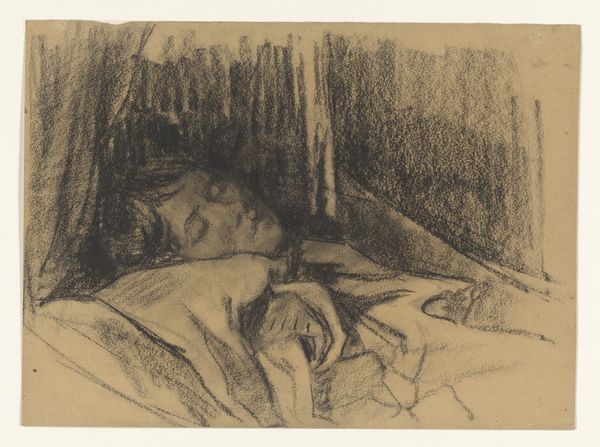
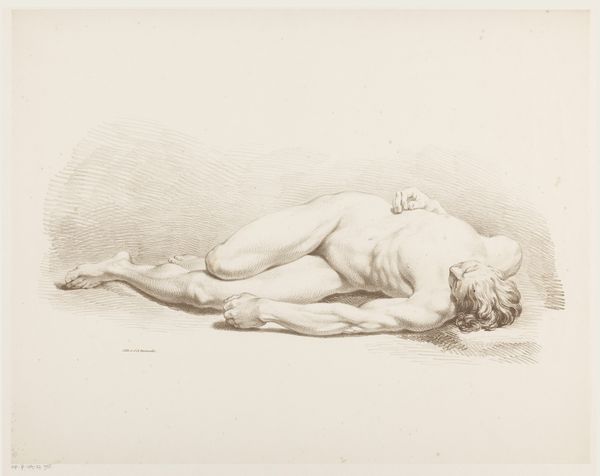
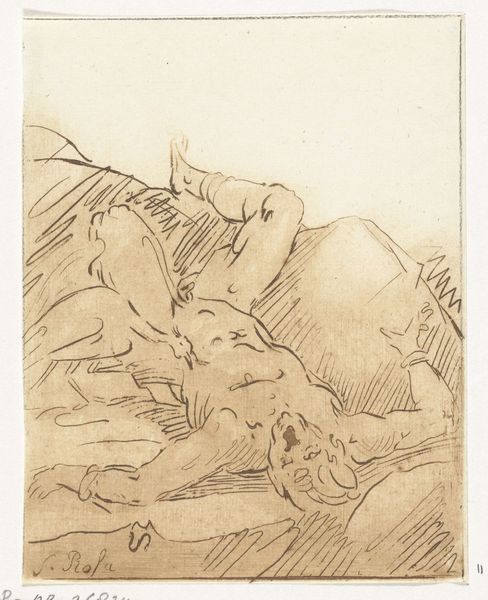
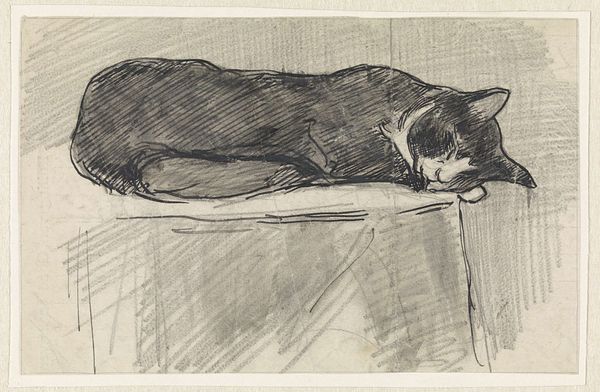
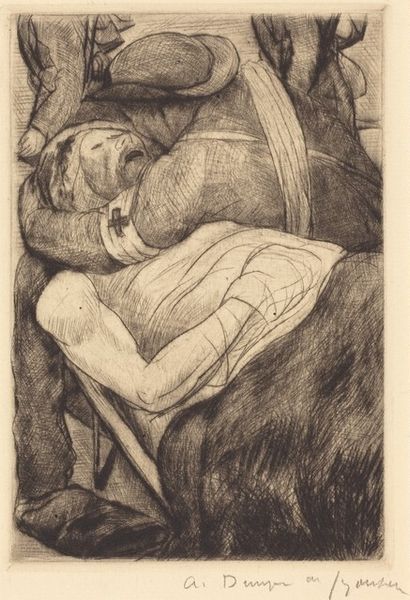
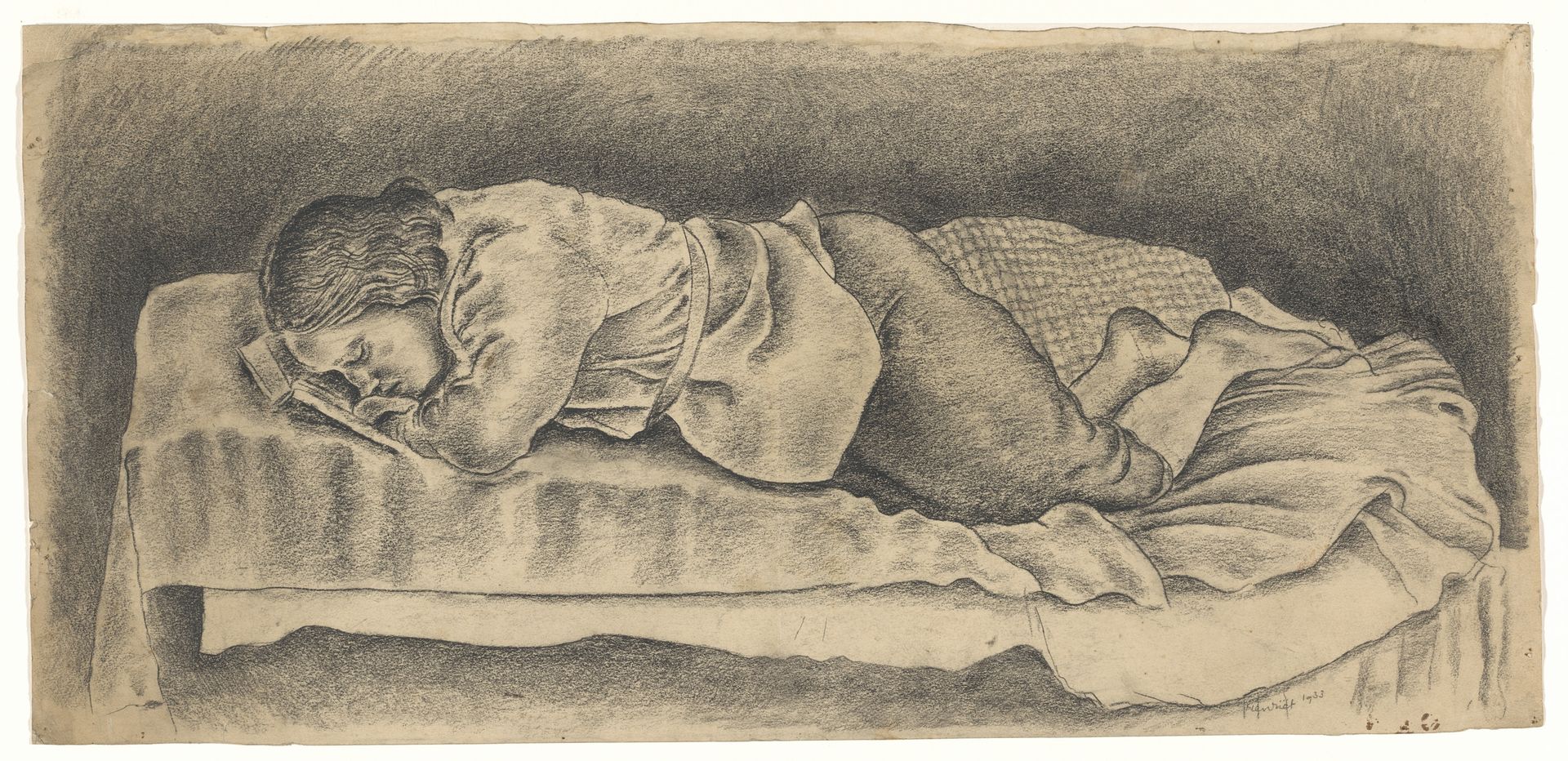
Editor: Here we have Henk Henriët’s 1933 drawing, "Liggende, slapende vrouw met het hoofd op een boek," a study rendered in pencil. The pose of the figure strikes me; she seems completely overcome with exhaustion. How do you interpret this work? Curator: The choice of subject and its quiet, almost desperate stillness speak volumes when considered in the context of 1930s Europe. The looming pre-war anxieties, coupled with the economic hardship of the Depression, created a climate of exhaustion – a kind of collective burnout. The woman’s utter collapse onto the book isn’t just about individual weariness. It symbolizes a broader societal fatigue. Notice how the soft pencil strokes convey not just form, but also a sense of vulnerability. What does the act of sleeping on a book represent here? Is it reverence or indifference? Is it a privilege, or something forced on them by socio-economic pressure? Editor: That's fascinating! I hadn't considered the societal implications. It seemed so personal, so isolated. I suppose it's both, right? Individual experience shaped by larger forces. Curator: Precisely. Think about whose stories are often left out of dominant narratives, of the canon. Women, working class people and the intersection. How are their burdens portrayed or, more often, erased? The drawing might prompt reflection about labour, access to education, and rest as a form of resistance or resilience. Editor: So, the artwork opens a conversation about who gets to be tired, and who is expected to just keep going. Thank you; this has given me so much to think about regarding this very quiet artwork. Curator: And about the power of quiet artworks to reflect the unspoken anxieties of a generation. It is never just about "form".
Liggende, slapende vrouw met het hoofd op een boek
1933

Henk Henriët
1903 - 1945Location
RijksmuseumArtwork details
- Medium
- drawing, pencil
- Dimensions
- height 612 mm, width 291 mm
- Location
- Rijksmuseum
- Copyright
- Rijks Museum: Open Domain
Tags
Comments
Share your thoughts
About this artwork
Editor: Here we have Henk Henriët’s 1933 drawing, "Liggende, slapende vrouw met het hoofd op een boek," a study rendered in pencil. The pose of the figure strikes me; she seems completely overcome with exhaustion. How do you interpret this work? Curator: The choice of subject and its quiet, almost desperate stillness speak volumes when considered in the context of 1930s Europe. The looming pre-war anxieties, coupled with the economic hardship of the Depression, created a climate of exhaustion – a kind of collective burnout. The woman’s utter collapse onto the book isn’t just about individual weariness. It symbolizes a broader societal fatigue. Notice how the soft pencil strokes convey not just form, but also a sense of vulnerability. What does the act of sleeping on a book represent here? Is it reverence or indifference? Is it a privilege, or something forced on them by socio-economic pressure? Editor: That's fascinating! I hadn't considered the societal implications. It seemed so personal, so isolated. I suppose it's both, right? Individual experience shaped by larger forces. Curator: Precisely. Think about whose stories are often left out of dominant narratives, of the canon. Women, working class people and the intersection. How are their burdens portrayed or, more often, erased? The drawing might prompt reflection about labour, access to education, and rest as a form of resistance or resilience. Editor: So, the artwork opens a conversation about who gets to be tired, and who is expected to just keep going. Thank you; this has given me so much to think about regarding this very quiet artwork. Curator: And about the power of quiet artworks to reflect the unspoken anxieties of a generation. It is never just about "form".
Comments
Share your thoughts