About this artwork
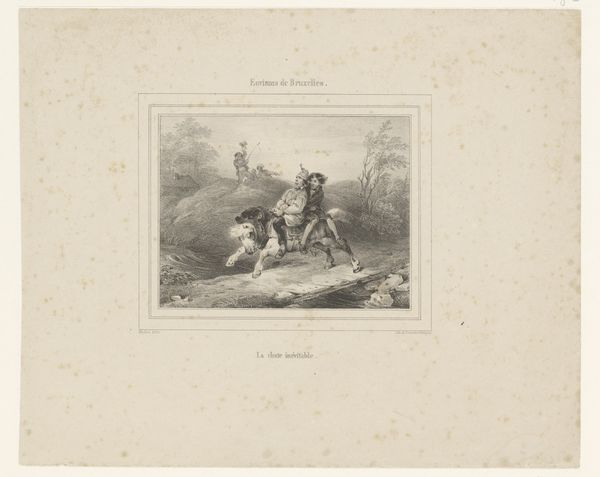
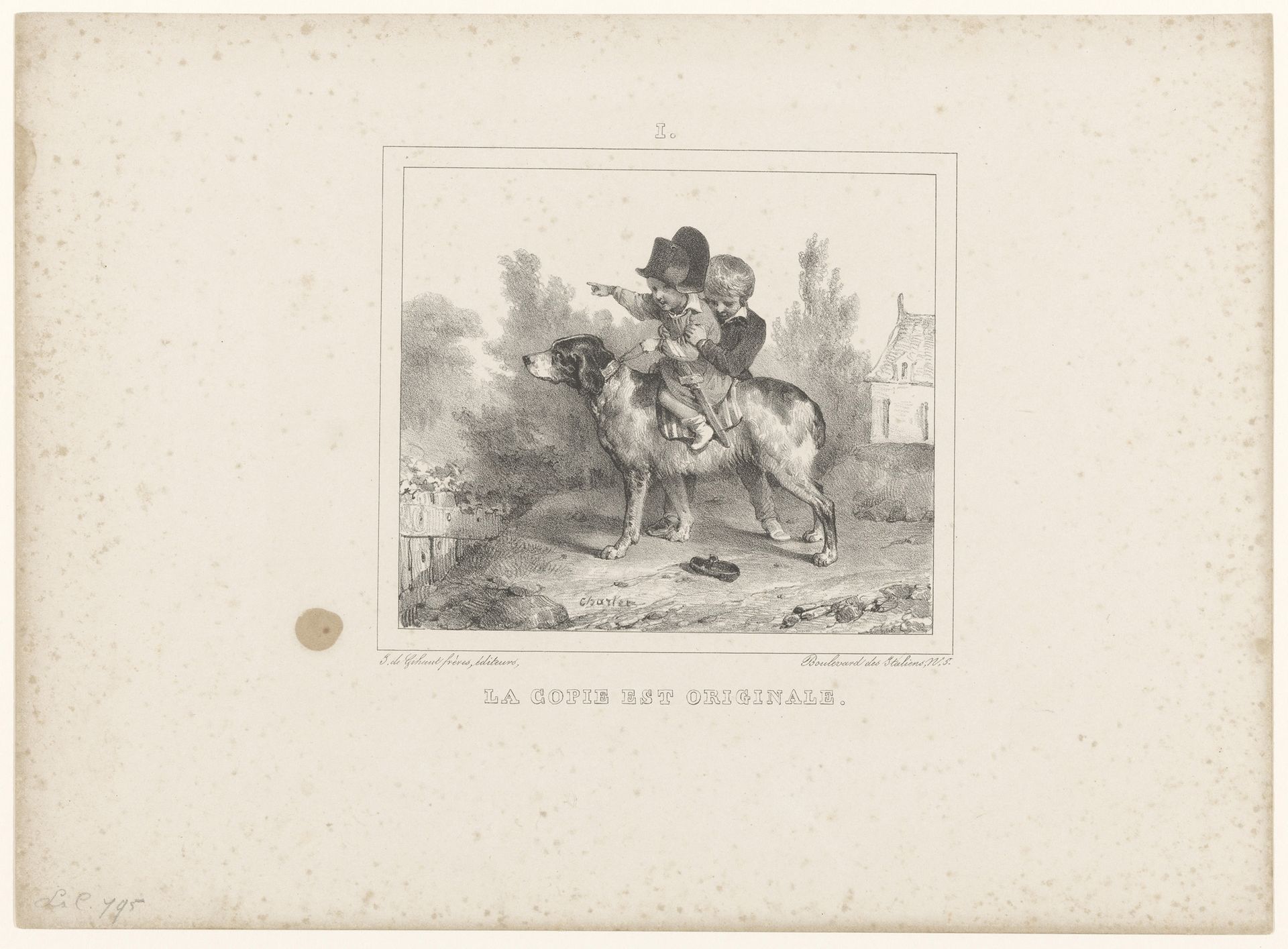
Nicolas Toussaint Charlet created this lithograph titled *Kleine jongen doet alsof hij Napoleon is,* or *Little Boy Pretending to be Napoleon,* in the early 19th century. Charlet lived through the rise and fall of Napoleon Bonaparte, a period of intense social and political upheaval in France. Here, we see a child, dressed in a large hat, gesturing dramatically while riding on the back of a dog. Another child sits behind him, a quiet participant in this game of make-believe. The artwork touches on themes of identity and aspiration, especially during the post-revolutionary era. The imagery evokes the popular fascination with military heroes and the theatricality of leadership. The print invites us to consider the relationship between childhood fantasy and historical memory. How do we, even as children, internalize and reenact the narratives of power and authority that surround us? It’s a charming, yet poignant reflection on how history shapes our imagination and self-perception from a very young age.
Kleine jongen doet alsof hij Napoleon is
1832

Nicolas Toussaint Charlet
1792 - 1845Location
RijksmuseumArtwork details
- Medium
- drawing, lithograph, print, paper
- Dimensions
- height 247 mm, width 338 mm
- Location
- Rijksmuseum
- Copyright
- Rijks Museum: Open Domain
Tags
Comments
Share your thoughts
About this artwork
Nicolas Toussaint Charlet created this lithograph titled *Kleine jongen doet alsof hij Napoleon is,* or *Little Boy Pretending to be Napoleon,* in the early 19th century. Charlet lived through the rise and fall of Napoleon Bonaparte, a period of intense social and political upheaval in France. Here, we see a child, dressed in a large hat, gesturing dramatically while riding on the back of a dog. Another child sits behind him, a quiet participant in this game of make-believe. The artwork touches on themes of identity and aspiration, especially during the post-revolutionary era. The imagery evokes the popular fascination with military heroes and the theatricality of leadership. The print invites us to consider the relationship between childhood fantasy and historical memory. How do we, even as children, internalize and reenact the narratives of power and authority that surround us? It’s a charming, yet poignant reflection on how history shapes our imagination and self-perception from a very young age.
Comments
Share your thoughts