drawing, paper, pencil
portrait
drawing
pencil sketch
paper
text
romanticism
pencil
academic-art
female-portraits
Copyright: Public domain
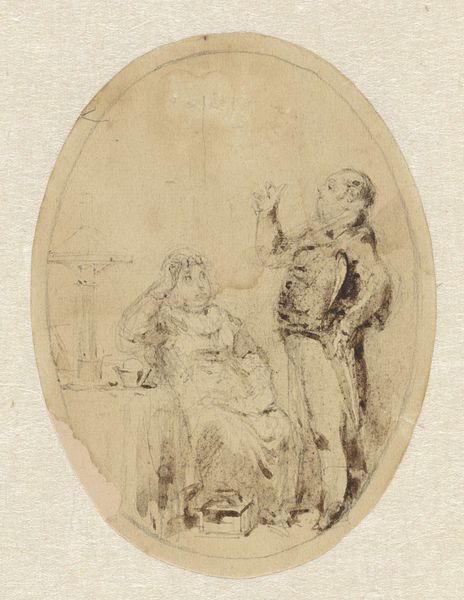
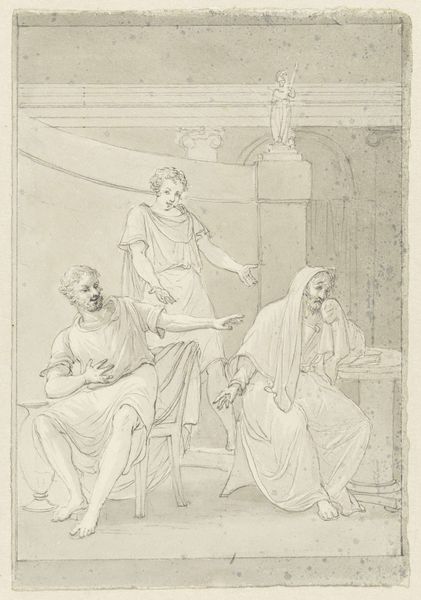
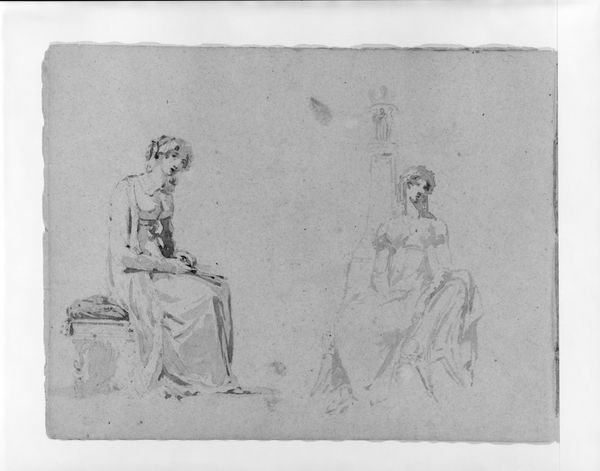
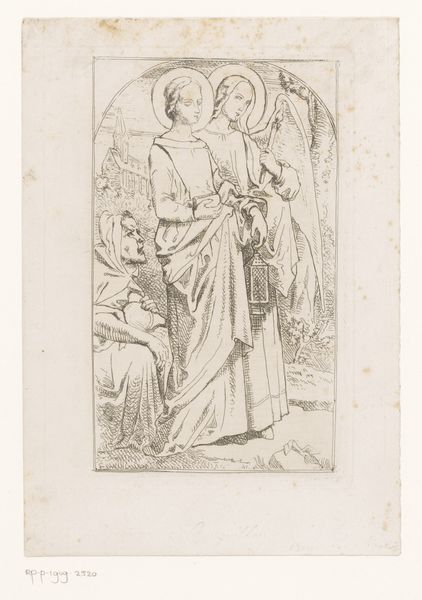
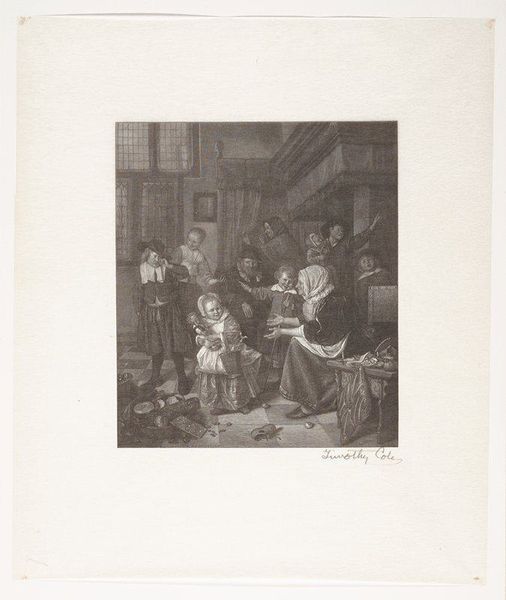
Editor: This is "Raphael and the Fornarina," a pencil drawing by Jean-Auguste-Dominique Ingres. The rendering feels precise but also strangely distant. What structural elements stand out to you in this composition? Curator: The emphasis lies undoubtedly on line. Note how Ingres constructs form, not through tonal modelling but through contour. The internal lines articulate the drapery, creating a complex interplay of curves and angles. Observe the way he uses hatching to define form, adding depth and volume without compromising the overall linearity of the image. Editor: So, the medium of pencil allows for an interrogation of form? Curator: Precisely. Pencil offers a unique capacity for controlled precision, allowing the artist to meticulously construct forms. It’s interesting how the textures almost cancel each other out. The wood grain, fabrics and even skin tones all have a consistent feel, prioritizing clear distinction and outlines rather than naturalness. Editor: I noticed that the scene looks theatrical, almost staged. Is that intentional? Curator: Indeed. The setting is contrived; Ingres manipulates spatial depth, compressing the background and foreground, reinforcing the image’s inherent flatness. How does the relationship of forms lead the eye? Editor: My gaze is drawn from Raphael to the Fornarina, then across the canvas. The drawing guides me through it carefully. I see that this piece goes far beyond a simple portrait or historical scene. Thanks for opening my eyes to Ingres’ complex formalism. Curator: The piece truly highlights how fundamental formal language is for interpreting narrative paintings like this. Looking at this has certainly helped refine my understanding of Ingres' methods.
Comments
No comments
Be the first to comment and join the conversation on the ultimate creative platform.
 React
React Comment