About this artwork
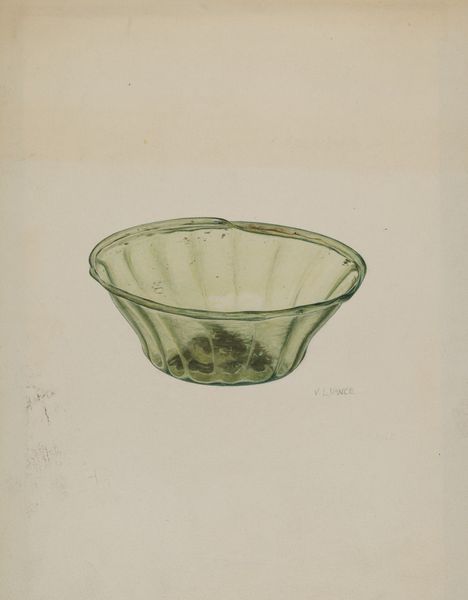
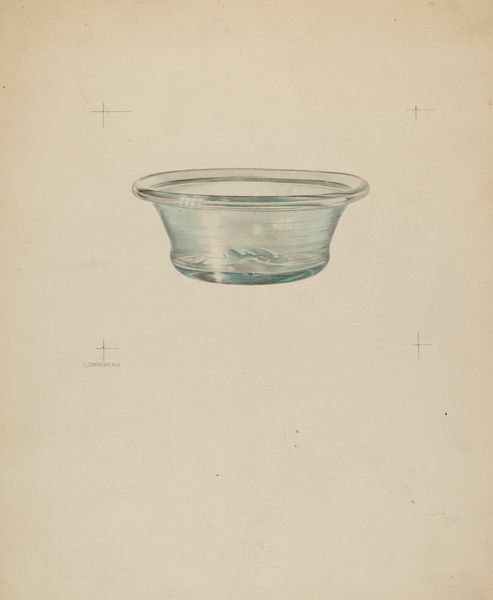
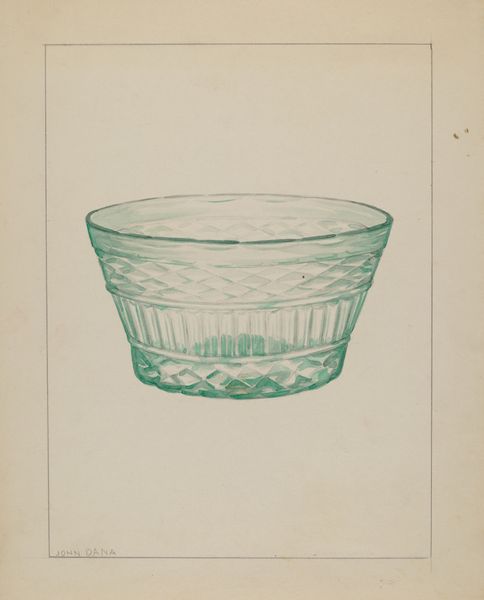
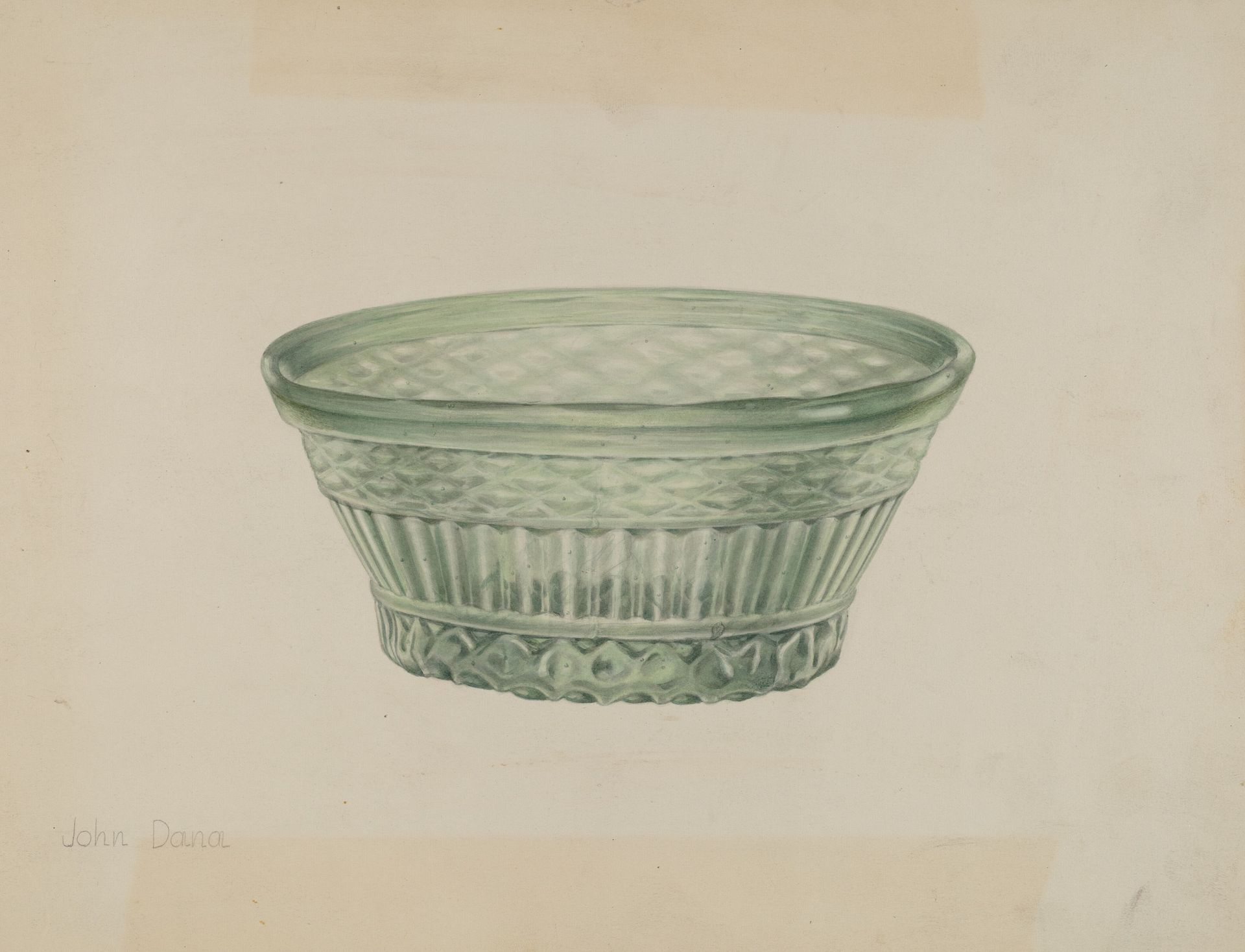
Curator: What catches my eye immediately is the interplay between opacity and translucence, creating this lovely dreamlike impression. Editor: It’s as if the object is disappearing right before my eyes. But I also wonder about its socio-historical significance. I am here to help you consider the era in which the bowl was created—the 1930s and early 1940s, when social realism and everyday life were recurrent themes. Curator: Absolutely. It reminds me of domesticity. Not to essentialize womanhood, but during the years after The Great Depression there were high societal expectations and pressures to find stability. Editor: You can almost imagine seeing that glass bowl within a domestic space… filled with colorful fruit perhaps? The simple glass could act as both a beacon of humble celebration, as well as a subtle signifier for its inhabitants' social positioning and lifestyle. The bowl is common, and could stand for collectivity during hard times. Curator: That makes me think about the choice of media too. John Dana opts for watercolors in this study titled, aptly enough, *Bowl*. Watercolor is inherently transparent and lends itself perfectly to capturing the ephemeral qualities of glass. Editor: The loose brushstrokes make me imagine Dana himself deeply observing the object in that light. Did he pick it up? Consider the weight? This image is the synthesis of a man with a simple item... yet the item represents so much more. Curator: In this interplay of the artistic, social, and theoretical aspects, we come closer to fully appreciating how simple an object—like Dana's "Bowl"—opens into deeper meaning for ourselves. Editor: This whole conversation makes me consider the preciousness of seemingly mundane items. We should remember how powerful everyday items truly are in defining us.


Artwork details
- Medium
- drawing, painting, watercolor
- Dimensions
- overall: 22.9 x 29.4 cm (9 x 11 9/16 in.)
- Copyright
- National Gallery of Art: CC0 1.0
Tags
Comments
Share your thoughts
About this artwork
Curator: What catches my eye immediately is the interplay between opacity and translucence, creating this lovely dreamlike impression. Editor: It’s as if the object is disappearing right before my eyes. But I also wonder about its socio-historical significance. I am here to help you consider the era in which the bowl was created—the 1930s and early 1940s, when social realism and everyday life were recurrent themes. Curator: Absolutely. It reminds me of domesticity. Not to essentialize womanhood, but during the years after The Great Depression there were high societal expectations and pressures to find stability. Editor: You can almost imagine seeing that glass bowl within a domestic space… filled with colorful fruit perhaps? The simple glass could act as both a beacon of humble celebration, as well as a subtle signifier for its inhabitants' social positioning and lifestyle. The bowl is common, and could stand for collectivity during hard times. Curator: That makes me think about the choice of media too. John Dana opts for watercolors in this study titled, aptly enough, *Bowl*. Watercolor is inherently transparent and lends itself perfectly to capturing the ephemeral qualities of glass. Editor: The loose brushstrokes make me imagine Dana himself deeply observing the object in that light. Did he pick it up? Consider the weight? This image is the synthesis of a man with a simple item... yet the item represents so much more. Curator: In this interplay of the artistic, social, and theoretical aspects, we come closer to fully appreciating how simple an object—like Dana's "Bowl"—opens into deeper meaning for ourselves. Editor: This whole conversation makes me consider the preciousness of seemingly mundane items. We should remember how powerful everyday items truly are in defining us.
Comments
Share your thoughts