print, engraving
#
neoclacissism
# print
#
old engraving style
#
landscape
#
pencil drawing
#
engraving
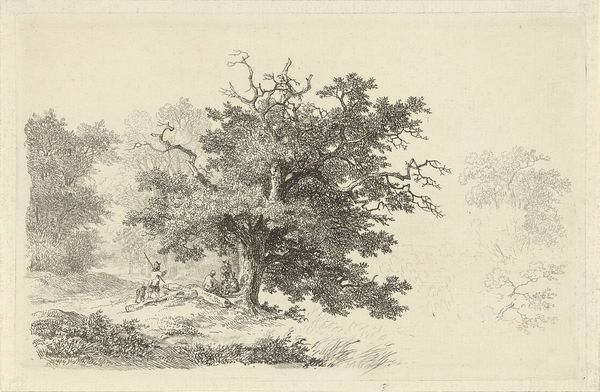
Dimensions: height 204 mm, width 295 mm
Copyright: Rijks Museum: Open Domain
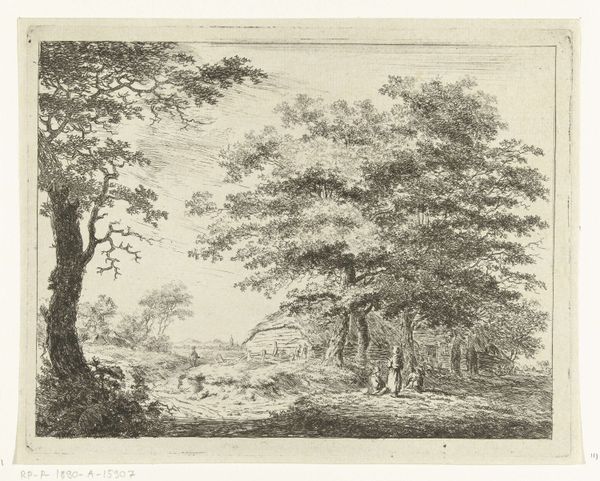
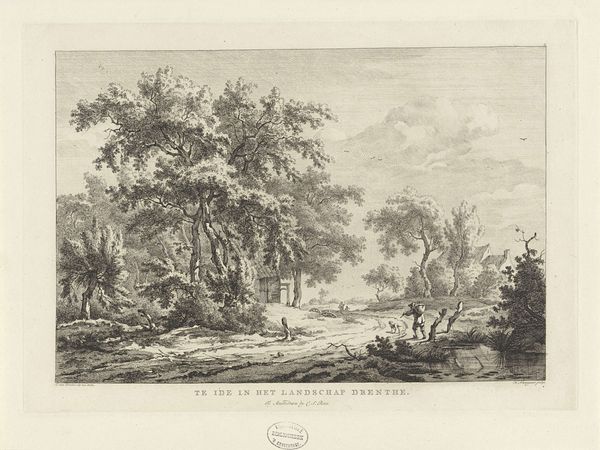
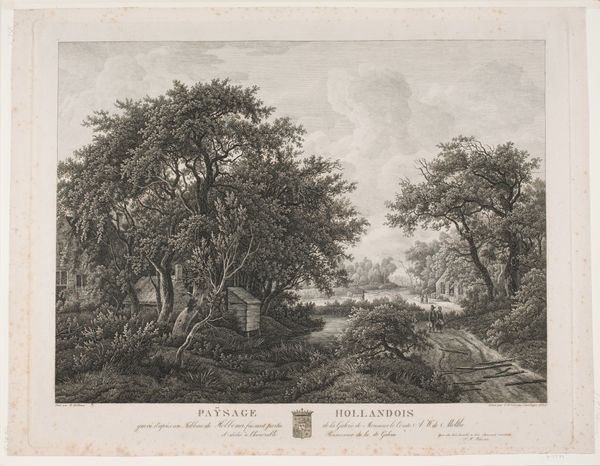
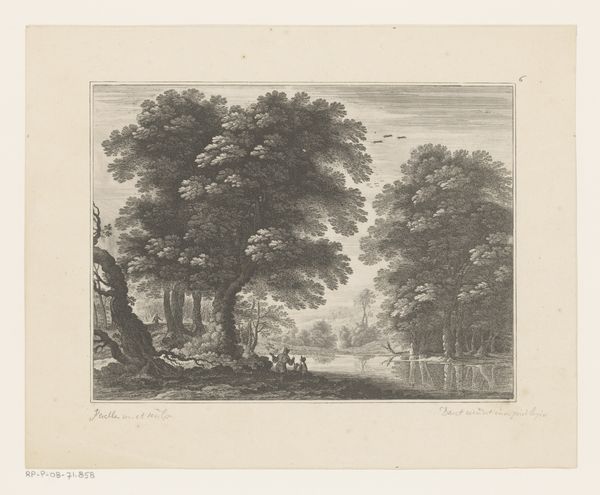
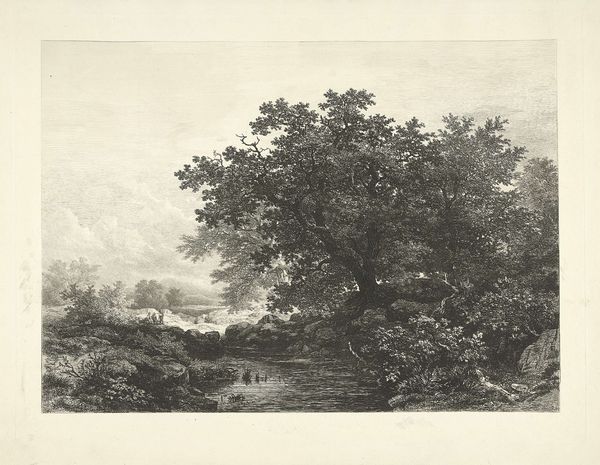
Curator: Here we have a rather arresting engraving by Daniël Vrijdag from 1801, titled "Gezicht op de kastanjeboom op de Etna," which translates to "View of the chestnut tree on Mount Etna." Editor: It strikes me immediately. There’s a feeling of something ancient and grand—a monumentality in the tree's form, yet the landscape surrounding feels quite barren. What narratives of power and control might be found within this engraving of the famed Mount Etna and the immense tree? Curator: Certainly, it's compelling to examine its sociopolitical implications. Vrijdag created this piece at a time of great scientific curiosity, and it embodies that period's fascination with natural wonders. Think about how knowledge of the natural world and its representation played into colonialism and national identity. This engraving participated in shaping European understanding, and perhaps exploitation, of places like Sicily. Editor: Yes, I can definitely read the era's impulses through this image. This "natural wonder" becomes a visual signifier in the colonial project. The Etna and tree symbolize power, yet the few small figures clustered inside seem to hint at human influence, a quiet occupation. Curator: Absolutely, and it raises some important questions about our own viewership. To what extent is our gaze complicit in that historical power structure? How can we interpret this print in a way that acknowledges that historical burden? Editor: I’m left thinking about how the aesthetic preferences of the time—this almost romanticized, classical representation—both served and potentially obscured those underlying political and economic forces. There is almost an exotic appeal—as this is how one experiences “nature”—distorted as a picturesque backdrop. The tree and the landscape may feel less immediate and even, perhaps, distant. Curator: That distance is key, isn't it? By grappling with how cultural context informs not just the artwork, but our understanding, we can challenge and broaden dialogues within the history of art and create a better understanding of marginalized views. Editor: Ultimately, it is not just a picture of a tree. Instead, it speaks about a nexus of culture, science, and power through visual representations that demand a critical awareness, urging a much wider view for our considerations in the arts.
Comments
No comments
Be the first to comment and join the conversation on the ultimate creative platform.
 Collect
 React
React Comment
More like this