print, engraving
#
16_19th-century
# print
#
old engraving style
#
cityscape
#
genre-painting
#
engraving
#
realism
Dimensions: height 346 mm, width 270 mm
Copyright: Rijks Museum: Open Domain
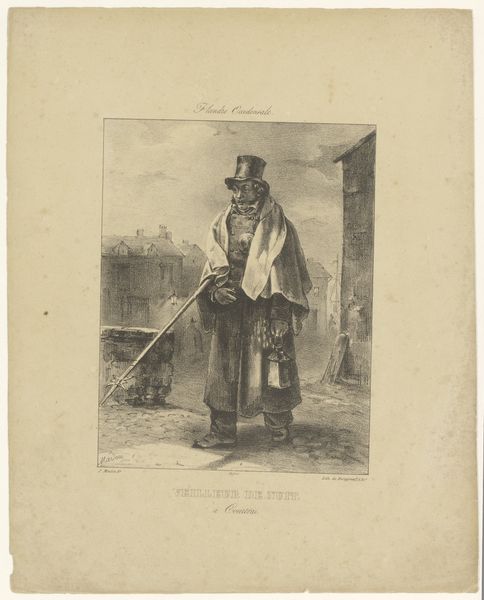
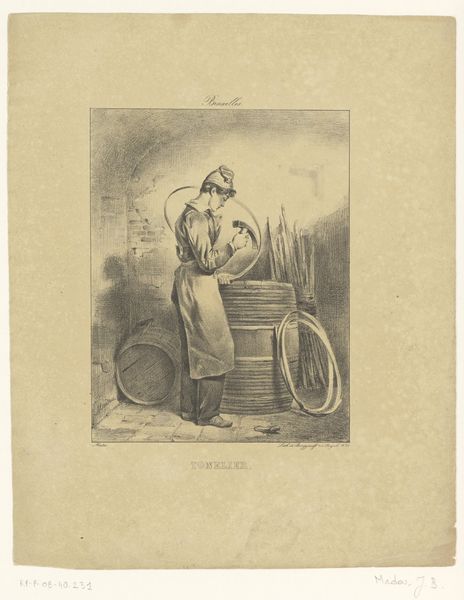
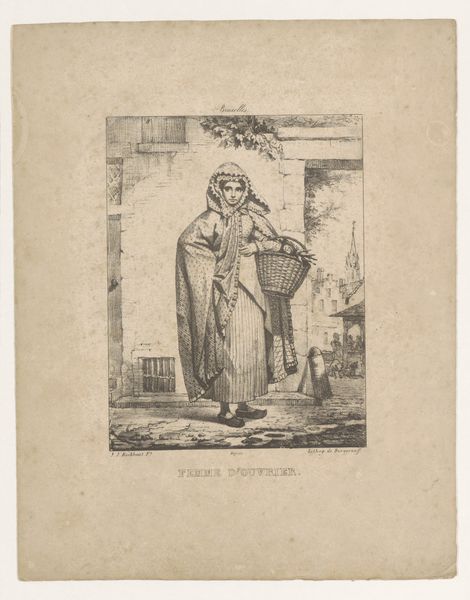
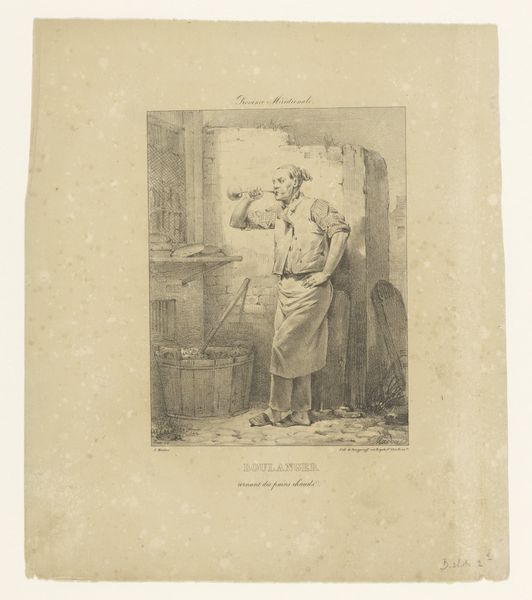
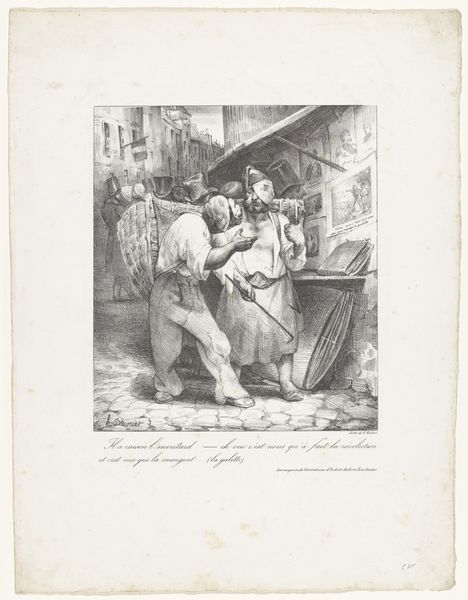
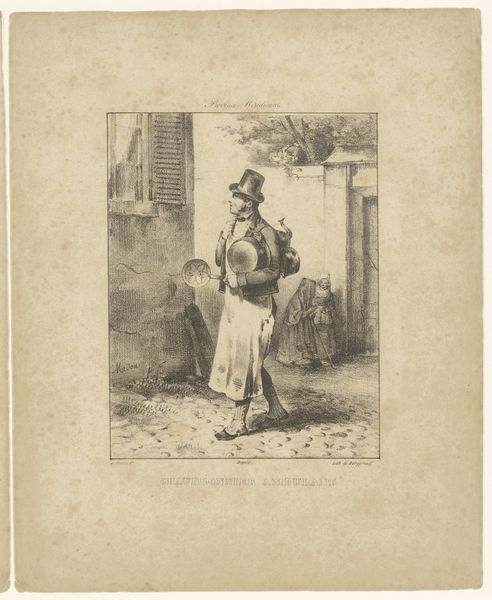
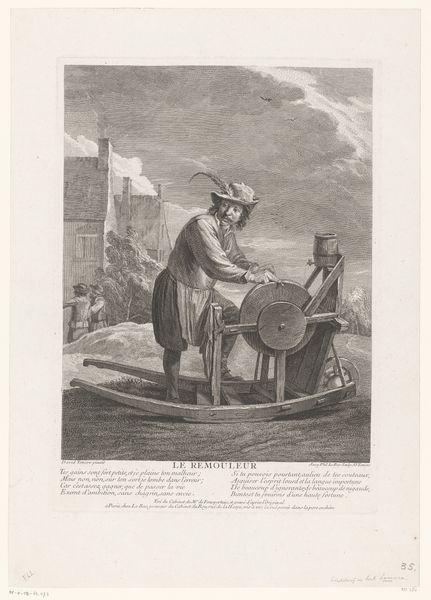
This print, "Verkoper van gevogelte" or "Seller of Poultry" was created by Guillaume Philidor Van den Burggraaff using the technique of etching, sometime around the early 19th century. Etching involves coating a metal plate with a waxy substance, then scratching an image into that surface, exposing the metal. When acid is applied, it bites into the exposed lines, creating grooves that will hold ink. The plate is then inked, wiped clean, and pressed onto paper, transferring the image. The beauty of etching lies in its capacity for fine detail and tonal variation, as we can see here in the depiction of the cobblestones and the merchant’s clothing. This print isn't just a picture; it’s a record of skilled labor, both in the scene and in its making. The merchant's trade, the horse at his side, and even the architectural setting are all delineated by a laborious process. This etching is not just a depiction of commerce, but an artifact of it. It reminds us that every image, like every object, carries the traces of its own production.
Comments
No comments
Be the first to comment and join the conversation on the ultimate creative platform.
 Collect
 React
React Comment
More like this