poster
#
portrait
#
magazine cover
#
film poster
#
geometric
#
poster
Copyright: Public Domain: Artvee
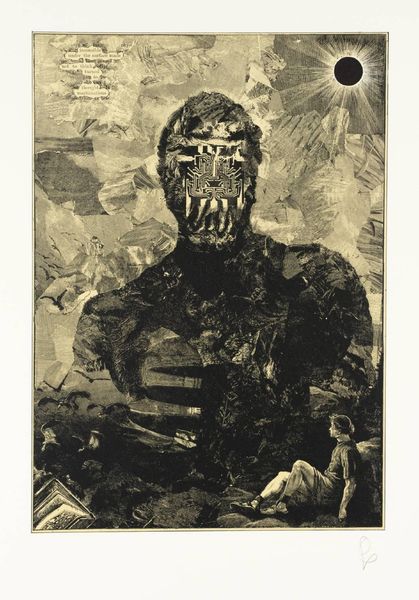
Editor: So, this is Robert Peak's poster for "Excalibur," from 1981. The heavy use of shadow and metallic tones gives it a mystical, almost imposing presence. What’s your take on it? Curator: The iconography of Arthurian legend has long been used to legitimize power, and Peak's poster consciously taps into that historical resonance. The knight's face, both obscured and revealed, speaks volumes about identity and power. Think about the legacy of colonialism. Editor: Colonialism? I'm not sure I follow. Curator: Well, Arthurian mythos often served as a cultural blueprint for empire, justifying expansion through ideas of chivalry and divinely ordained rule. The quest for the Grail, the Round Table - all reinforced a hierarchical structure ripe for appropriation by imperial powers. How might we, therefore, read this poster in the context of anxieties about post-colonial power dynamics at the end of the 20th century? The hero's fragmented image implies doubt. Editor: I hadn’t considered that perspective. It does make you think about how myths are constantly reinterpreted to serve new political ends. The fracturing does complicate that clean narrative of the "hero king," right? Curator: Precisely. And the poster format itself…consider its mass accessibility, disseminating these complex ideas about leadership and cultural identity to a wide audience. It's less about glorifying the past and more about engaging with its complex legacy. What could that sword symbolize beyond power? Editor: It makes me think about potential - unrealized, even broken potential. It's fascinating how much is communicated through a film poster! Curator: Absolutely. By questioning the established narratives, artworks like this provide valuable insight.
Comments
No comments
Be the first to comment and join the conversation on the ultimate creative platform.
 Collect
 React
React Comment
More like this