c. 1837
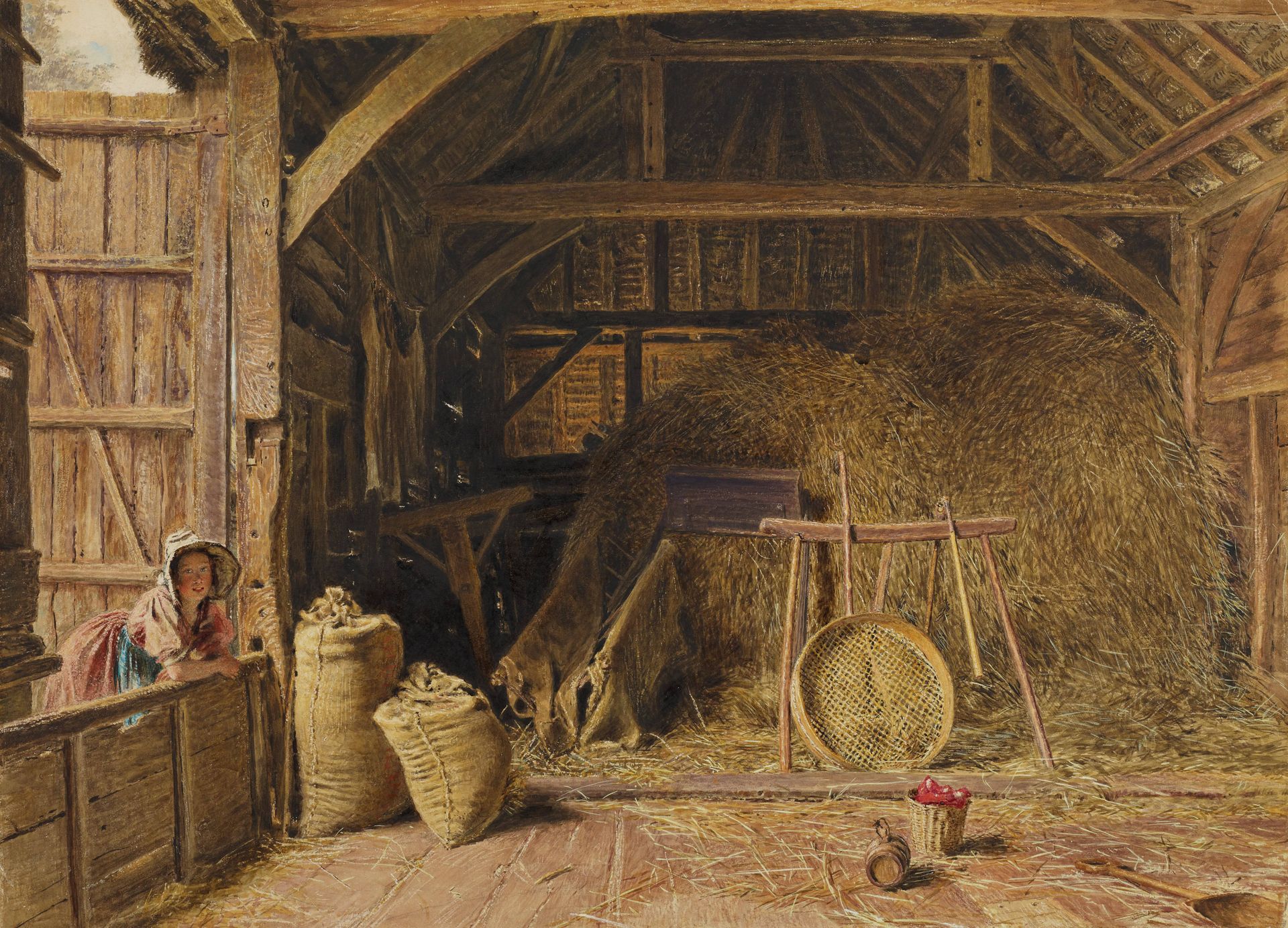
Interior of a Barn


Listen to curator's interpretation
Curatorial notes
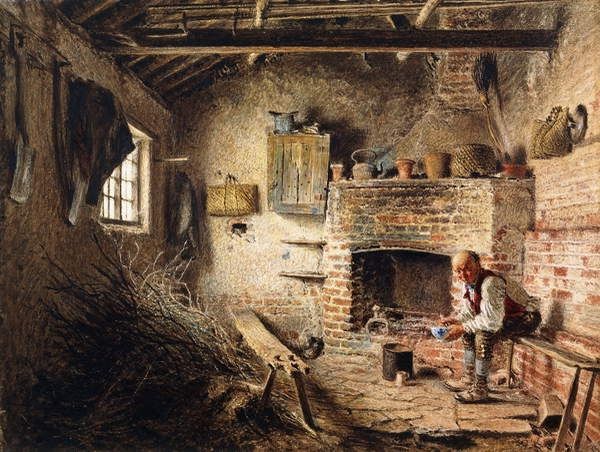
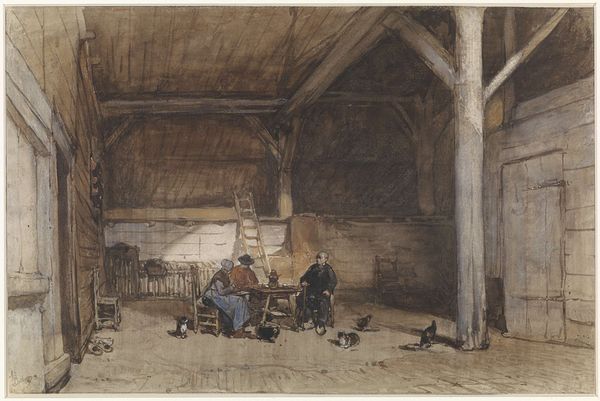
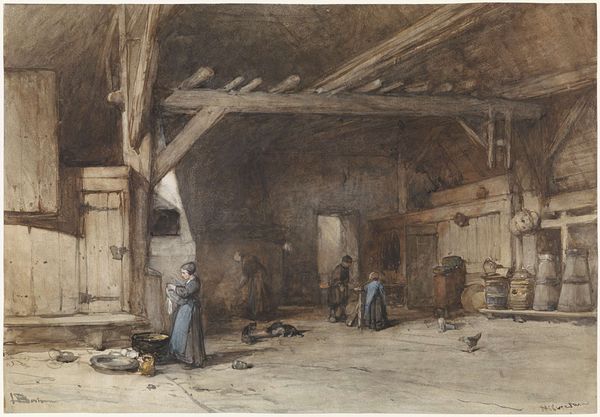
William Henry Hunt created this watercolor painting, "Interior of a Barn," filled with rustic tools and a young woman, capturing a moment frozen in time. The prominent bales of hay aren't just fodder; they symbolize fertility and abundance, echoing ancient agrarian rituals. Notice the sieve resting against it. Sieves have long been associated with judgment and discernment, as seen in medieval allegories where truth is sifted from falsehood. Reflect on how the simple act of separating grain has been laden with meaning through the ages. In ancient Egypt, winnowing was linked to the afterlife, representing the separation of worthy souls from the unworthy. In our collective memory, the sieve appears in various guises, each time carrying a sense of evaluation. It is a testament to how everyday objects acquire layers of symbolic weight, engaging our subconscious through art. It has morphed and adapted, yet the core idea of sorting endures.