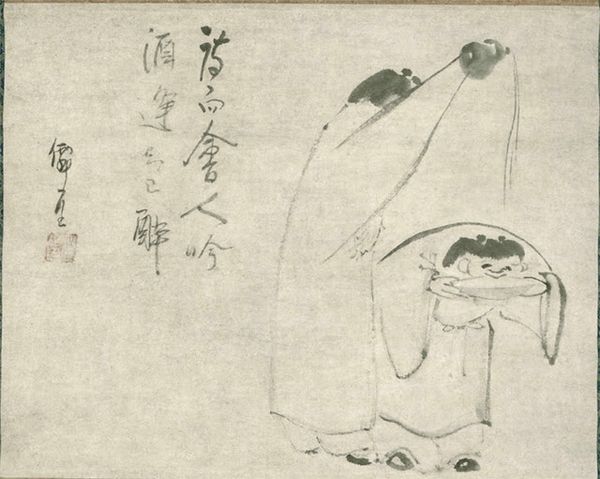
![Chinese Immortals [one of a pair] by Hara Zaichū 原在中](https://d2w8kbdekdi1gv.cloudfront.net/eyJidWNrZXQiOiAiYXJ0ZXJhLWltYWdlcy1idWNrZXQiLCAia2V5IjogImFydHdvcmtzLzc2OTU5NjIyLWM1YTEtNGM0NS05MWI5LTM0MjFkYTMxZDQ0NS83Njk1OTYyMi1jNWExLTRjNDUtOTFiOS0zNDIxZGEzMWQ0NDVfZnVsbC5qcGciLCAiZWRpdHMiOiB7InJlc2l6ZSI6IHsid2lkdGgiOiAxOTIwLCAiaGVpZ2h0IjogMTkyMCwgImZpdCI6ICJpbnNpZGUifX19)
1804
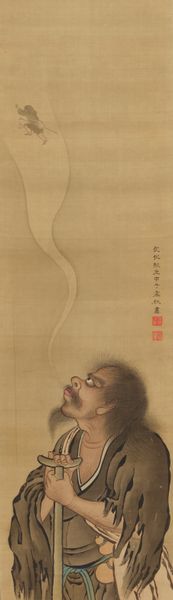
Chinese Immortals [one of a pair]


Listen to curator's interpretation
Curatorial notes
Hara Zaichū painted this scroll – one of a pair – on silk in Japan sometime in the late 18th or early 19th century. Here we see what's meant to be a Chinese Immortal. This eccentric figure with his knowing smirk, together with the albino toad perched on his head, are associated with longevity and perhaps even alchemy. The work comes to us out of the Edo period, a time of relative peace and economic growth in Japan. During this period, we see an increasing interest in Chinese culture and art. But, these images were not straightforward copies. Artists like Hara Zaichū took liberties, blending Chinese themes with Japanese aesthetics and humor. What was the social function of an image like this? Was it a form of escapism, a commentary on the human condition, or something else entirely? It's through understanding the cultural and historical context that we begin to unravel the layers of meaning embedded within this fascinating work. Consulting period literature, comparing artistic styles, and researching social customs can help us get there.