1784
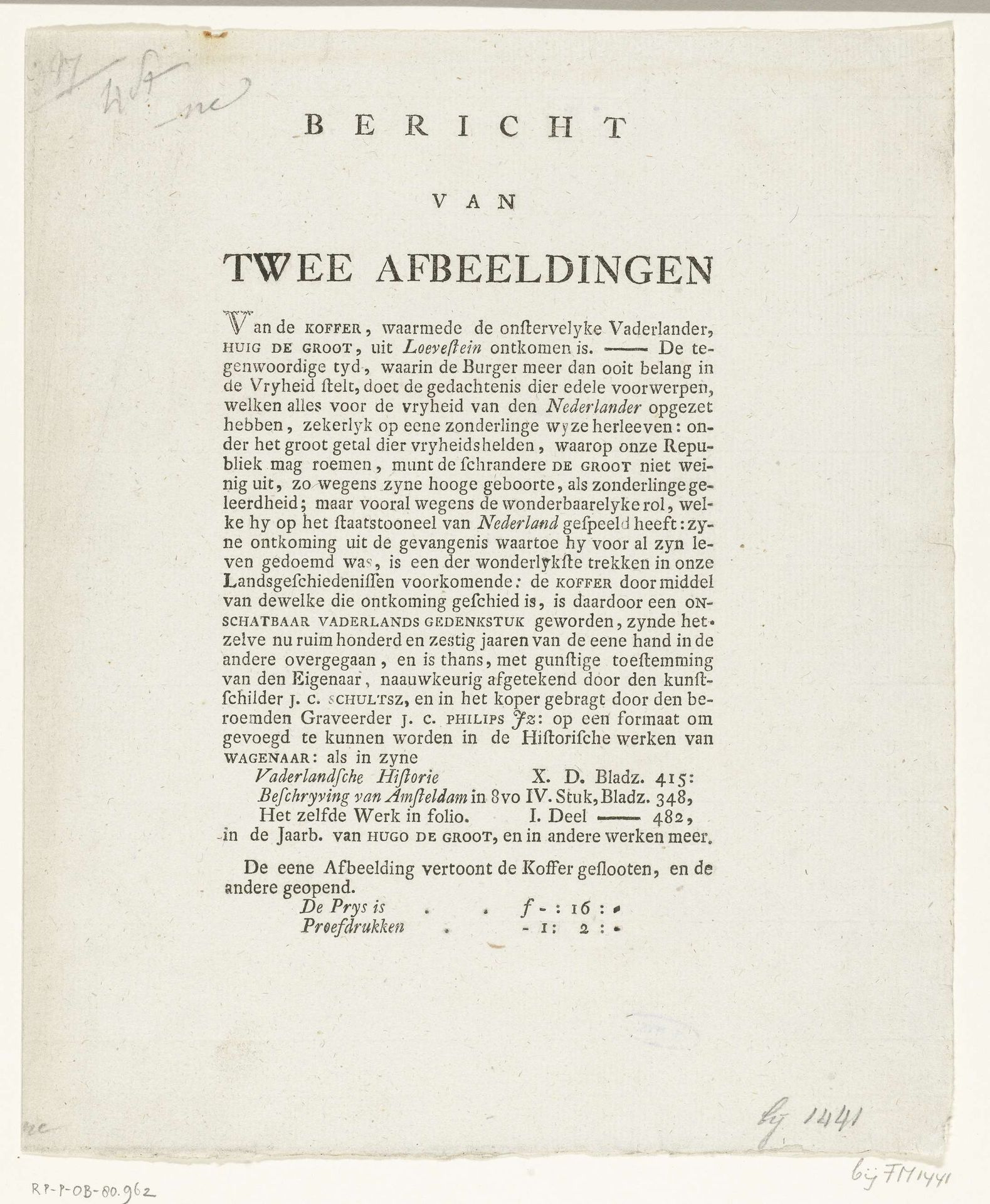
Bericht waarin de uitgever de prenten aanbiedt van de boekenkist waarin Hugo de Groot in 1621 uit Loevestein ontsnapt is, 1783

Jan Barend Elwe
1730 - 1860Location
RijksmuseumListen to curator's interpretation
Curatorial notes
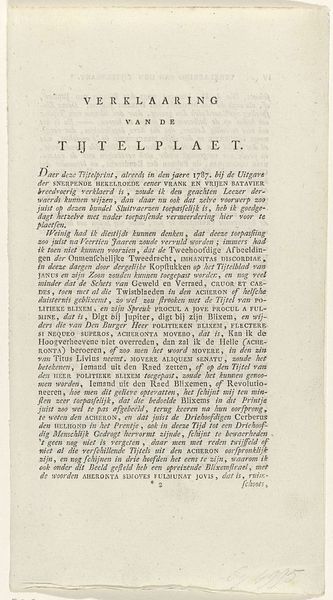
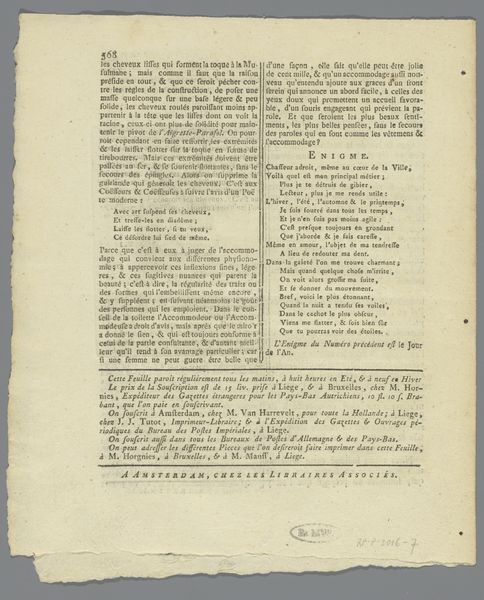
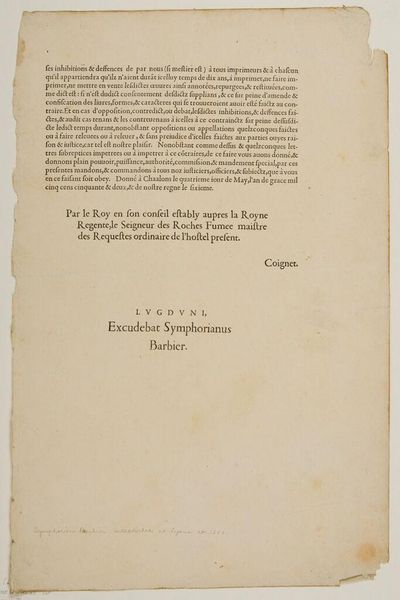
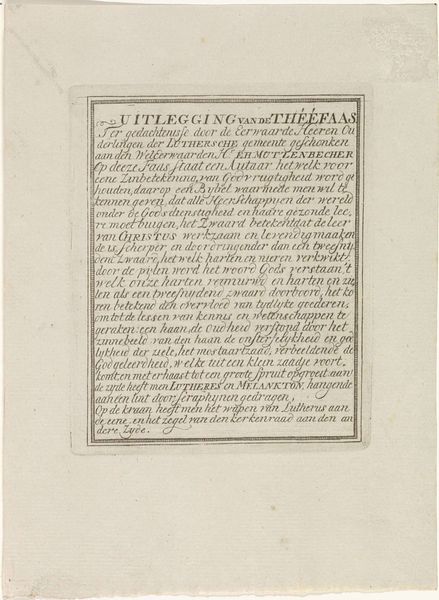
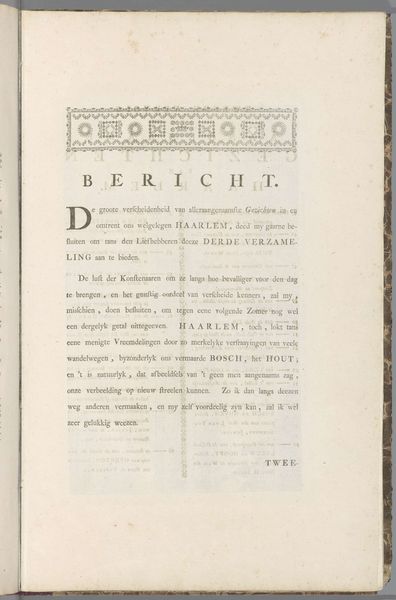
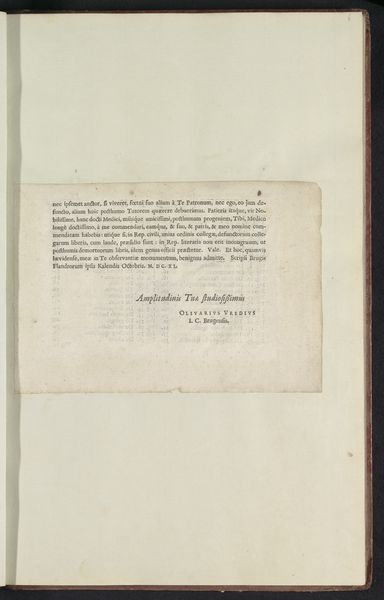
Curator: Let's explore this fascinating print titled "Bericht waarin de uitgever de prenten aanbiedt van de boekenkist waarin Hugo de Groot in 1621 uit Loevestein ontsnapt is," created around 1784. It's housed at the Rijksmuseum. Editor: Immediately, I’m struck by the power of the text itself! The font choices, the aged paper, the almost feverish pitch of the wording…it's like uncovering a long-lost broadside, brimming with urgency and intrigue. Curator: Exactly. This engraving serves as an advertisement. It announces prints depicting the book chest used in Hugo de Groot's daring escape from Loevestein Castle in 1621. Jan Barend Elwe published it. The publisher is highlighting the historical importance of this chest. Editor: So, this isn't just a depiction of an event, but a commercial piece leveraging a celebrated moment in Dutch history. Clever! It frames de Groot’s escape, positioning the prints, the container—everything, as a near-mythical object representing national pride. I'd buy one. Curator: The text certainly plays up that angle. It refers to de Groot as an "immortal patriot" and emphasizes how his escape reminds citizens of the value of freedom. These were tumultuous times with plenty of civil unrest, so de Groot's actions were an emblem for personal liberties. Editor: I also like how the print acknowledges its own making—the mention of J.C. Schultsz and J.C. Philips. The creation of history, even something relatively immediate, is acknowledged within the very document creating and celebrating it. The paper’s tea stained appearance contributes to this as well! Curator: True. It speaks to a desire for accuracy and authenticity, essential for connecting to its intended audience through recognizable visual imagery. Editor: Ultimately, I appreciate that the print uses a sensational narrative to market historical relics while underscoring a collective yearning for liberty during the late 18th century. Curator: A tangible piece connecting the past to contemporary civic values. Thank you for pointing out the obvious clever sales tactic.