


Curatorial notes
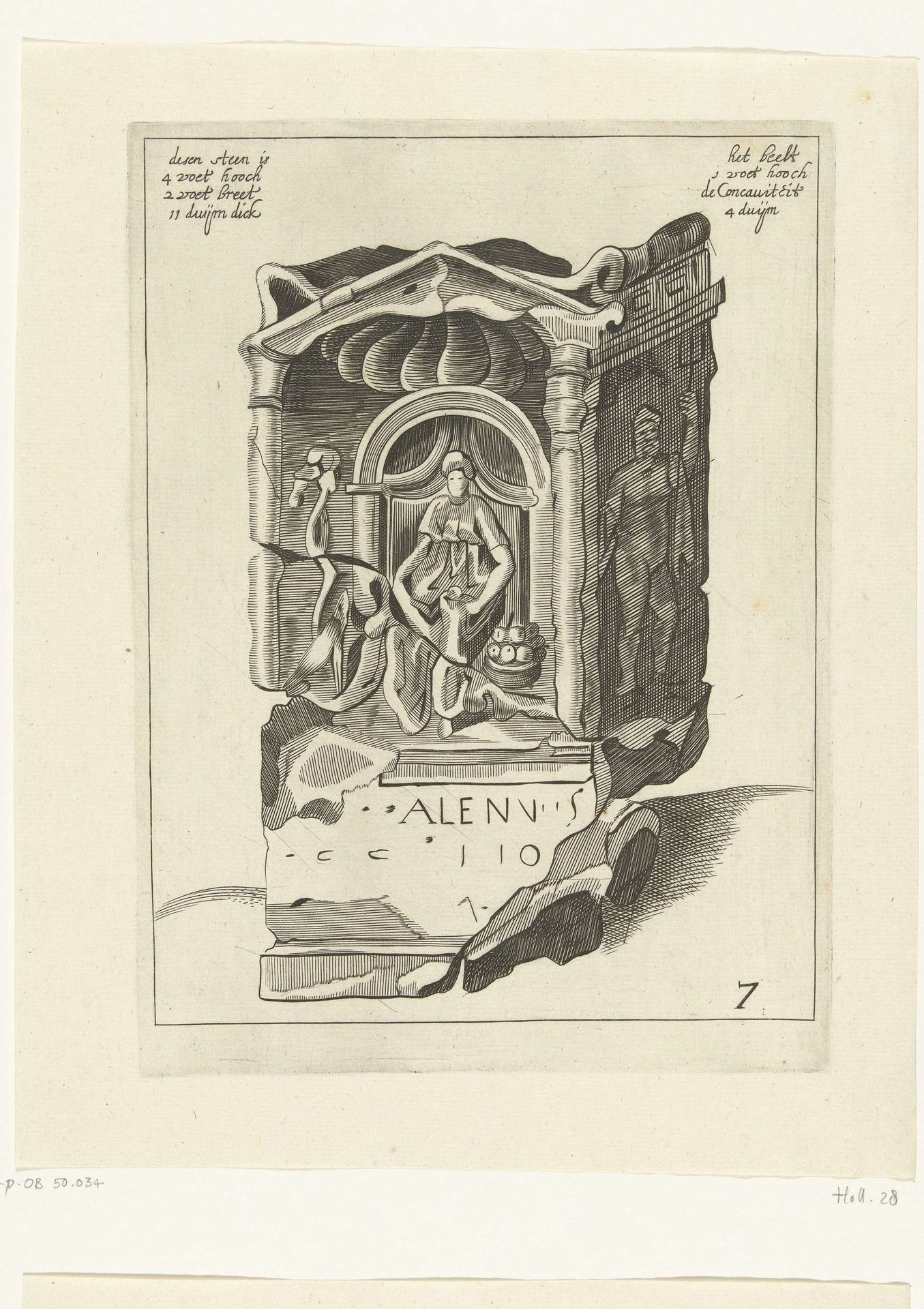
Editor: This is Hendrick Danckerts' 1647 engraving, "Nehalennia-altaar." The broken quality makes me feel as if I'm looking at an ancient artifact, unearthed after centuries. What strikes you when you see this image? Curator: The initial visual impact derives from the artist's skillful rendering of texture and form through line. Note how Danckerts utilizes varied densities of hatching to delineate the relief carving, simulating three-dimensionality on a two-dimensional plane. The use of chiaroscuro is compelling. Do you perceive a Baroque aesthetic operating in this piece, as opposed to, say, the geometric flatness in many Medieval works? Editor: I think so. The shadows create such depth, particularly in the folds of Nehalennia's robes. So, you’re seeing it more as a study of form than as just a historical document? Curator: Precisely. Observe how the composition employs a series of vertical and horizontal lines to establish a sense of structure. This formal interplay, between the carved altar's figural depiction and the graphic qualities of the print, underscores the artwork’s aesthetic complexity. Are we viewing an historical artifact or is the artist constructing new knowledge using intaglio printmaking practices? Editor: It's almost like the artist is inviting us to consider how we look at and interpret objects from the past, by manipulating what he depicts on the surface. Curator: Precisely. Through the arrangement of line, texture, and form, Danckerts constructs an intellectual discourse on history, image, and aesthetic experience, and further emphasizes our need to think about our role as viewers. Editor: It's fascinating how much a formalist reading reveals! This close look has truly changed my understanding of this print.