

1692
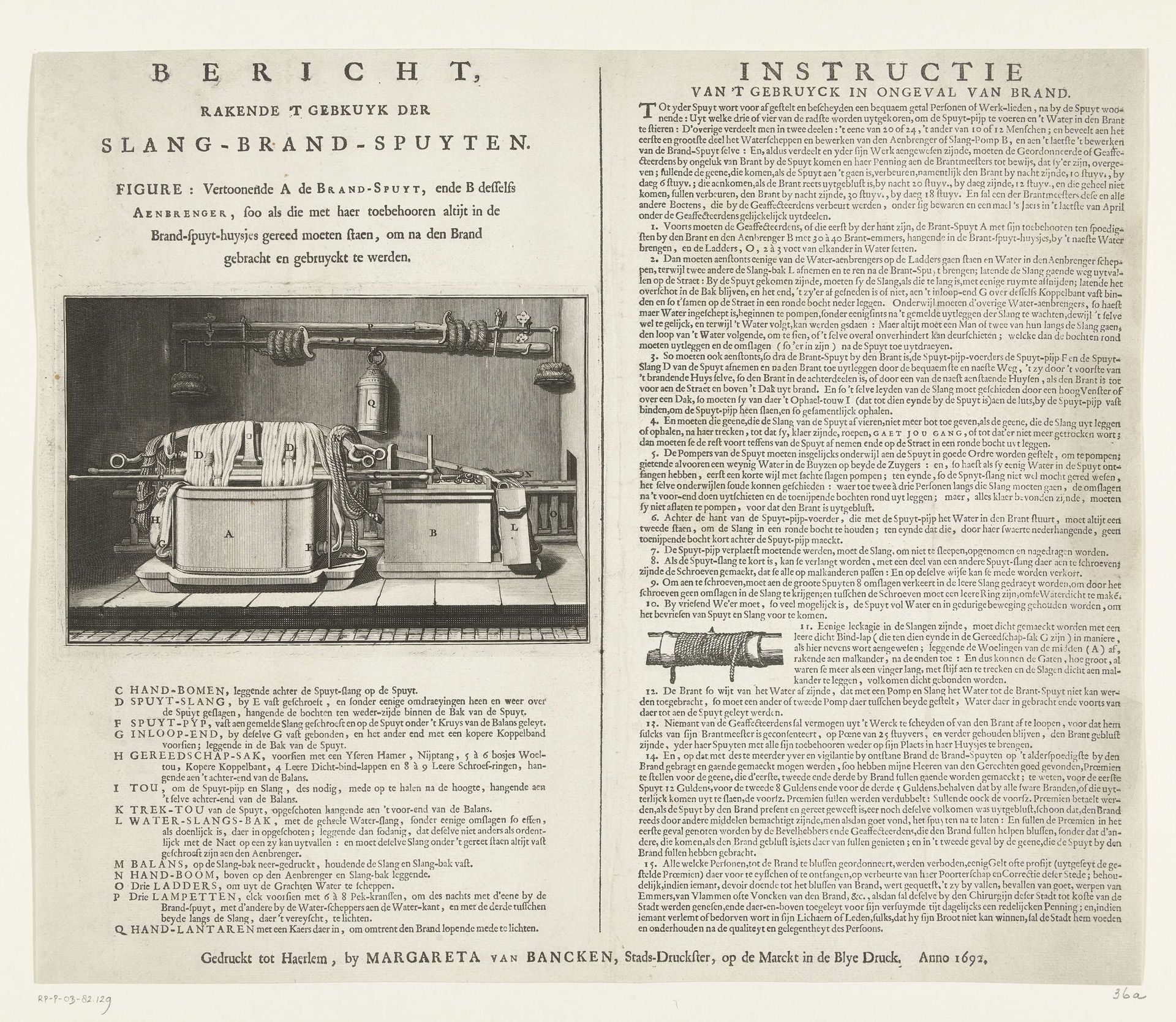
Instructie over het gebruik van de slangbrandspuiten, 1692

Listen to curator's interpretation
Curatorial notes
Editor: Here we have a print from 1692 titled "Instructie over het gebruik van de slangbrandspuiten," which translates to "Instructions on the use of hose fire extinguishers." It's an engraving, and the artist is Margareta van Bancken. What immediately strikes me is the density of information; it seems to be a manual or guide of some kind. What do you make of it? Curator: It’s fascinating to consider this not simply as a static image, but as a piece of visual rhetoric intended for a specific purpose and audience within a particular societal context. Think about the burgeoning urban centers of the Dutch Republic in the 17th century. Fire was a constant threat. Editor: So, this wasn't just about art, it was about public safety? Curator: Precisely. The print served a very practical public role, disseminating knowledge about fire safety technology. It was part of a broader visual culture aimed at informing and shaping public behavior. Margareta van Bancken, as a city printer, held a civic position that impacted how knowledge was made accessible to the population. How does that impact our appreciation of the print? Editor: It makes it feel more grounded. It's not just an image, it's a tool. Curator: Exactly. The way it depicts the fire-fighting equipment—the labels, the cross-sections—it's all designed to communicate very specific information. In today’s world, this print anticipated visual language to serve an important social function, helping the city to modernize. What I wonder is what it communicated about fire safety? What impression of civic responsibility did people perceive? Editor: It's interesting how practical and aesthetically designed the image is simultaneously. I hadn't considered the role of public education in art so early. Curator: Precisely. It's a potent reminder that art, and the institutions that promote it, play an important role in shaping our collective experience.