n.d.
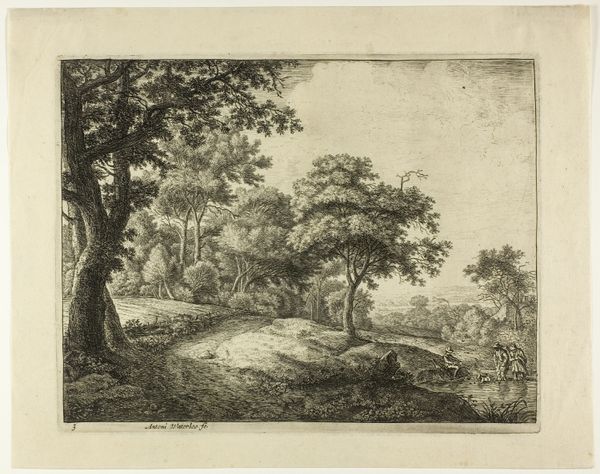
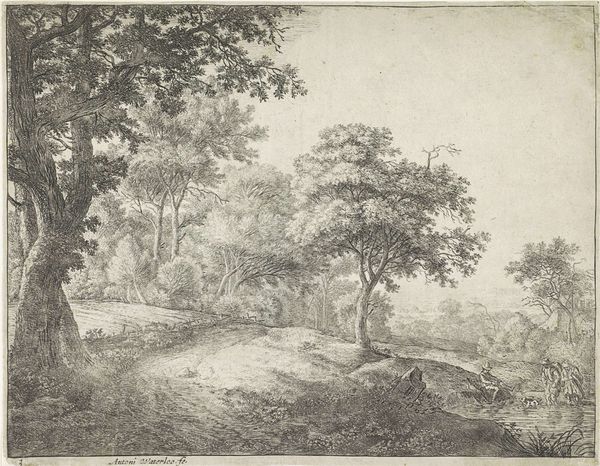
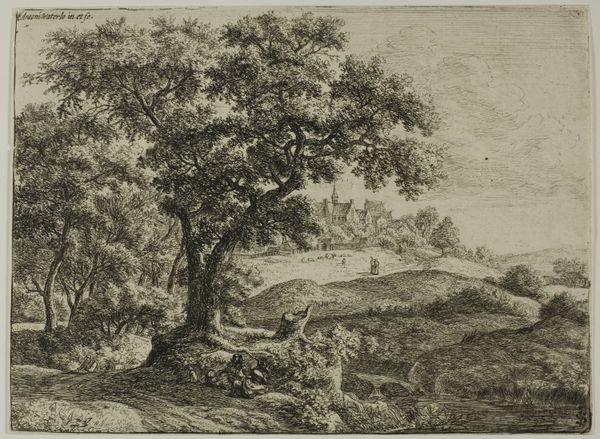
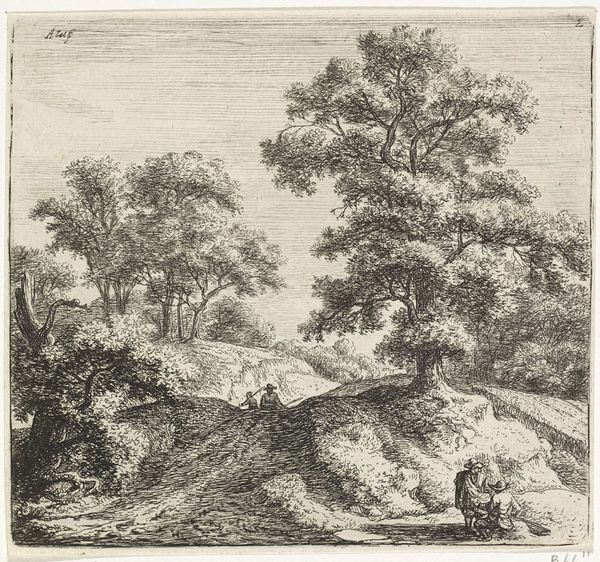
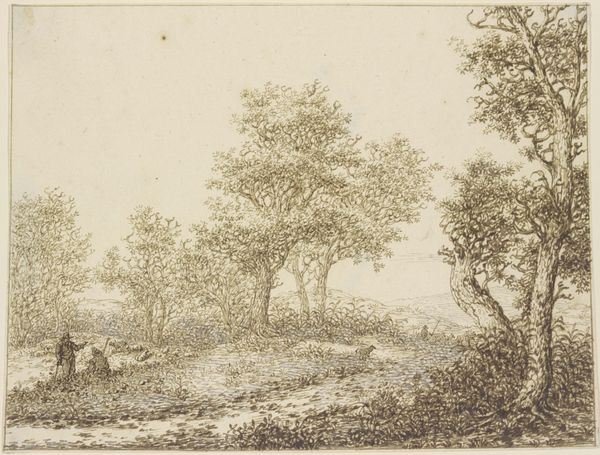
Two Men in the Hollow


Listen to curator's interpretation
Curatorial notes
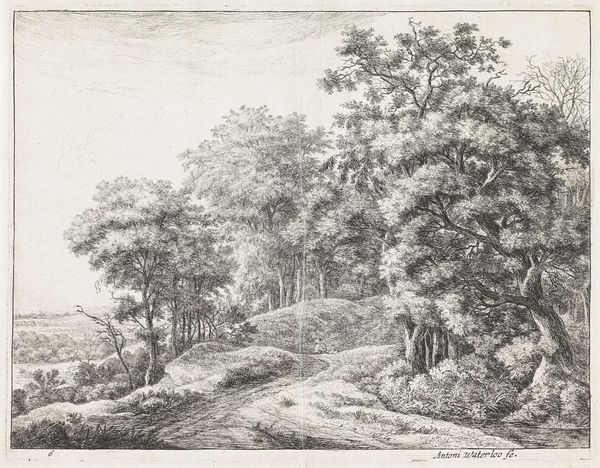
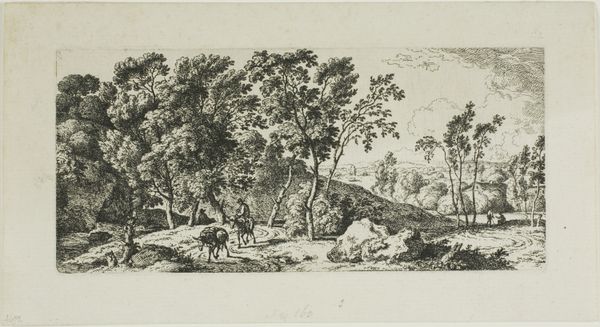
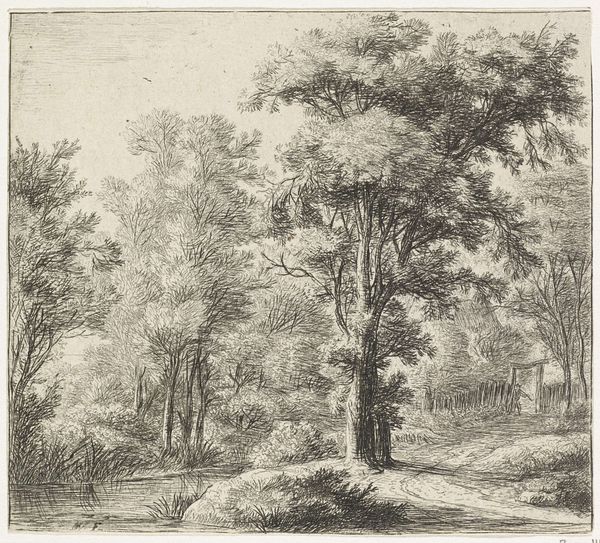
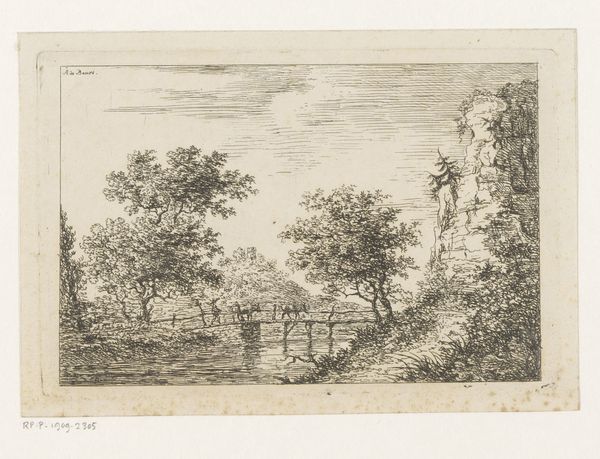
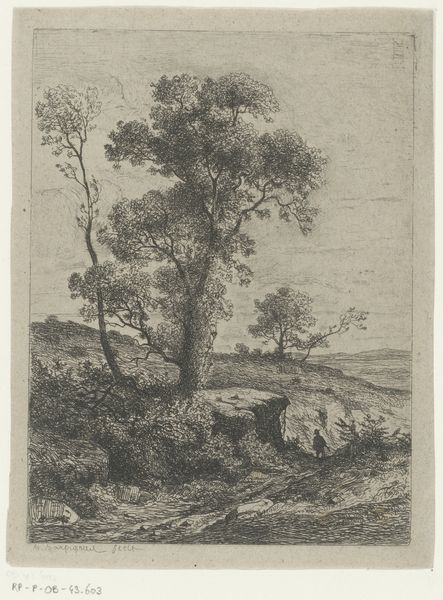
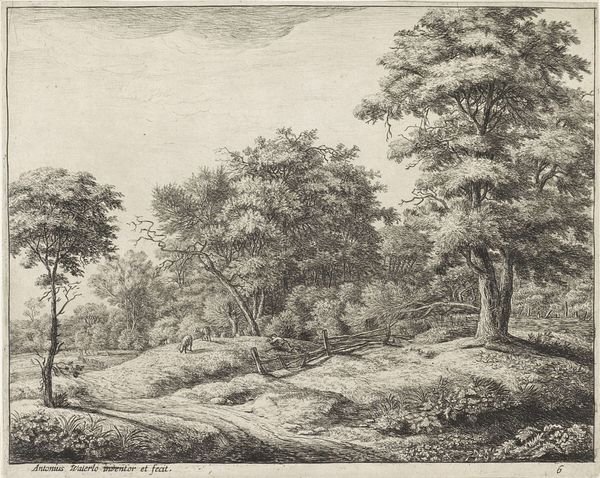
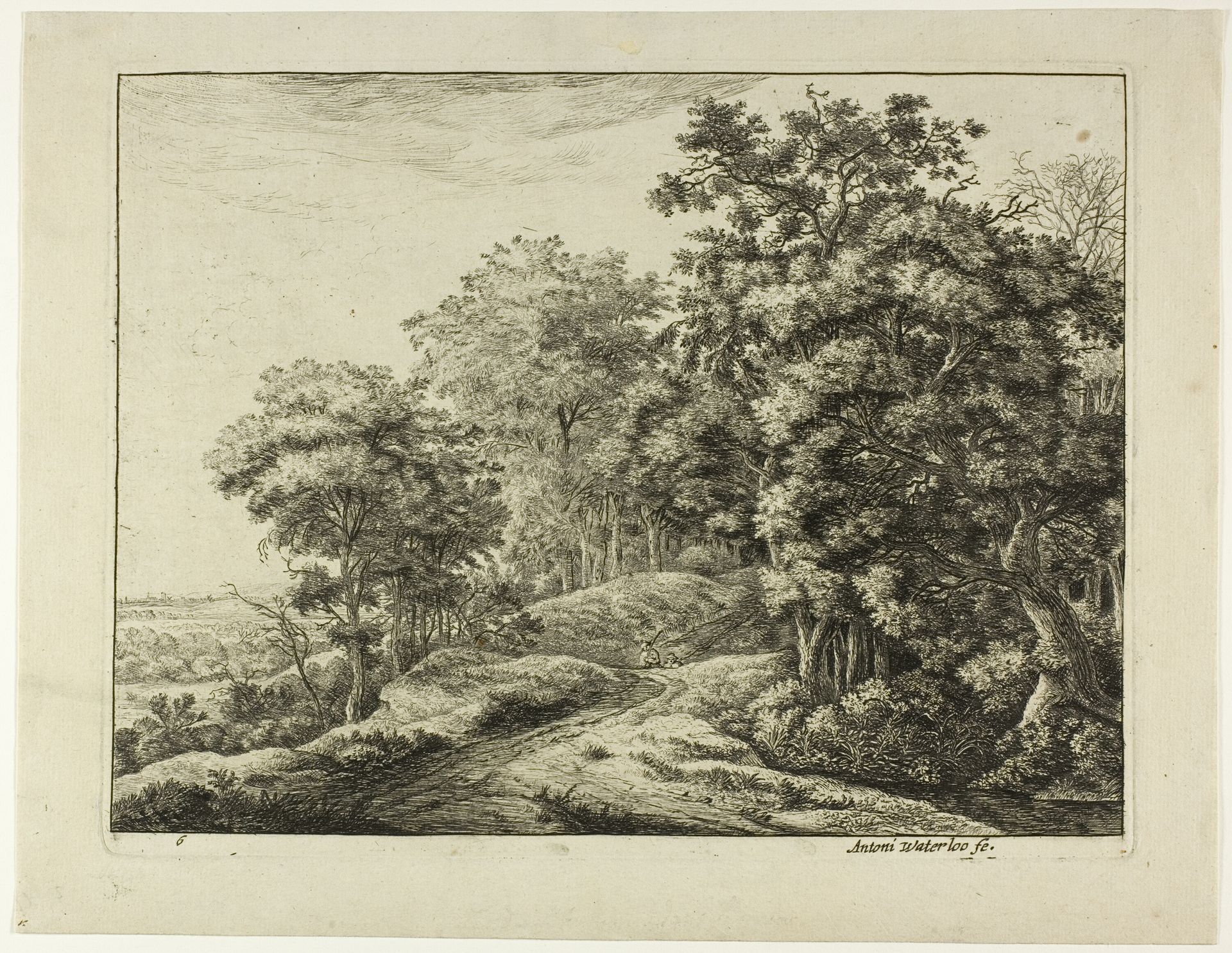
Editor: So, this is "Two Men in the Hollow" by Anthonie Waterloo, etched on paper, undated. It has such a peaceful, almost nostalgic mood. What do you see in this piece, looking at it through a historical lens? Curator: Waterloo’s landscapes reflect a specific moment in Dutch art. During the 17th century, there was growing fascination with the common landscape, particularly scenes depicting everyday life. Does this resonate with you? Editor: Definitely! It makes me think about how art was becoming more accessible, depicting things people could actually see and experience. Curator: Precisely! These types of landscape etchings gained popularity, acting almost like early photographs, disseminating images of the countryside widely. What do you notice about the composition of the trees themselves? Editor: They seem almost idealized? Like they represent a wilder version of the managed farmland in the background. Maybe a symbol of freedom, compared to the cultivated landscape. Curator: Exactly! It is possible that there's a certain political dimension too. This idealization of nature coincided with urbanization and could represent a yearning for a simpler, more "authentic" existence. What role do you think prints like this might have played in shaping national identity? Editor: That’s a great question. Maybe these prints contributed to a shared idea of what it meant to be Dutch, tying it to the land and a certain rustic ideal? I never thought about landscape art that way before. Curator: These landscapes served not just as pretty pictures, but also helped cultivate collective values and notions about national identity and socio-political commentaries. Editor: I'll definitely look at landscapes differently now! Thanks for pointing out that it’s about more than just nice scenery.