metal, sculpture, wood
#
metal
#
sculpture
#
wood
Dimensions: model height 19.5 cm, model width 21.9 cm, model depth 18 cm, packaging capsule height 22.5 cm, packaging capsule width 82.5 cm, packaging capsule depth 22.5 cm
Copyright: Rijks Museum: Open Domain
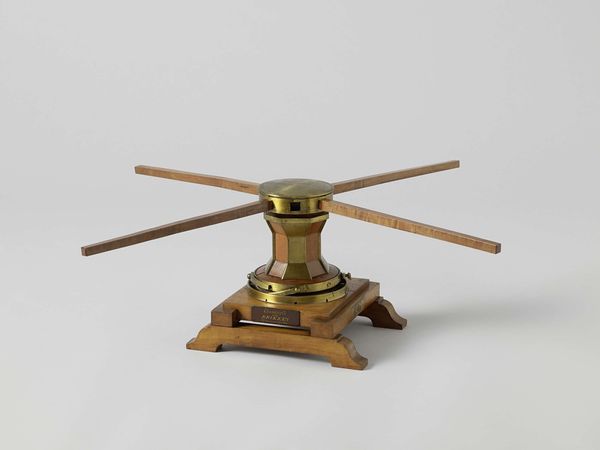
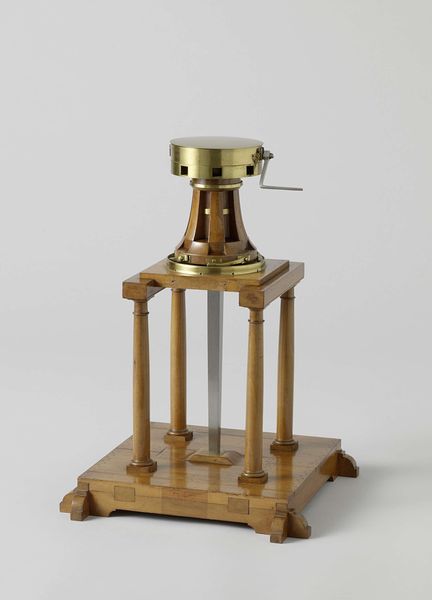
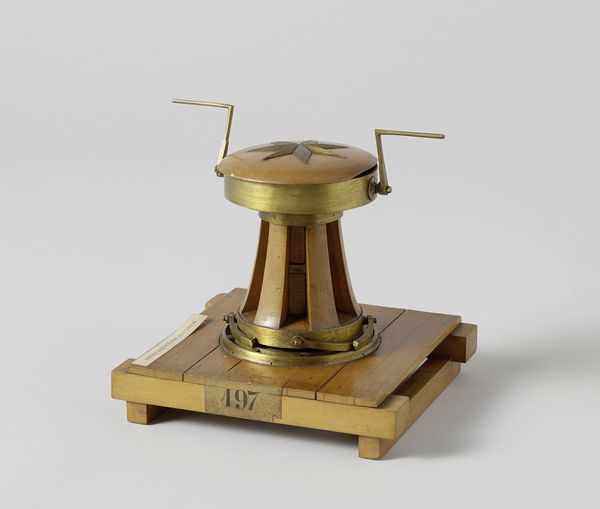
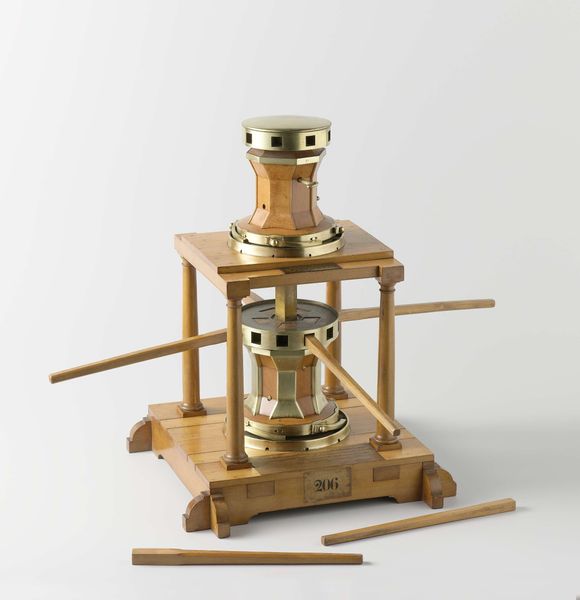
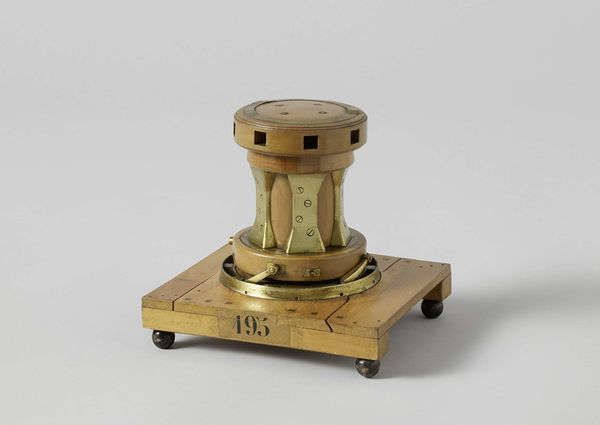
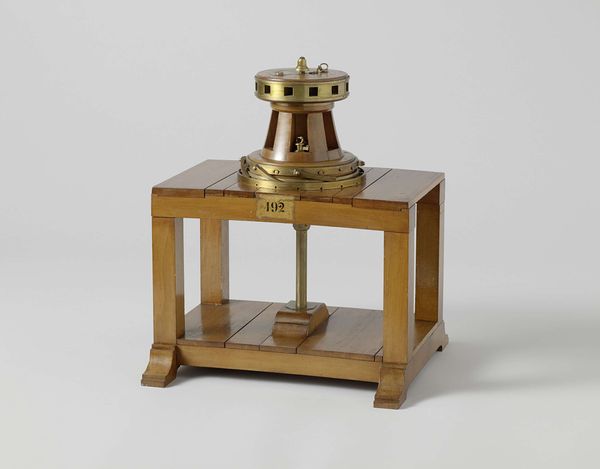
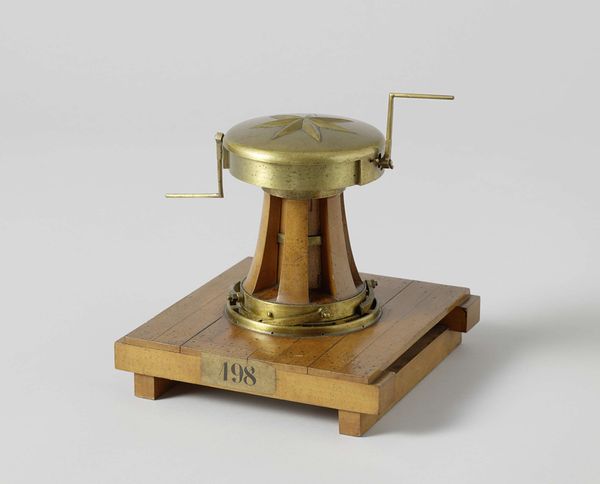
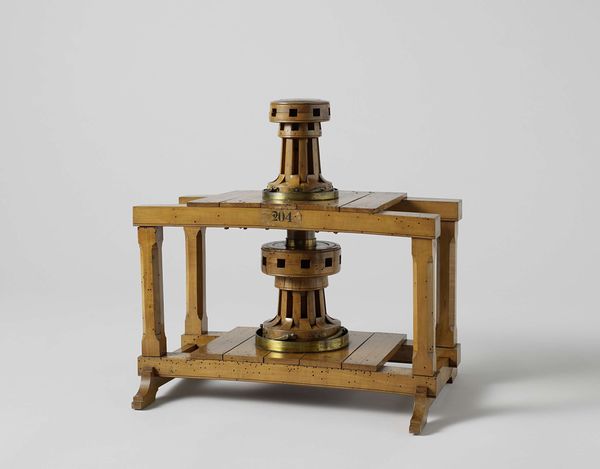
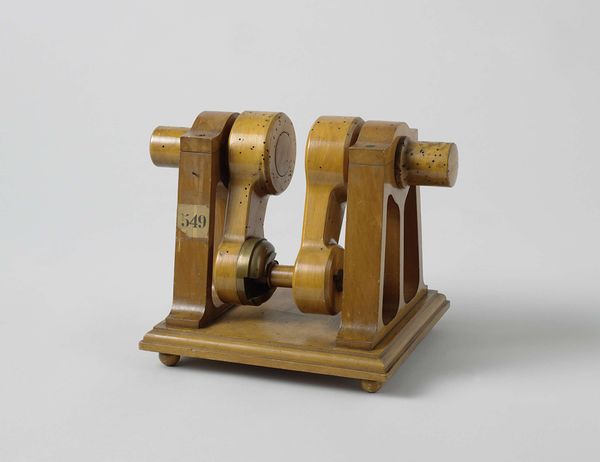
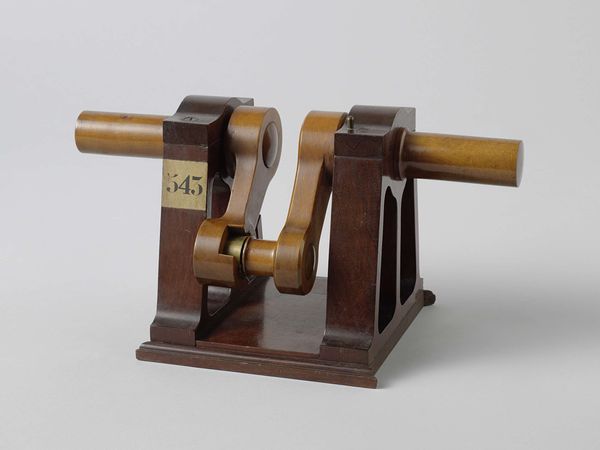
Editor: Here we have a "Model of a Capstan" from around 1848 to 1850, crafted from wood and metal by Rijkswerf Vlissingen. I find it remarkable how something so utilitarian can also possess an inherent elegance in its construction. What catches your eye when you look at this piece? Curator: I see a distillation of labor. Consider the Rijkswerf Vlissingen, a Dutch shipyard. This model isn't just a representation; it's a physical manifestation of industrial processes. Each piece of wood and metal, chosen and crafted, speaks to the division of labor, resource extraction, and the social organization necessary for 19th-century shipbuilding. The interplay of materials highlights the transition from sail to steam. What kind of labor do you imagine was required to create a functional capstan like this? Editor: I hadn't really considered the labour process involved. A lot of careful work in different materials I guess. So, the choice of materials, then, isn't arbitrary? The metal perhaps representing progress and strength? Curator: Exactly. And wood, of course, recalling the older traditions of shipbuilding even as metal asserted itself. Think of the cost involved in its making – who was able to afford to display this, or other fine instruments from the time period, and why? These models themselves could function as display objects, emblems of a society’s wealth derived directly from material production and overseas trade, masking at the same time some of its hidden dark sides. Editor: That's a very insightful point. I suppose I hadn't considered it within its full social context. Curator: Considering these aspects helps us to unpack a much wider set of considerations about craft and high art. What did you find most engaging in considering its materiality and creation process? Editor: Reflecting on the production process really brings the object to life, helping to understand not just its function, but also the values and priorities of the time. Curator: And for me, understanding its materiality, both literal and historical, grounds our interpretations in something more concrete and tangible.
Comments
No comments
Be the first to comment and join the conversation on the ultimate creative platform.
 Collect
 React
React Comment
More like this