About this artwork
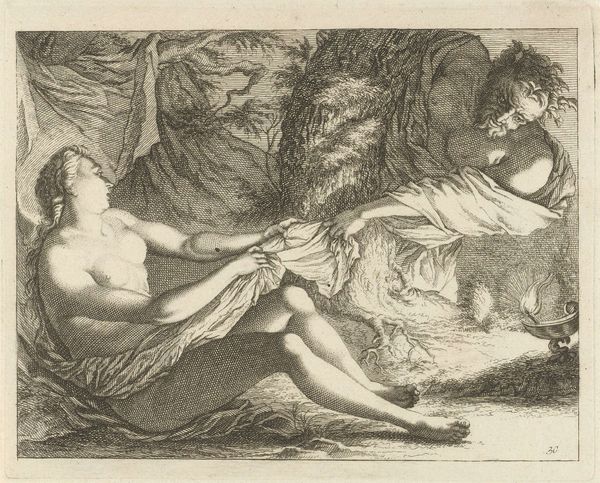
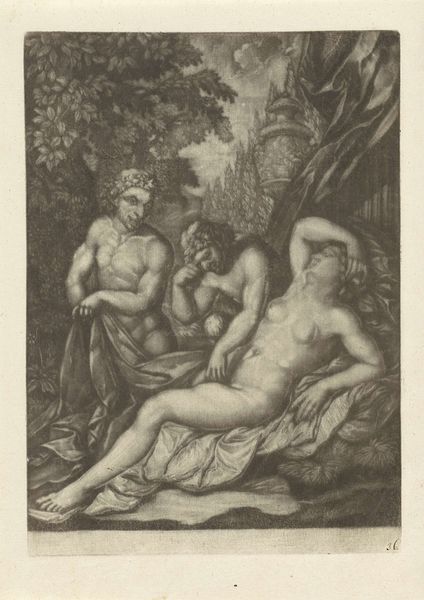
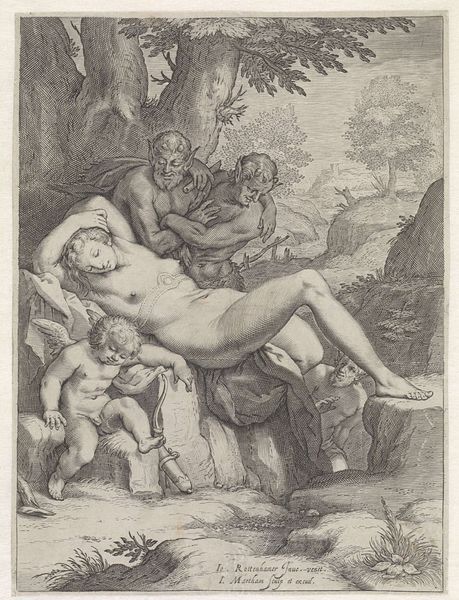
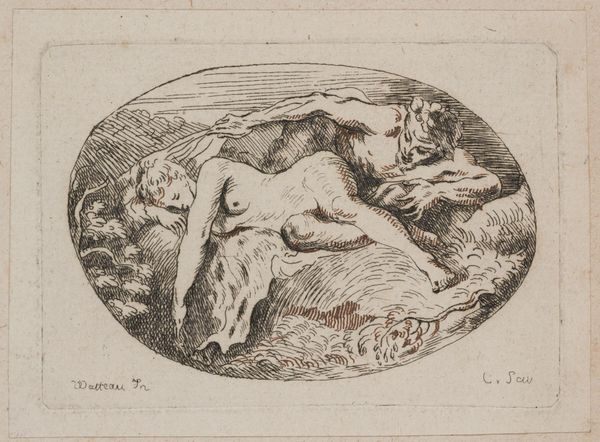
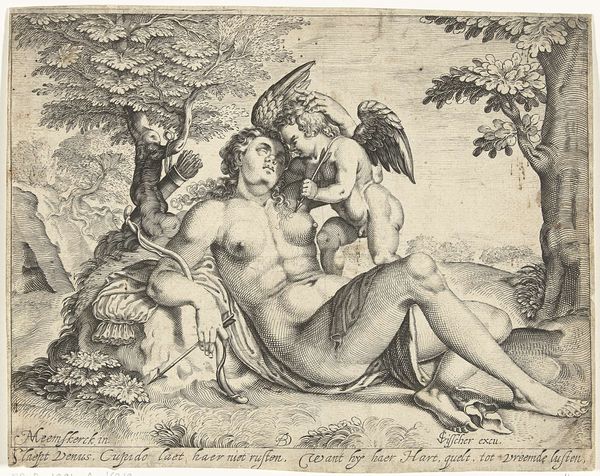
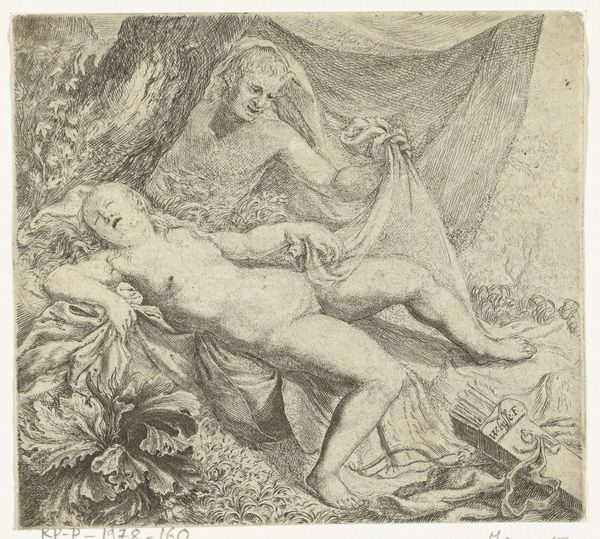
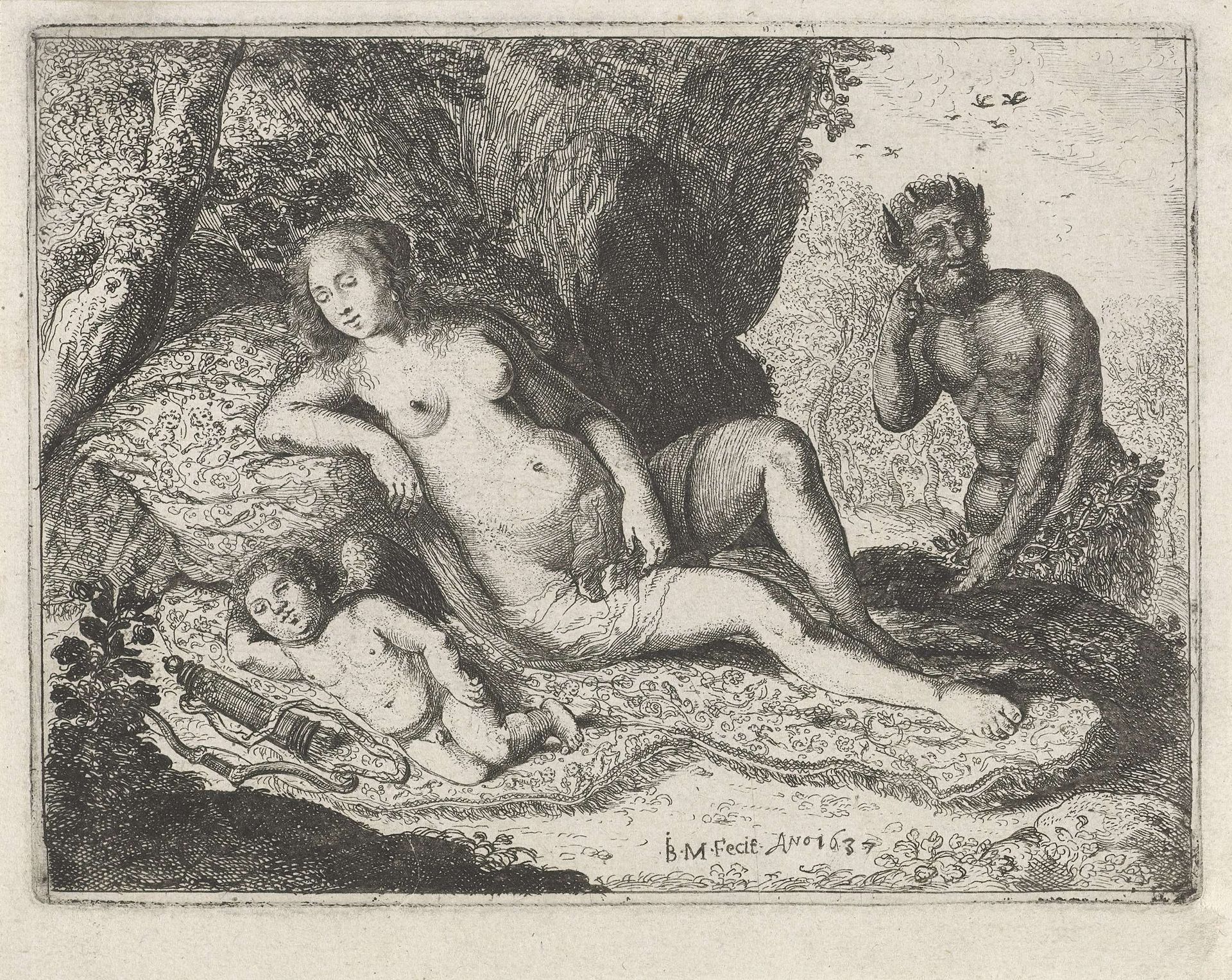
Jan Barentsz. Muyckens etched this depiction of a sleeping Venus spied upon by a satyr in 1634. The iconography of Venus, Cupid, and the Satyr carries echoes from antiquity. Venus, the goddess of love and beauty, is often depicted nude to evoke themes of desire and fertility. Cupid, her son, sleeping with his bow discarded, adds a layer of vulnerability. The satyr, a symbol of untamed nature, spies on them; his presence introduces a narrative of voyeurism. This composition calls to mind similar themes explored in Renaissance paintings, like those by Titian, where the exposure of female beauty to a male gaze carries complex undertones of power and vulnerability. The satyr's presence introduces an element of the Dionysian, a primitive impulse that contrasts with Venus’s cultivated beauty. The cyclical nature of these symbols continues through the ages, reflecting humanity’s ongoing negotiation between the Apollonian and Dionysian forces, between order and chaos, beauty and primal instinct, constantly reappearing in art and culture in new forms.

Artwork details
- Medium
- etching, engraving
- Dimensions
- height 106 mm, width 140 mm
- Copyright
- Rijks Museum: Open Domain
Tags
Comments
Share your thoughts
About this artwork
Jan Barentsz. Muyckens etched this depiction of a sleeping Venus spied upon by a satyr in 1634. The iconography of Venus, Cupid, and the Satyr carries echoes from antiquity. Venus, the goddess of love and beauty, is often depicted nude to evoke themes of desire and fertility. Cupid, her son, sleeping with his bow discarded, adds a layer of vulnerability. The satyr, a symbol of untamed nature, spies on them; his presence introduces a narrative of voyeurism. This composition calls to mind similar themes explored in Renaissance paintings, like those by Titian, where the exposure of female beauty to a male gaze carries complex undertones of power and vulnerability. The satyr's presence introduces an element of the Dionysian, a primitive impulse that contrasts with Venus’s cultivated beauty. The cyclical nature of these symbols continues through the ages, reflecting humanity’s ongoing negotiation between the Apollonian and Dionysian forces, between order and chaos, beauty and primal instinct, constantly reappearing in art and culture in new forms.
Comments
Share your thoughts