About this artwork
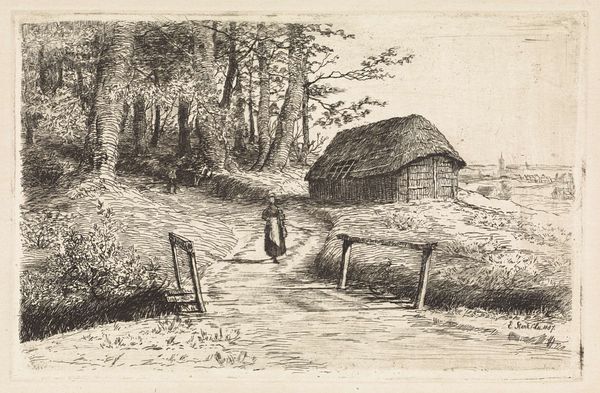
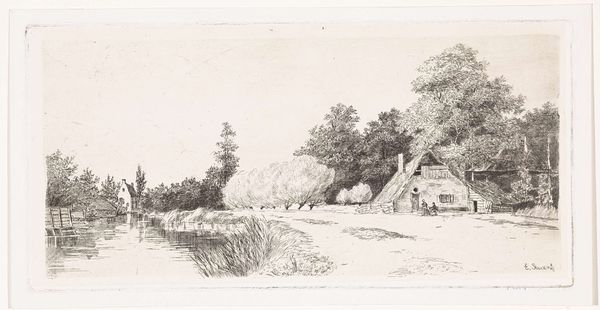
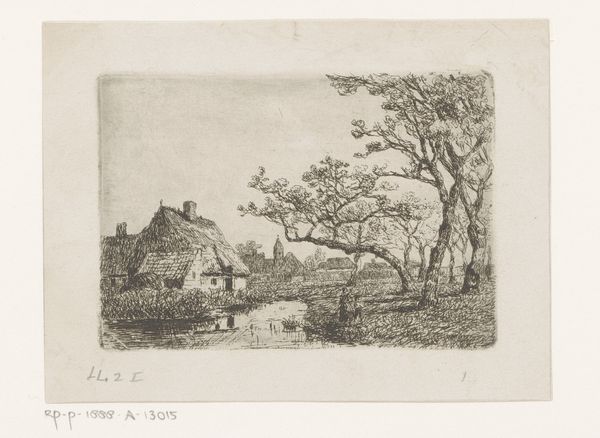
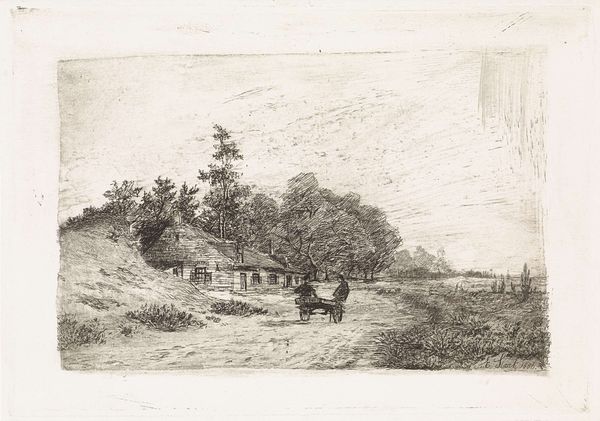
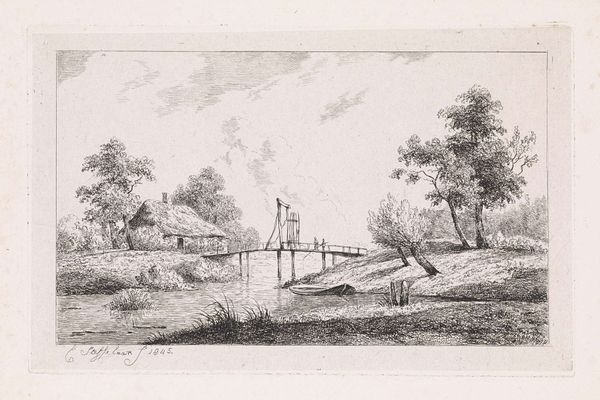
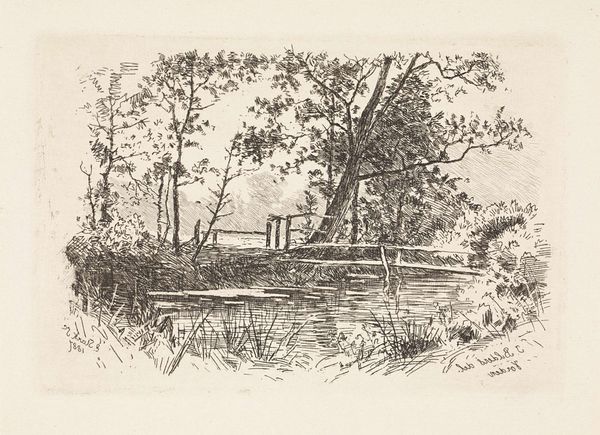
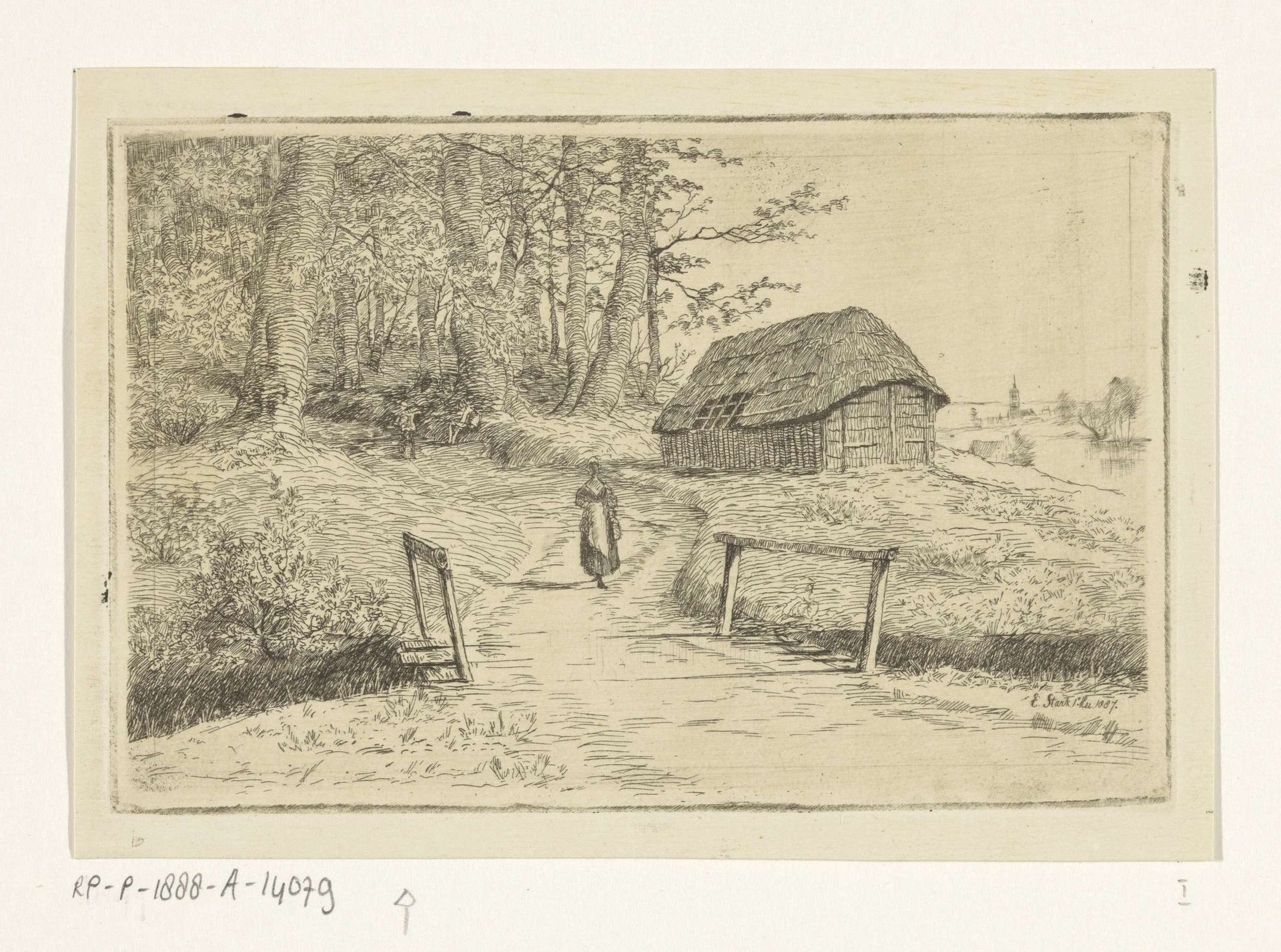
Editor: This etching, "Landschap met bruggetje en schuur" - or Landscape with bridge and barn - is attributed to Elias Stark and possibly dates back to 1887. I find it rather charming, a quiet pastoral scene with very subtle details achieved through the etching technique. What strikes you about it? Curator: What I see here is a powerful commentary on the changing Dutch landscape and the role of genre-painting in shaping national identity. The simplicity, what you call charming, reflects a deliberate aesthetic choice aligned with the period's focus on depicting ordinary, everyday life. Editor: How does that tie into national identity? Curator: In the late 19th century, art became a vehicle for constructing a collective memory. Pictures like this, showing idealized rural scenes, fostered a sense of shared cultural heritage, subtly reinforcing the image of an industrious and peaceful countryside. Think of it as art being used to promote certain values, especially as industrialization and urbanization took hold. This artwork almost becomes a romanticized memory, or perhaps even propaganda. The public's hunger for idyllic portrayals definitely helped boost Elias Stark's sales. Does knowing this shift how you view it? Editor: Absolutely, it gives the landscape a whole other layer. What seemed like a simple image of the countryside now carries this weight of cultural construction. I see how the tranquil setting and unassuming people play into creating a very specific narrative about Dutch life. Curator: Exactly! The "bridge and barn" aren't just visual elements, but symbols deeply embedded within the era's cultural discourse. Editor: It’s fascinating to think about the politics of imagery in something that appears so unassuming on the surface. It's also made me think about who controls these narratives and how. Thanks so much for the added depth. Curator: My pleasure, it's a great lesson in reading artwork more critically.

Artwork details
- Medium
- drawing, print, etching
- Dimensions
- height 97 mm, width 148 mm
- Location
- Rijksmuseum
- Copyright
- Rijks Museum: Open Domain
Tags
Comments
Share your thoughts
About this artwork
Editor: This etching, "Landschap met bruggetje en schuur" - or Landscape with bridge and barn - is attributed to Elias Stark and possibly dates back to 1887. I find it rather charming, a quiet pastoral scene with very subtle details achieved through the etching technique. What strikes you about it? Curator: What I see here is a powerful commentary on the changing Dutch landscape and the role of genre-painting in shaping national identity. The simplicity, what you call charming, reflects a deliberate aesthetic choice aligned with the period's focus on depicting ordinary, everyday life. Editor: How does that tie into national identity? Curator: In the late 19th century, art became a vehicle for constructing a collective memory. Pictures like this, showing idealized rural scenes, fostered a sense of shared cultural heritage, subtly reinforcing the image of an industrious and peaceful countryside. Think of it as art being used to promote certain values, especially as industrialization and urbanization took hold. This artwork almost becomes a romanticized memory, or perhaps even propaganda. The public's hunger for idyllic portrayals definitely helped boost Elias Stark's sales. Does knowing this shift how you view it? Editor: Absolutely, it gives the landscape a whole other layer. What seemed like a simple image of the countryside now carries this weight of cultural construction. I see how the tranquil setting and unassuming people play into creating a very specific narrative about Dutch life. Curator: Exactly! The "bridge and barn" aren't just visual elements, but symbols deeply embedded within the era's cultural discourse. Editor: It’s fascinating to think about the politics of imagery in something that appears so unassuming on the surface. It's also made me think about who controls these narratives and how. Thanks so much for the added depth. Curator: My pleasure, it's a great lesson in reading artwork more critically.
Comments
Share your thoughts