1606
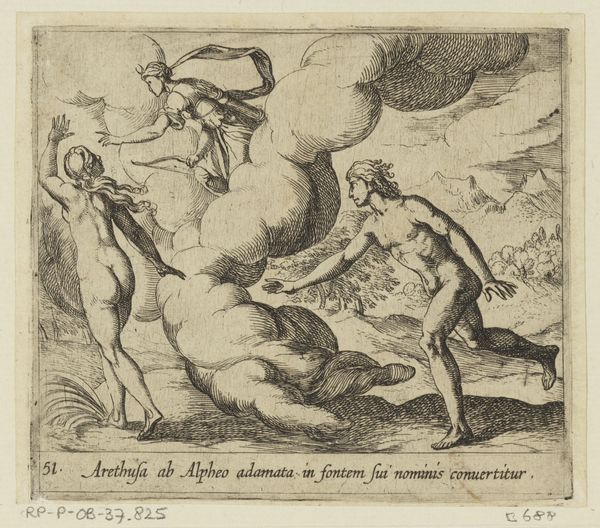
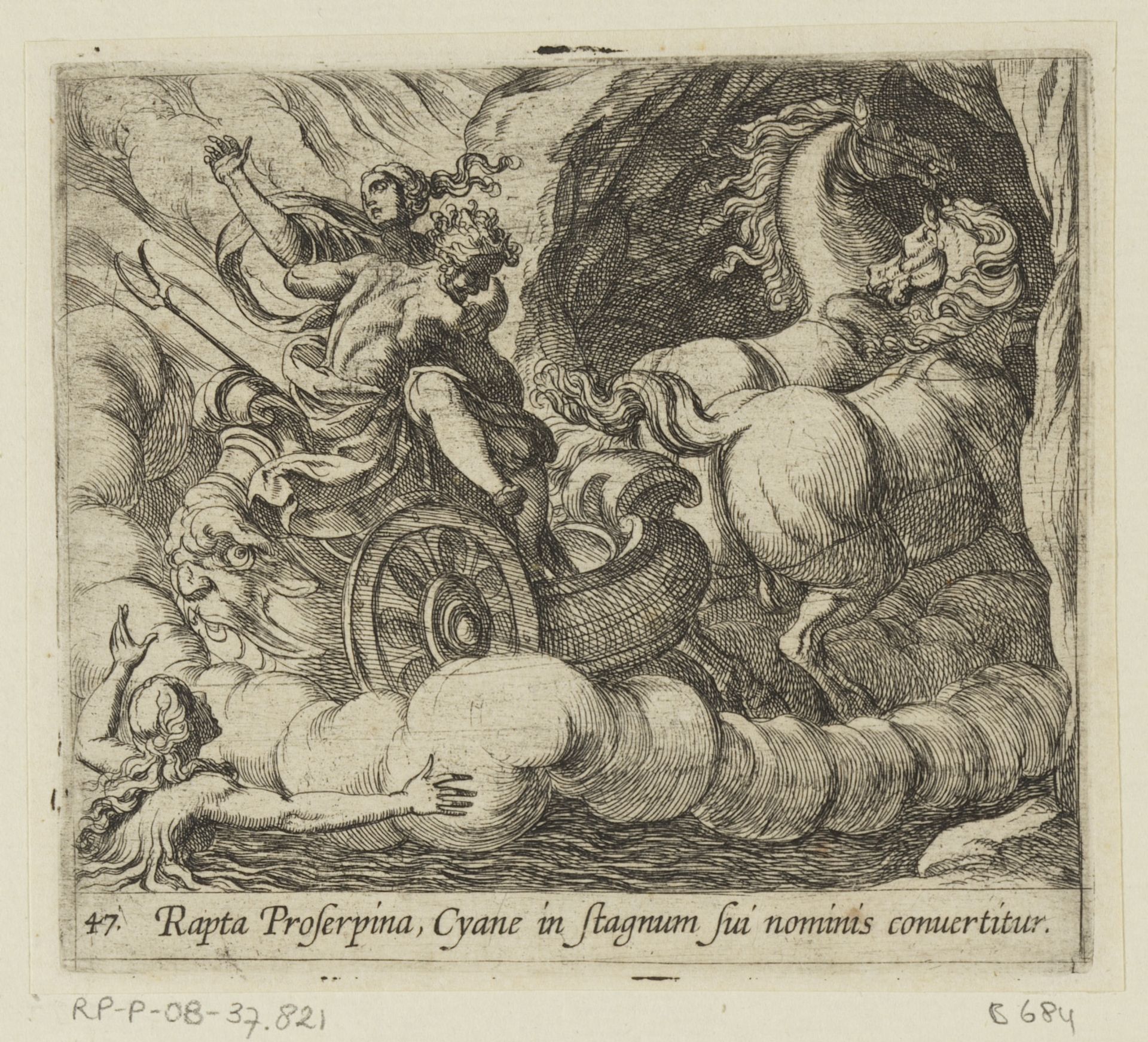
Pluto voert Proserpina langs de nimf Cyane

Antonio Tempesta
1555 - 1630Location
RijksmuseumListen to curator's interpretation
Curatorial notes
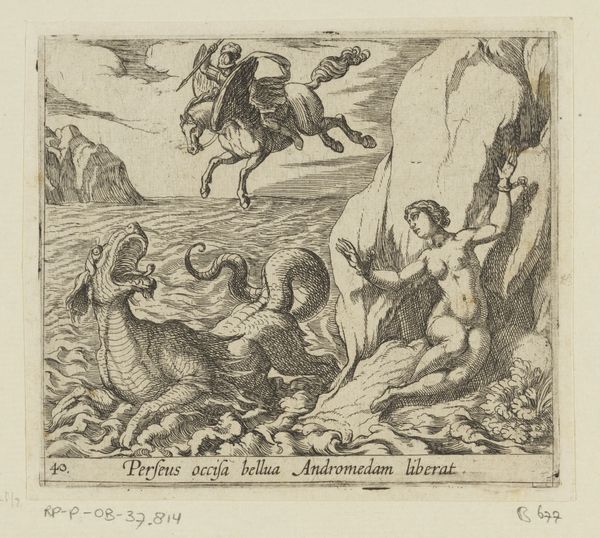
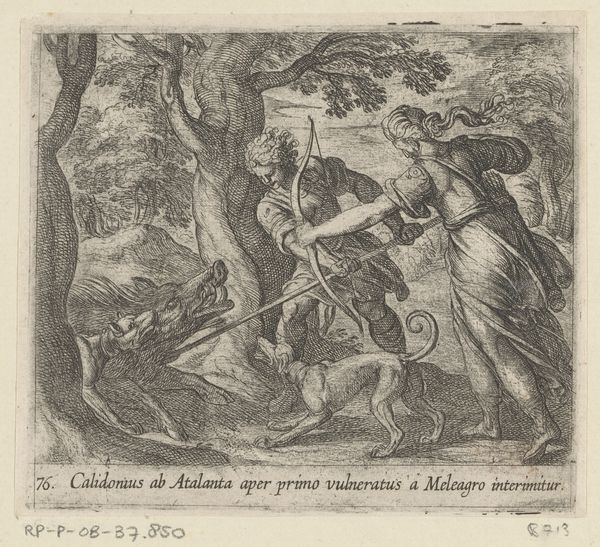
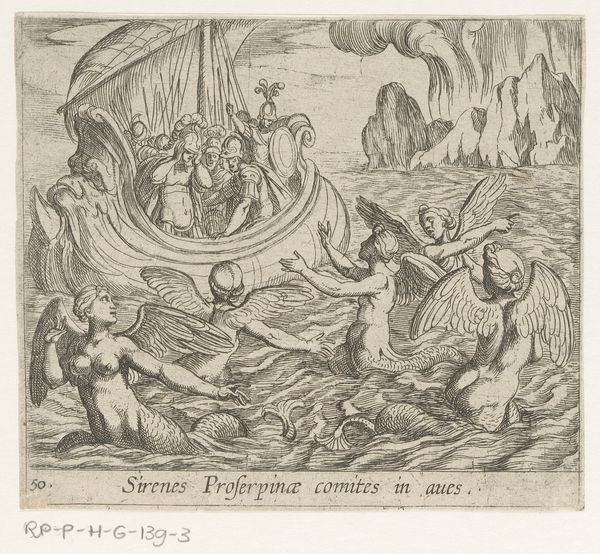
Antonio Tempesta made this print of Pluto abducting Proserpina sometime before 1630, using the technique of etching. In this process, a metal plate is coated with a waxy ground and then scratched with a needle to expose the metal. The plate is then immersed in acid, which bites into the exposed lines, creating an image that can be inked and printed. Etching allowed Tempesta to create intricate details and dramatic contrasts, evident in the swirling clouds and dynamic figures. The medium itself—a relatively reproducible and accessible one—suggests a desire to disseminate this classical story to a wider audience. The level of detail achieved speaks to Tempesta's skill and the labor-intensive nature of printmaking. Each line etched by hand contributes to the overall composition, demonstrating the artist's control over the medium and his dedication to conveying the narrative. Consider how the materiality of the print—its lines, tones, and textures—enhances the storytelling. It's a reminder that even in reproductive media, the hand of the artist and the choices they make contribute significantly to the artwork's meaning and impact.