About this artwork
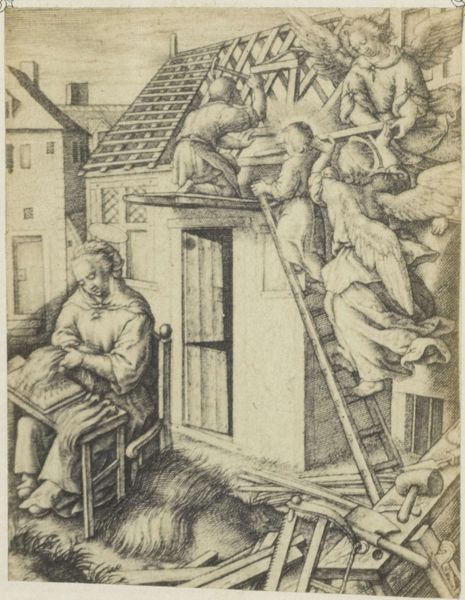
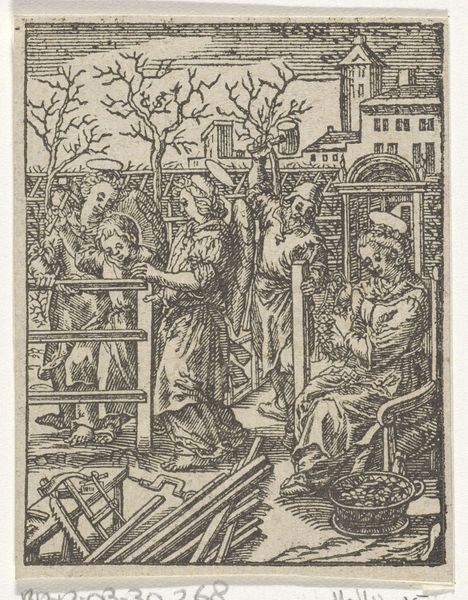
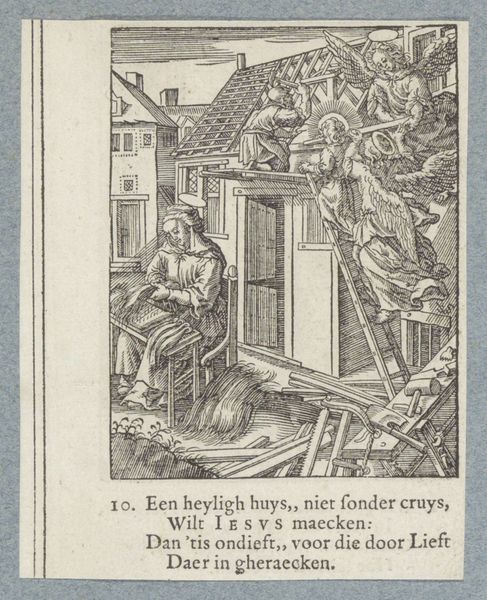
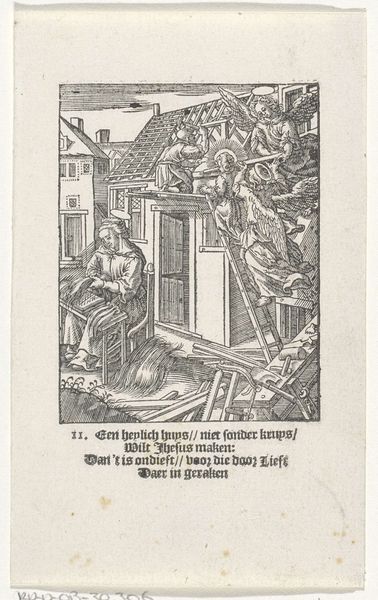
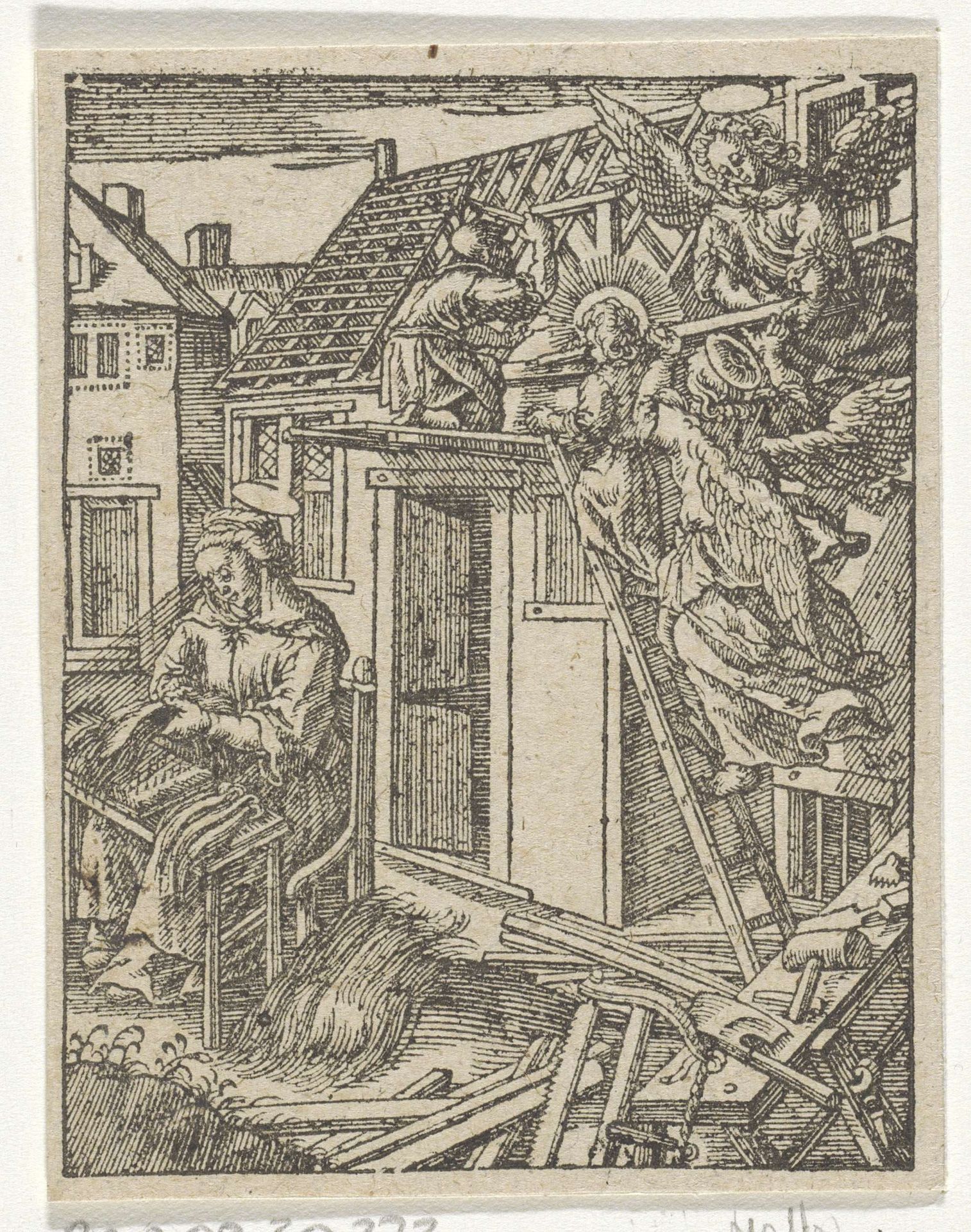
Christoffel van Sichem II created this woodcut, Christuskind legt een dak, sometime in the early 17th century. The texture of the print is immediately apparent. It shows the linear marks left by the artist's tools as they cut away the woodblock. Notice how the lines define form, creating shading and detail, from the roof tiles to the folds in the seated woman’s dress. Woodcut is an accessible medium, yet the skill required to carve such intricate details is considerable. Sichem, like many printmakers, would have been part of a workshop, and would have been working as part of a larger production process. The image itself is intriguing. It reminds us that even divine figures engage in manual labor. The depiction of Jesus working as a carpenter has a social dimension, reminding us of the dignity of work and the importance of skilled trades. Ultimately, this print demonstrates how an artist could use the woodcut medium to create images that are both aesthetically pleasing and socially relevant, blurring the lines between fine art and craft.
Christuskind legt een dak
1617 - 1658

Christoffel van (II) Sichem
1581 - 1658Location
RijksmuseumArtwork details
- Medium
- drawing, print, ink, woodcut, engraving
- Dimensions
- height 85 mm, width 66 mm
- Location
- Rijksmuseum
- Copyright
- Rijks Museum: Open Domain
Tags
Comments
Share your thoughts
About this artwork
Christoffel van Sichem II created this woodcut, Christuskind legt een dak, sometime in the early 17th century. The texture of the print is immediately apparent. It shows the linear marks left by the artist's tools as they cut away the woodblock. Notice how the lines define form, creating shading and detail, from the roof tiles to the folds in the seated woman’s dress. Woodcut is an accessible medium, yet the skill required to carve such intricate details is considerable. Sichem, like many printmakers, would have been part of a workshop, and would have been working as part of a larger production process. The image itself is intriguing. It reminds us that even divine figures engage in manual labor. The depiction of Jesus working as a carpenter has a social dimension, reminding us of the dignity of work and the importance of skilled trades. Ultimately, this print demonstrates how an artist could use the woodcut medium to create images that are both aesthetically pleasing and socially relevant, blurring the lines between fine art and craft.
Comments
Share your thoughts