About this artwork
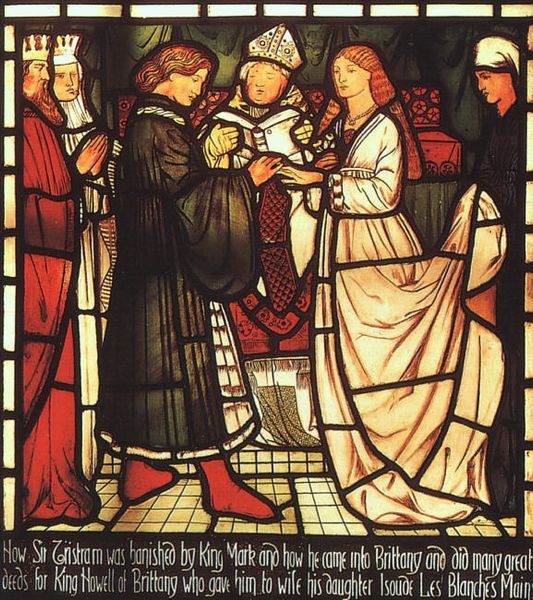
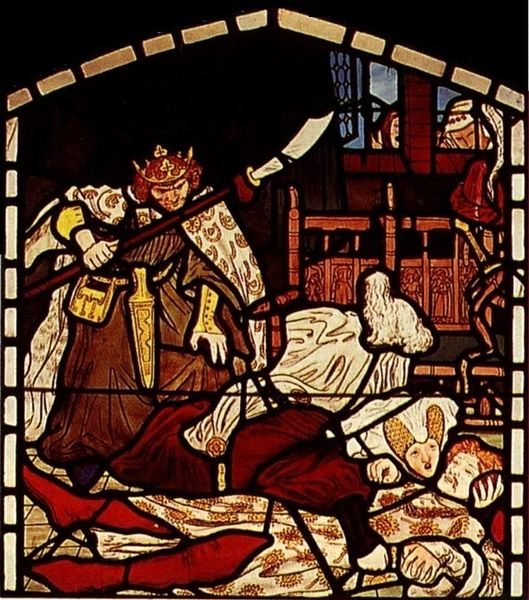
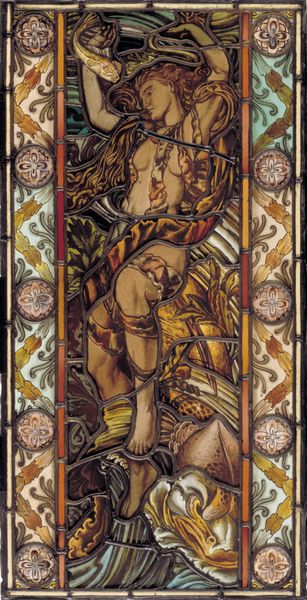
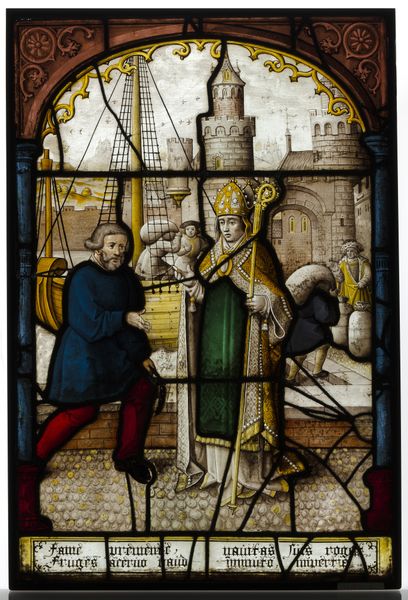
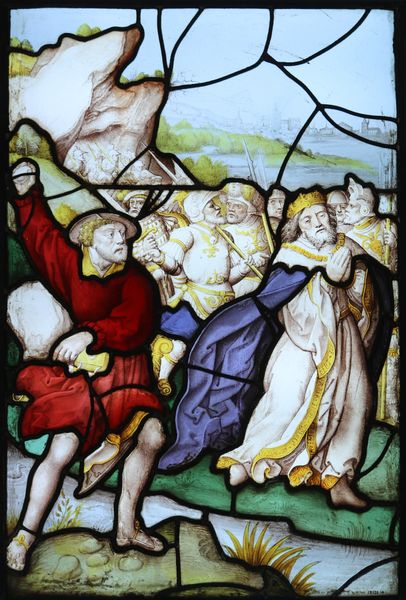
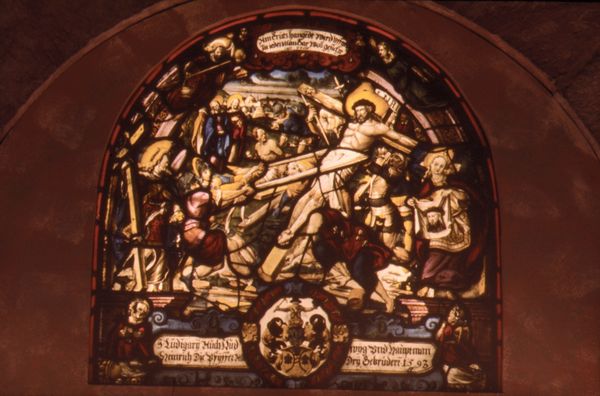
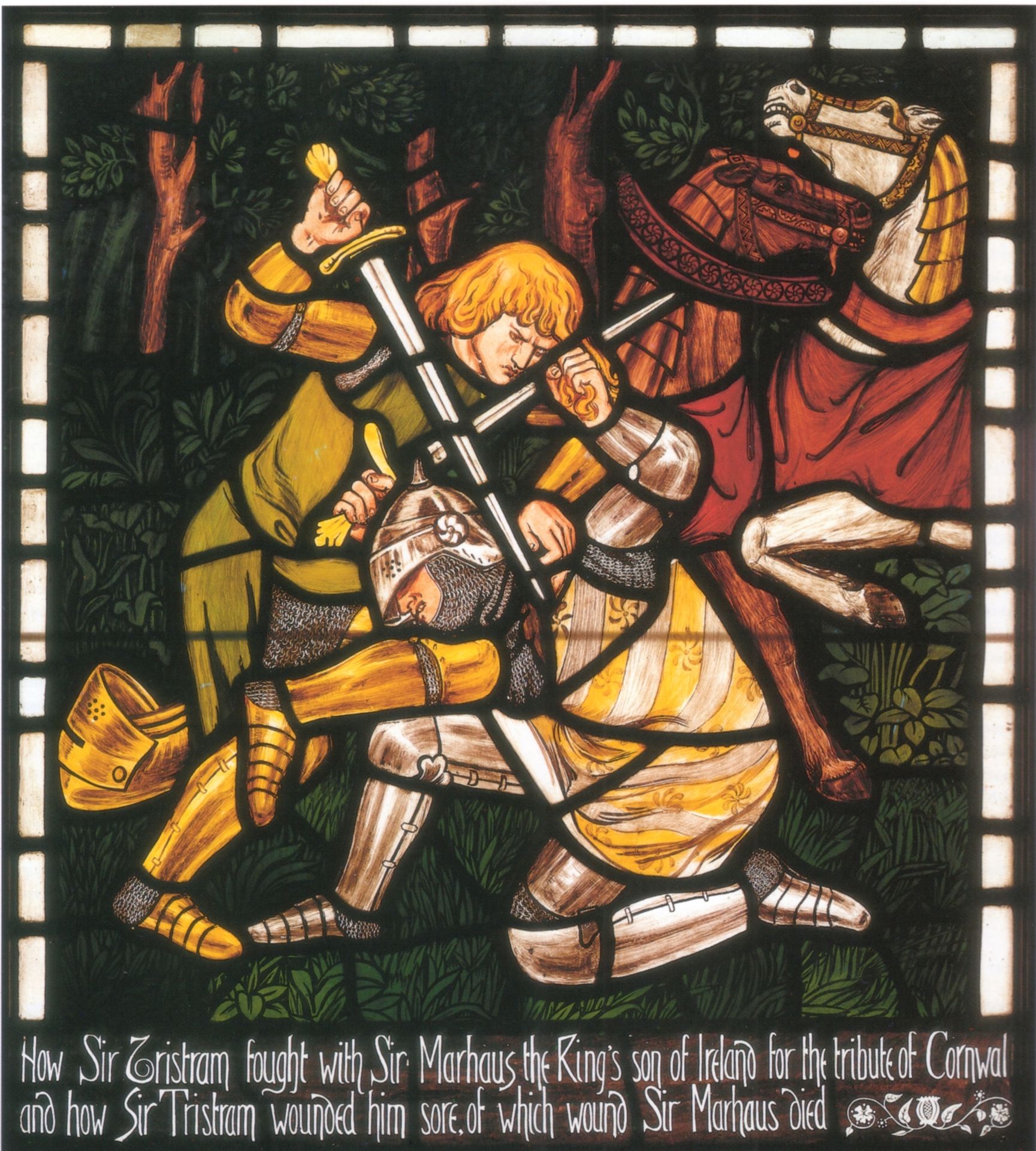
This stained-glass panel was made by Dante Gabriel Rossetti in England. It illustrates a scene from the legend of Tristan and Isolde, specifically, the fight between Tristan and Sir Marhalt. The Arthurian legends that inspired Rossetti and his Pre-Raphaelite contemporaries were deeply ingrained in the cultural imagination of Victorian England, informing ideas of nationhood and chivalry. Rossetti's interpretation, however, offers more than a simple illustration; it invites us to contemplate the Victorian fascination with the medieval past, refracted through the lens of contemporary social anxieties and artistic sensibilities. The visual codes, such as the knights' armor, the swords, and even the dark, dense forest, evoke a romanticized version of the medieval era. But, beyond mere nostalgia, Rossetti is engaging with the revival of interest in medieval craftsmanship, aligning himself with the Arts and Crafts movement. Understanding this artwork requires delving into a range of historical resources, from medieval literature to Victorian social and artistic manifestos. Only then can we understand the public role of art.
The Fight with Sir Marhalt, from 'The Story of Tristan and Isolde'

Dante Gabriel Rossetti
1828 - 1882Location
Bradford Museums and Galleries, Bradford, UKArtwork details
- Medium
- painting, glass
- Location
- Bradford Museums and Galleries, Bradford, UK
- Copyright
- Public domain
Tags
Comments
Share your thoughts
About this artwork
This stained-glass panel was made by Dante Gabriel Rossetti in England. It illustrates a scene from the legend of Tristan and Isolde, specifically, the fight between Tristan and Sir Marhalt. The Arthurian legends that inspired Rossetti and his Pre-Raphaelite contemporaries were deeply ingrained in the cultural imagination of Victorian England, informing ideas of nationhood and chivalry. Rossetti's interpretation, however, offers more than a simple illustration; it invites us to contemplate the Victorian fascination with the medieval past, refracted through the lens of contemporary social anxieties and artistic sensibilities. The visual codes, such as the knights' armor, the swords, and even the dark, dense forest, evoke a romanticized version of the medieval era. But, beyond mere nostalgia, Rossetti is engaging with the revival of interest in medieval craftsmanship, aligning himself with the Arts and Crafts movement. Understanding this artwork requires delving into a range of historical resources, from medieval literature to Victorian social and artistic manifestos. Only then can we understand the public role of art.
Comments
Share your thoughts