About this artwork
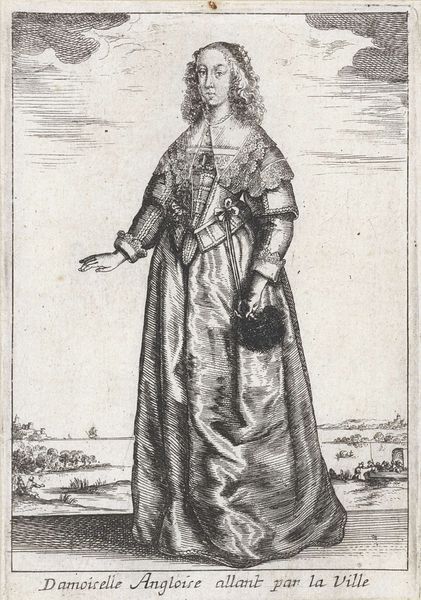
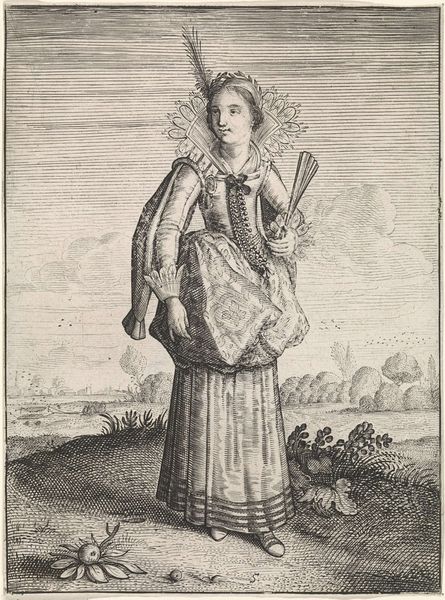
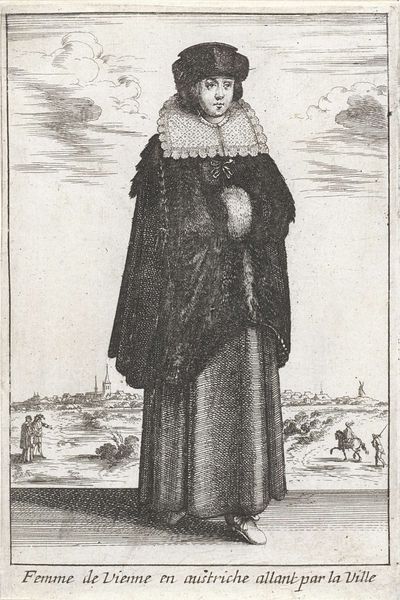
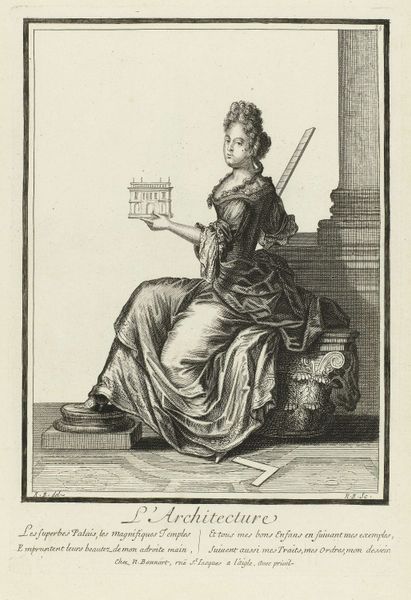
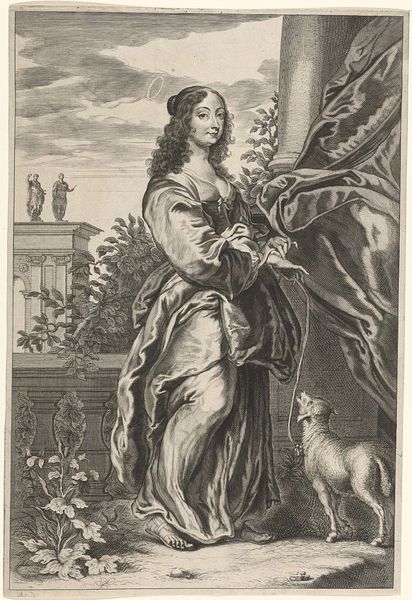
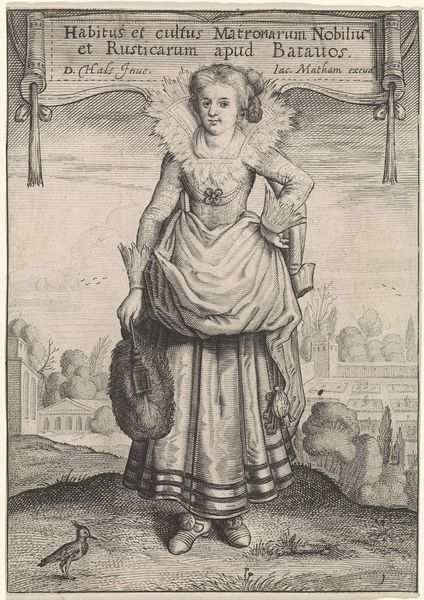
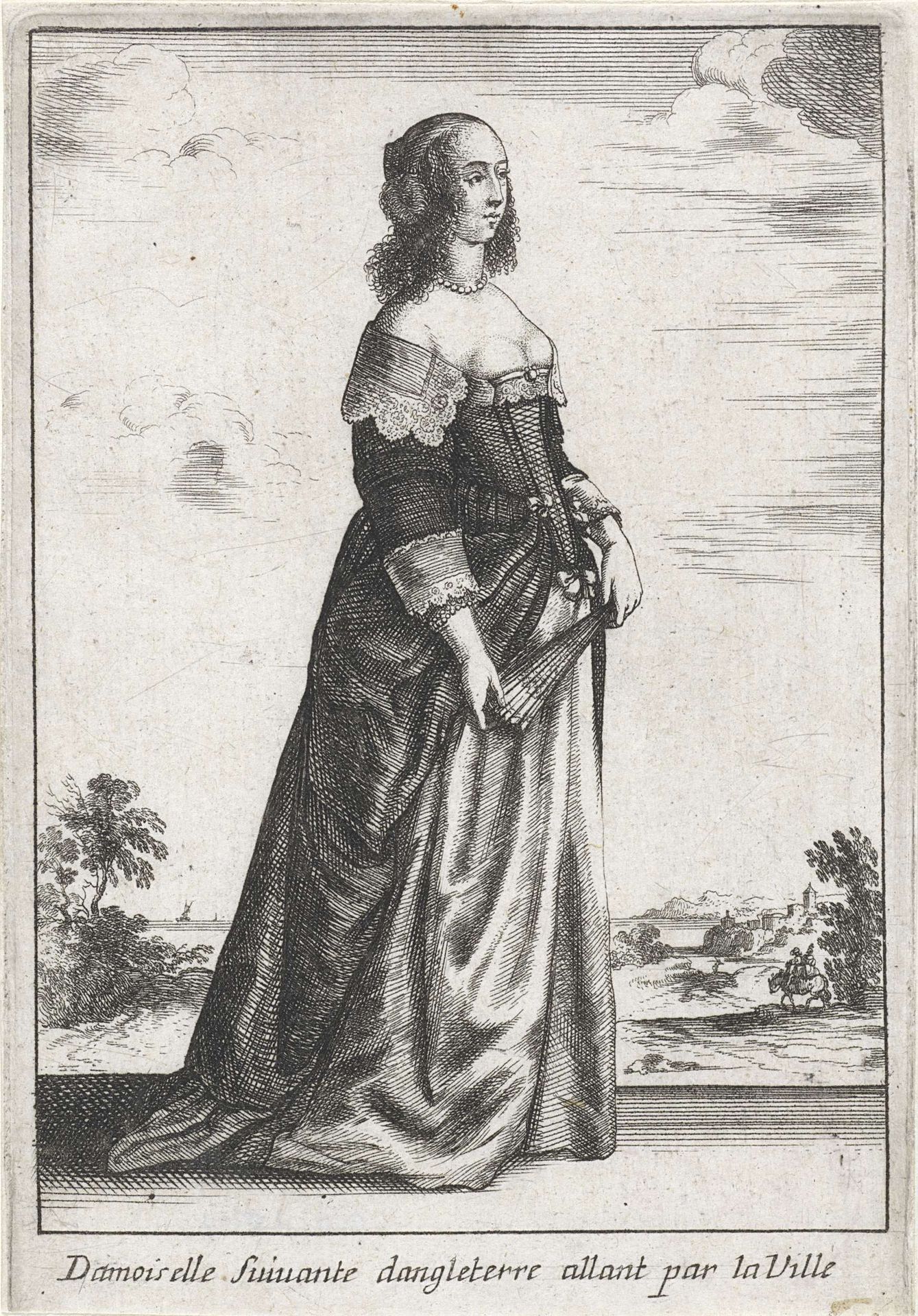
This is an engraving of an English noblewoman strolling through town, made by an anonymous artist. The image offers us insight into the social and cultural currents of its time. Consider the title, “A Young English Woman Going Through Town”. It suggests the print was made for a Continental audience curious about English fashion and manners. The woman’s dress, with its low neckline and emphasis on the figure, would have signified wealth and status. The fan she holds was not only a practical accessory but a symbol of refinement. Produced in the 17th century, this image reflects the growing exchange between England and the Continent, and the rising prominence of the merchant class. By studying costume books, fashion plates, and travel literature, we can better understand the nuances of dress, gesture, and social standing. Art, then, becomes a window into the past, shaped by social and institutional forces.
Damoiselle Suivante dangleterre allant par la Ville
1662

Anonymous
@anonymousLocation
RijksmuseumArtwork details
- Medium
- print, engraving
- Dimensions
- height 139 mm, width 95 mm
- Location
- Rijksmuseum
- Copyright
- Rijks Museum: Open Domain
Tags
Comments
Share your thoughts
About this artwork
This is an engraving of an English noblewoman strolling through town, made by an anonymous artist. The image offers us insight into the social and cultural currents of its time. Consider the title, “A Young English Woman Going Through Town”. It suggests the print was made for a Continental audience curious about English fashion and manners. The woman’s dress, with its low neckline and emphasis on the figure, would have signified wealth and status. The fan she holds was not only a practical accessory but a symbol of refinement. Produced in the 17th century, this image reflects the growing exchange between England and the Continent, and the rising prominence of the merchant class. By studying costume books, fashion plates, and travel literature, we can better understand the nuances of dress, gesture, and social standing. Art, then, becomes a window into the past, shaped by social and institutional forces.
Comments
Share your thoughts