1621 - 1675
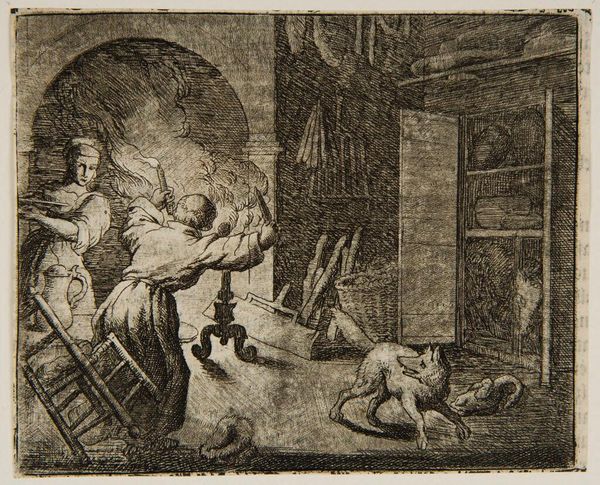
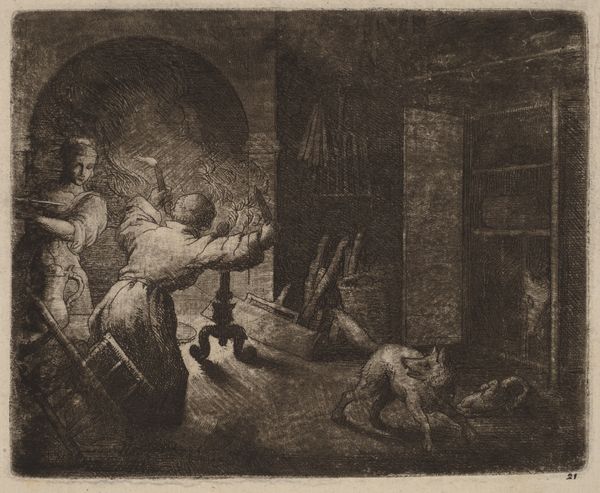
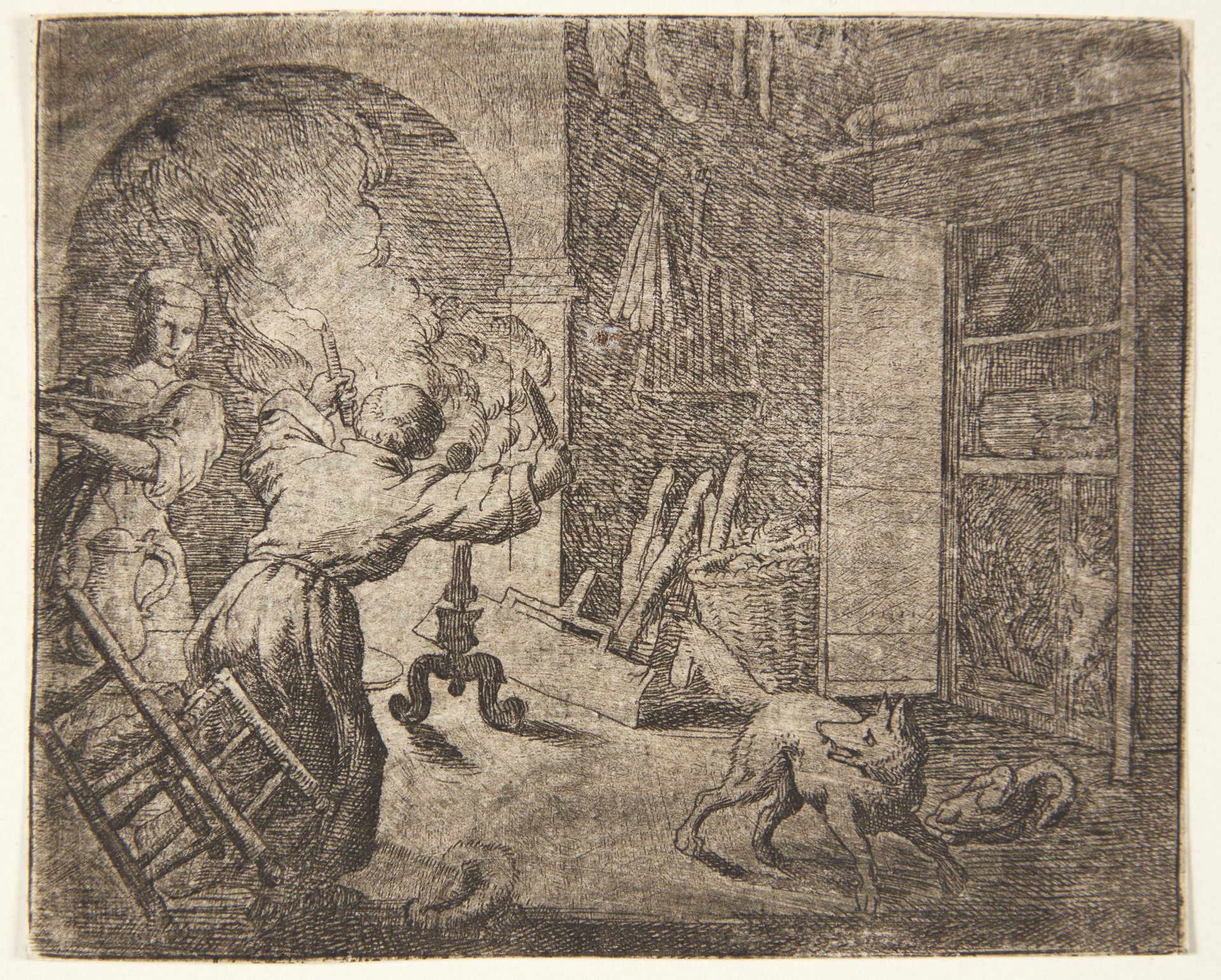
Renard stjæler en kapun


Listen to curator's interpretation
Curatorial notes
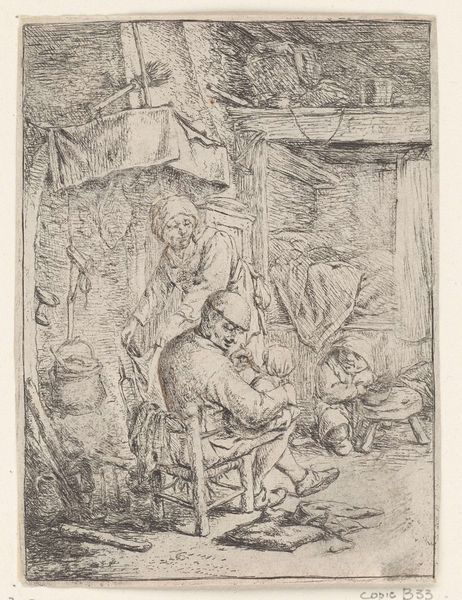
Editor: This etching, "Renard stjæler en kapun," or "Fox Stealing a Capon" by Allaert van Everdingen, was created sometime between 1621 and 1675. The composition, with its dense cross-hatching, makes for a rather chaotic and darkly humorous scene. How do you interpret the formal qualities of this piece? Curator: Indeed. Observe the masterful deployment of line. Everdingen uses hatching and cross-hatching to create tonal variations and define form, achieving a remarkable sense of depth and texture for a two-dimensional work. Note how the artist leads our eye throughout the scene using implied lines of action. Where do you think that we should focus on within this network? Editor: My eye is drawn to the figures. They create a rather dramatic central scene! Curator: Precisely. Observe the tension created by the figure swinging his tools at the source of the fire. This combined with the dark recesses within the domestic setting establishes a visual paradox that underscores a larger reading. Semiotically, we may view the burning interior as representative of human failure and an inability to establish domestic space. Editor: I hadn’t considered how the visual contrasts underscored deeper meanings! The semiotic perspective is fascinating. Curator: Visual form communicates content, yes, and it also determines that content's reception by the observer. Look how the implied diagonals destabilize what is supposedly a safe indoor area. It forces one to pause and truly notice all the forms in disarray. Editor: Thinking about the forms that way really changes how I see this piece. Curator: This exercise illustrates how visual form not only contains meaning but shapes how it's perceived and understood.