About this artwork
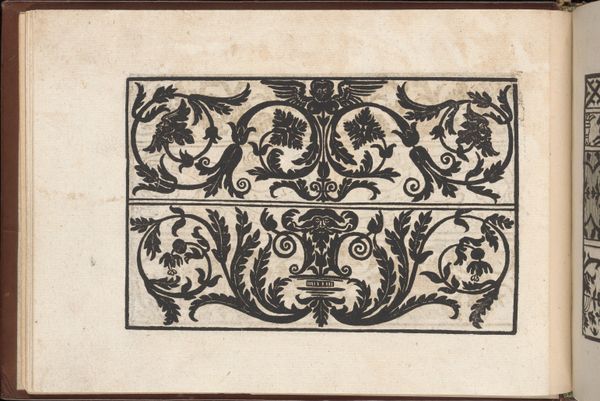
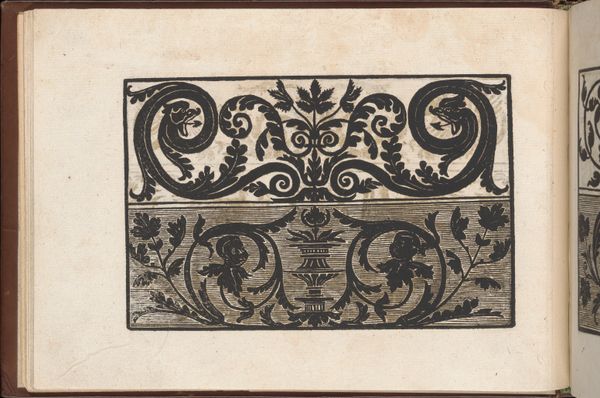
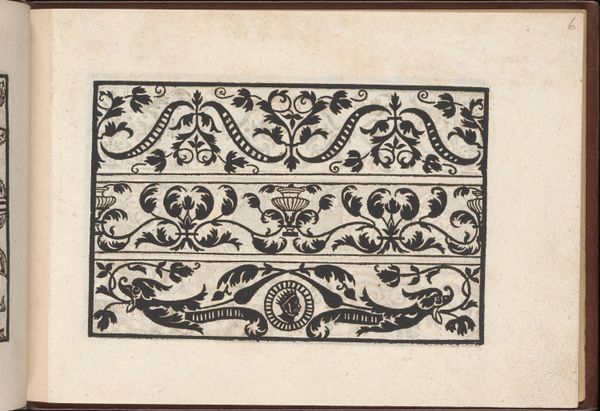
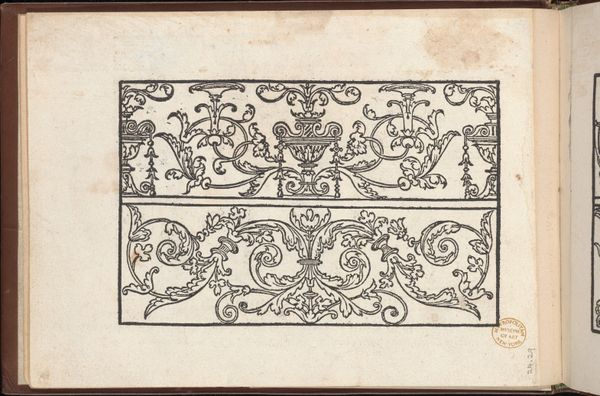
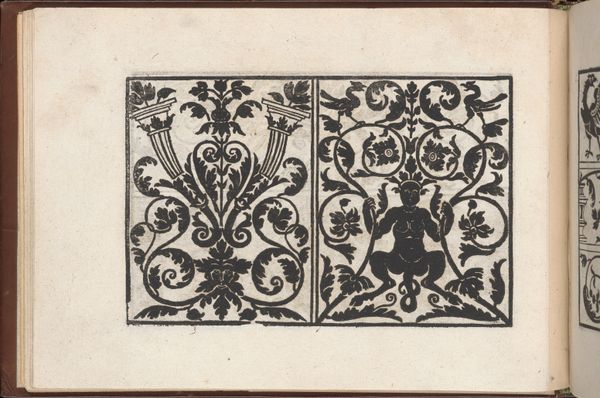
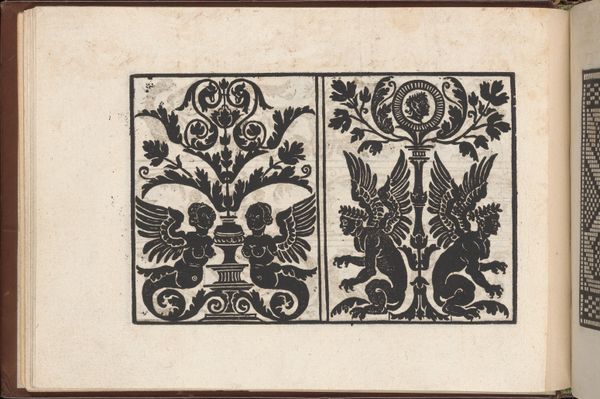
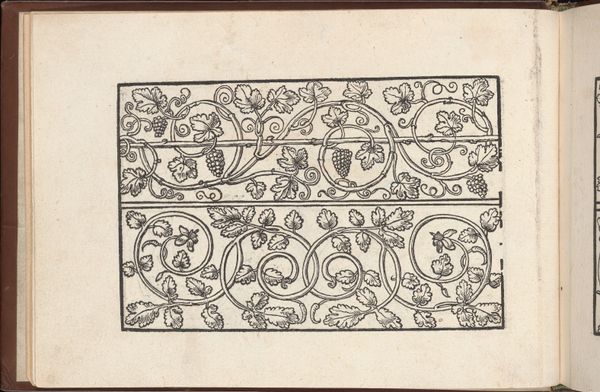
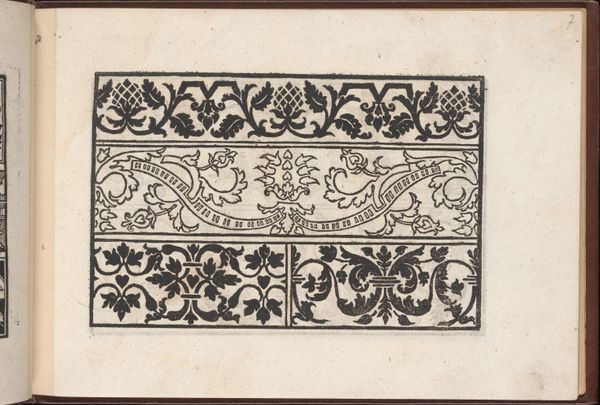
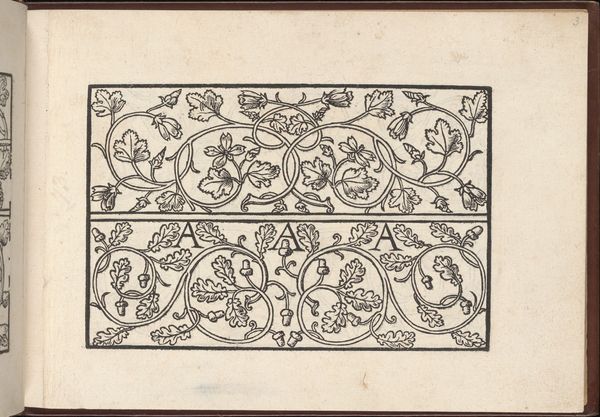
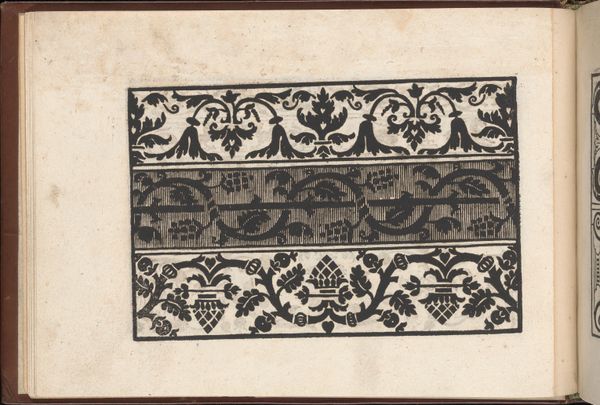
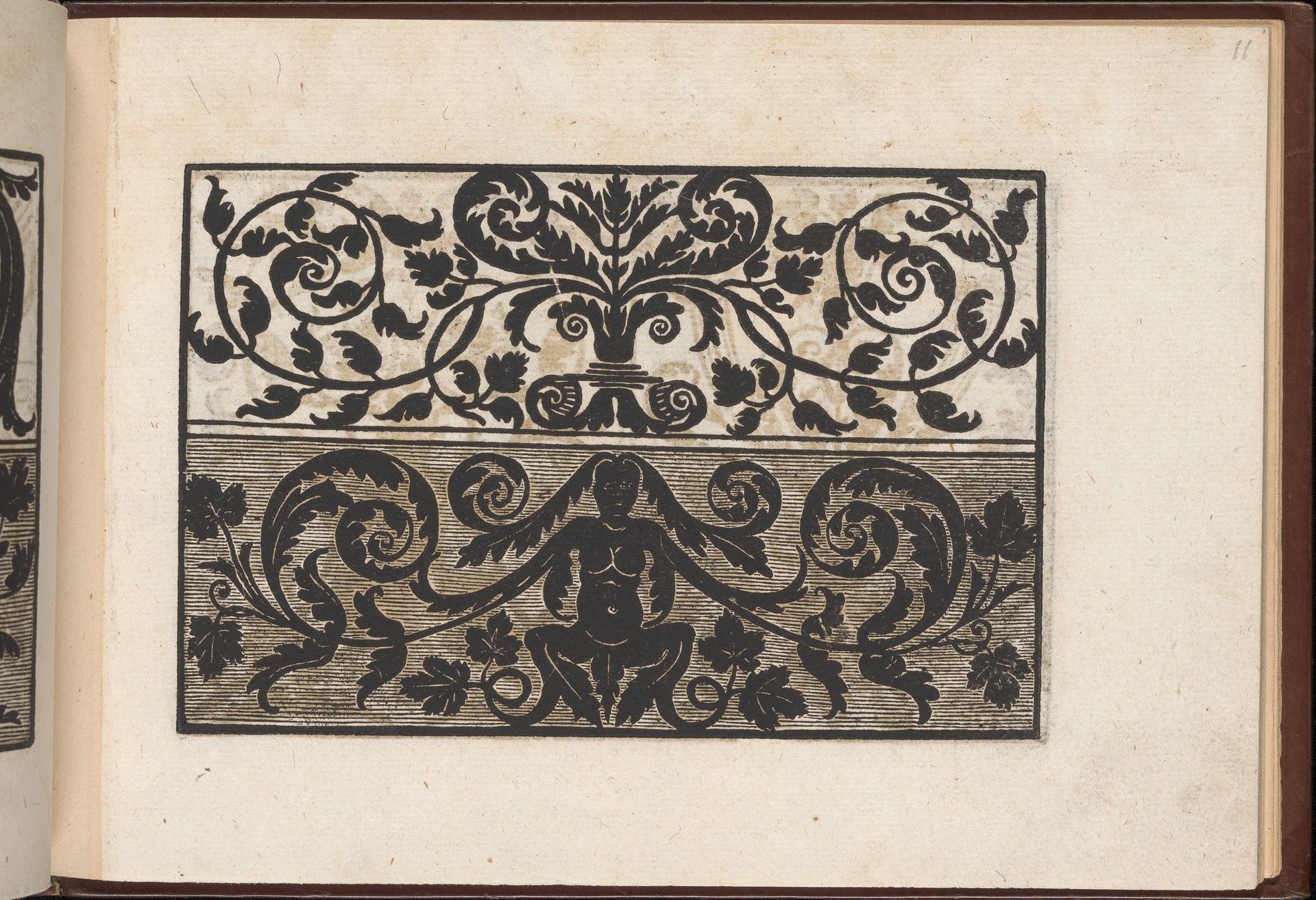
This is a page from ‘Eyn Newe kunstlich moetdelboech alle kunst’, created by Peter Quentel around the 16th century, using woodcut on paper. The page is divided horizontally into two distinct registers, each filled with intricate ornamental designs. The upper section features a symmetrical arrangement of stylized leaves and vines emanating from a vase-like form. The shapes are bold, and the contrast between the black ink and the blank paper creates a striking visual impact. Below, the lower register presents a darker background, setting the stage for an elaborate pattern featuring a winged figure flanked by swirling foliage. The use of symmetry is again evident, reinforcing a sense of balance. The artist plays with positive and negative space to create a dynamic composition, where the interplay between the solid forms and the voids around them is just as important. The structured layout of the page—divided yet harmonious—invites us to consider how ornamental art can achieve both order and complexity.
Page from Eyn Newe kunstlich moetdelboech alle kunst (Page 11r)
1532


Artwork details
- Medium
- drawing, graphic-art, print, paper, ink
- Dimensions
- Overall: 5 11/16 x 8 1/16 in. (14.5 x 20.5 cm)
- Location
- Metropolitan Museum of Art, New York, NY
- Copyright
- Public Domain
Tags
Comments
Share your thoughts
About this artwork
This is a page from ‘Eyn Newe kunstlich moetdelboech alle kunst’, created by Peter Quentel around the 16th century, using woodcut on paper. The page is divided horizontally into two distinct registers, each filled with intricate ornamental designs. The upper section features a symmetrical arrangement of stylized leaves and vines emanating from a vase-like form. The shapes are bold, and the contrast between the black ink and the blank paper creates a striking visual impact. Below, the lower register presents a darker background, setting the stage for an elaborate pattern featuring a winged figure flanked by swirling foliage. The use of symmetry is again evident, reinforcing a sense of balance. The artist plays with positive and negative space to create a dynamic composition, where the interplay between the solid forms and the voids around them is just as important. The structured layout of the page—divided yet harmonious—invites us to consider how ornamental art can achieve both order and complexity.
Comments
Share your thoughts