c. 1752
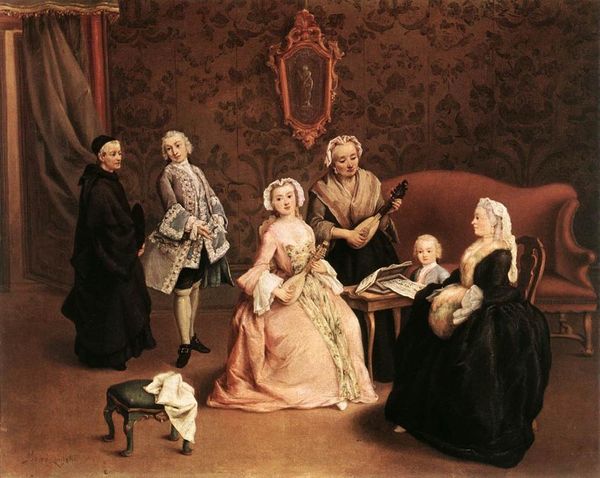
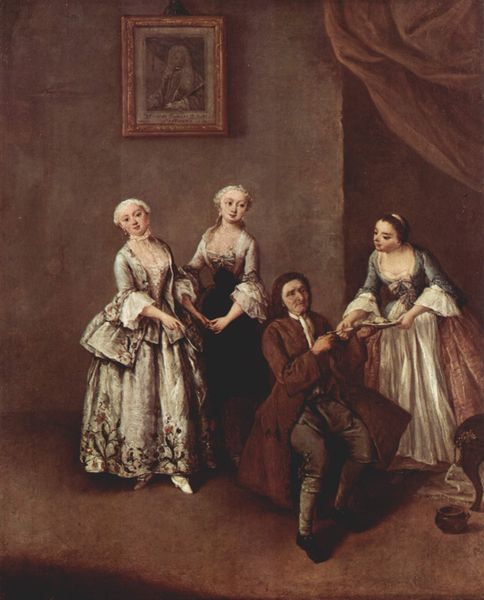
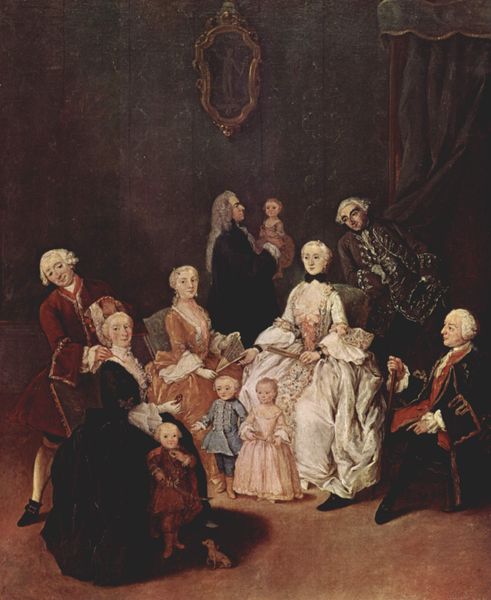
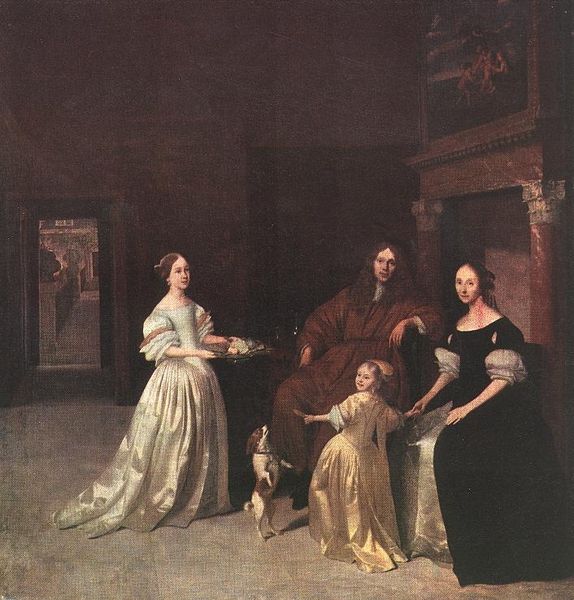
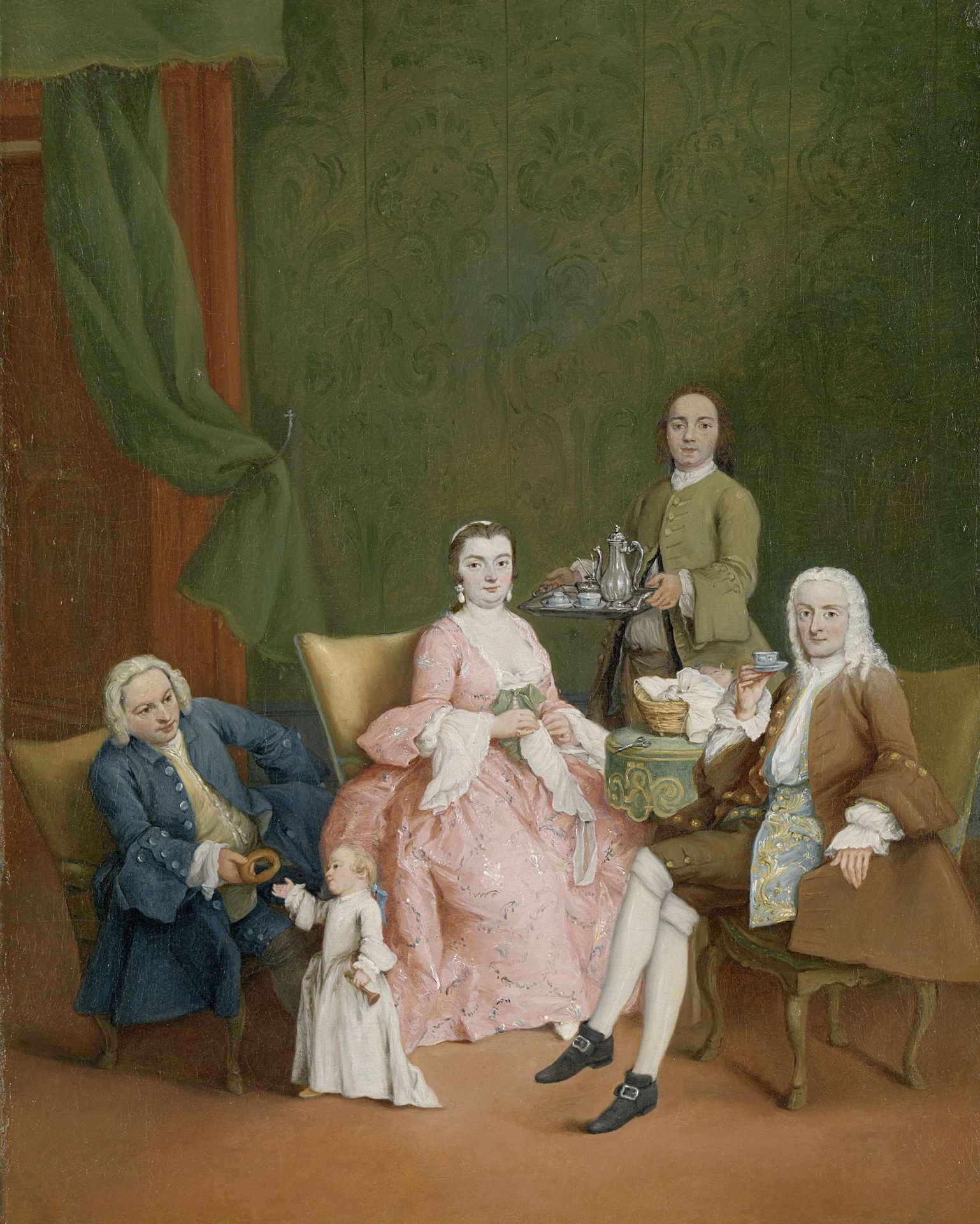
Portrait of a Venetian Family with a Manservant Serving Coffee

Pietro Longhi
1701 - 1785Location
RijksmuseumListen to curator's interpretation
Curatorial notes
Editor: So, this is Pietro Longhi’s "Portrait of a Venetian Family with a Manservant Serving Coffee," painted around 1752. The detail in their clothing is amazing. What really strikes me is how this scene seems to be staging wealth; what can we infer about its historical context from this portrait? Curator: A Materialist approach sees the textures of those sumptuous fabrics and recognizes the considerable resources necessary to produce such garments. Look at the lace, the satins, the carefully arranged folds; it screams consumption and conspicuous display. How does the treatment of the servant factor into this scene? Editor: The servant is bringing coffee. That signals luxury as well, because coffee would have been expensive, imported from afar and prepared by this figure for their enjoyment. I see now, it all connects back to what items are being circulated through this domestic scene! Curator: Precisely. The means of procuring these items--silks, coffee, precious metals-- speaks to colonial trade routes and the exploitation of labor required to maintain such an opulent lifestyle. Consider, too, the space they occupy. Is it merely a backdrop or something more? Editor: I had been focusing on the figures and the objects. Now, I realize that the patterned wallpaper, though faded, suggests an attempt to mimic the materials in the clothing and even amplifies it through the controlled design. This connects it all back to production and wealth display as part of this specific culture and time. Curator: Yes, and by examining those decorative motifs, we can understand how aesthetic trends functioned as commodities in themselves. What is truly being served is an elaborate tableau of power and privilege. It pushes us to consider art as the culmination of production. Editor: I appreciate understanding this as less about the family itself, but more a reflection of society at the time and the larger means of production at play in just one painting. Curator: Exactly. It invites inquiry into how those means of production sustained these forms of aesthetic expression.