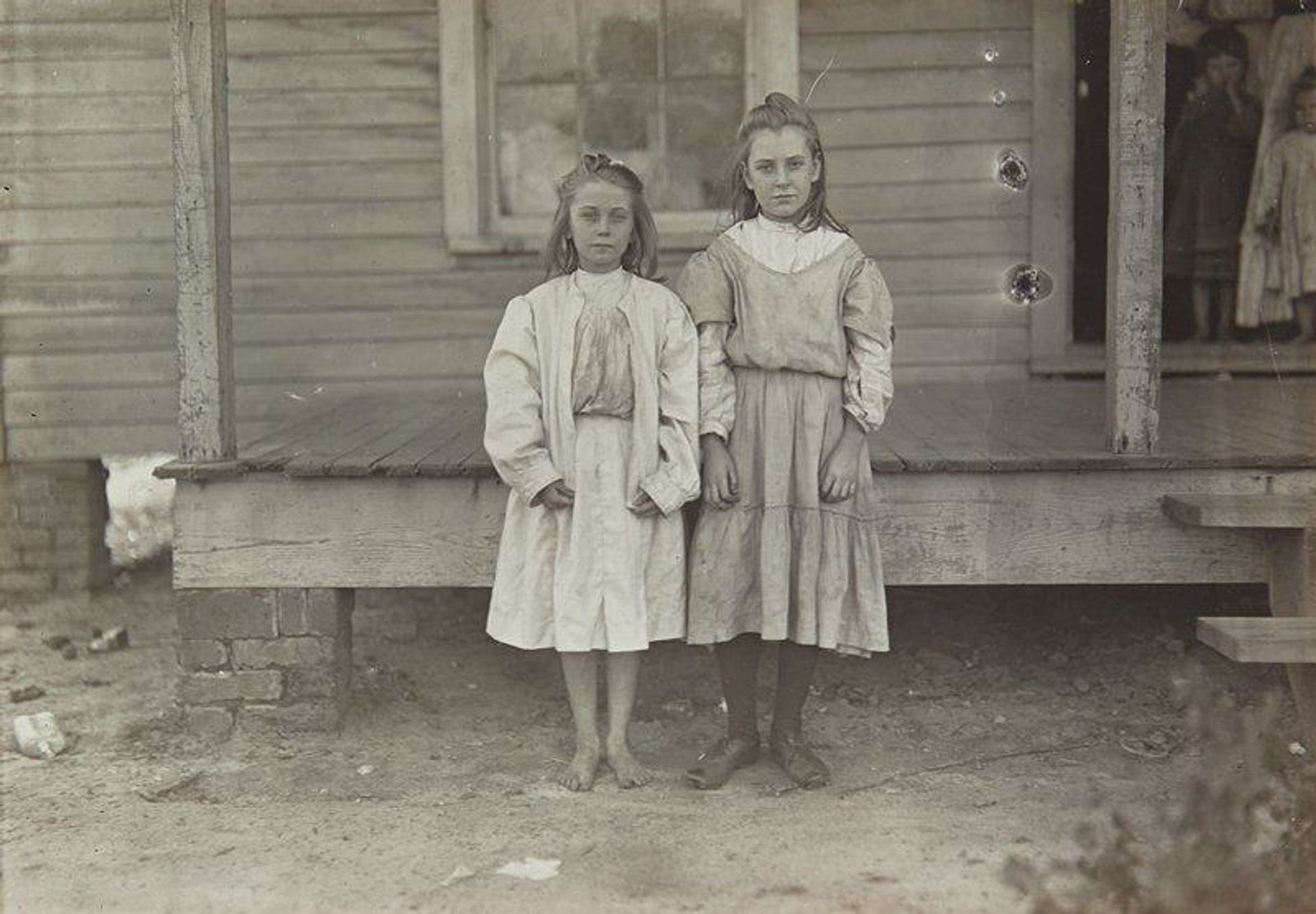
1908
Untitled


Listen to curator's interpretation
Curatorial notes
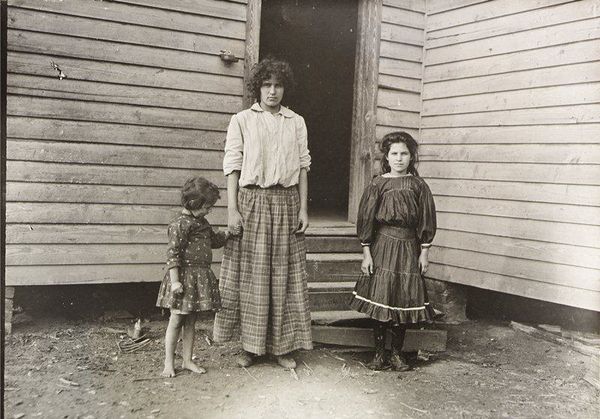
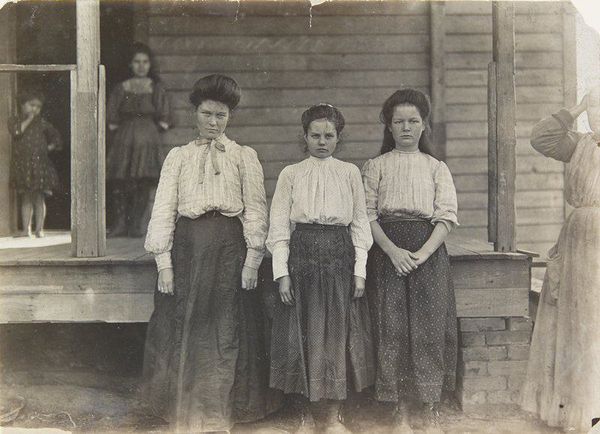
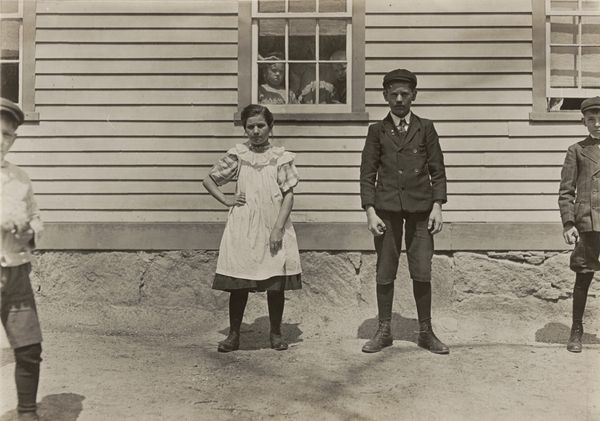
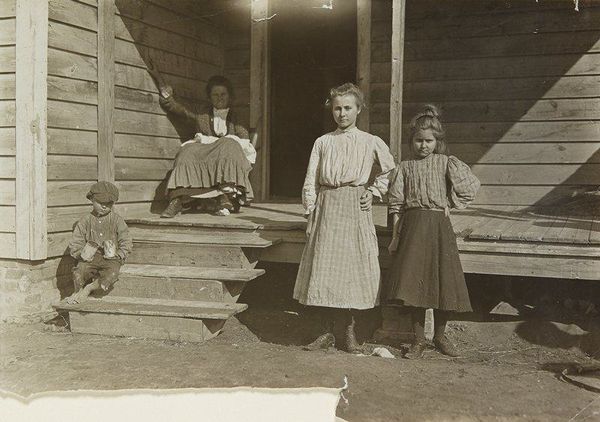
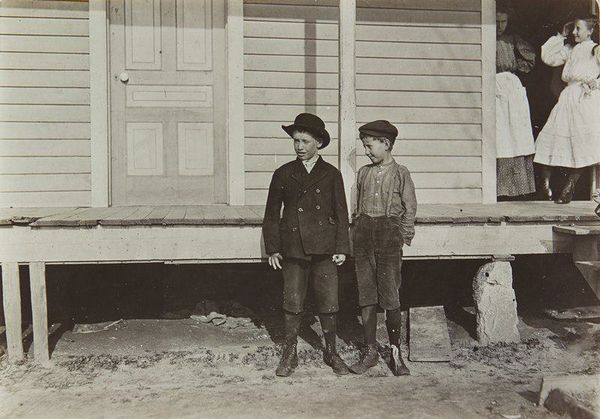
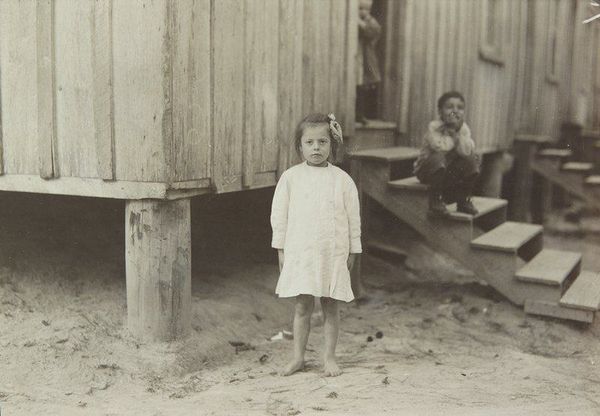
Editor: We're looking at an untitled photograph by Lewis Hine, taken around 1908. It's a gelatin-silver print of two young girls standing on a porch. There's a somber feel to it. They look directly at the camera with such seriousness. What strikes you when you look at this, considering the time it was taken? Curator: Ah, yes, another silent scream from the past, caught in silver. It's impossible to look at Hine's work and not feel a tug in the soul, don’t you think? Considering it's 1908, those aren't just any two girls on a porch. They’re likely child laborers, their childhoods stolen. The way they stand, almost defiant yet resigned... Notice the one without shoes. Hine often used his camera as a weapon, a tool to expose the harsh realities of the time. What do you make of the backdrop itself – the house? Editor: It looks simple, almost desolate. It definitely emphasizes the girls and perhaps their socio-economic standing? The composition leads our eyes right to them, doesn't it? Curator: Precisely! The seemingly plain background—the weathered house, the unadorned porch—it amplifies their vulnerability, doesn't it? It's as if Hine wants us to see them not just as individuals, but as symbols of a systemic problem. The lighting is also quite interesting. What mood do you think it sets? Editor: The subdued lighting adds to that heavy atmosphere, I think. It's not dramatic, but it's definitely not cheerful. Almost like a grey veil. Curator: Exactly. It softens the edges, making them approachable, humanizing them. This approach stirred empathy. The seemingly casual composition and this softness invited viewers to engage emotionally with their plight. Editor: So it's beautiful, but purposefully so. Hauntingly beautiful, perhaps. Thanks. I definitely have a much deeper understanding now.